
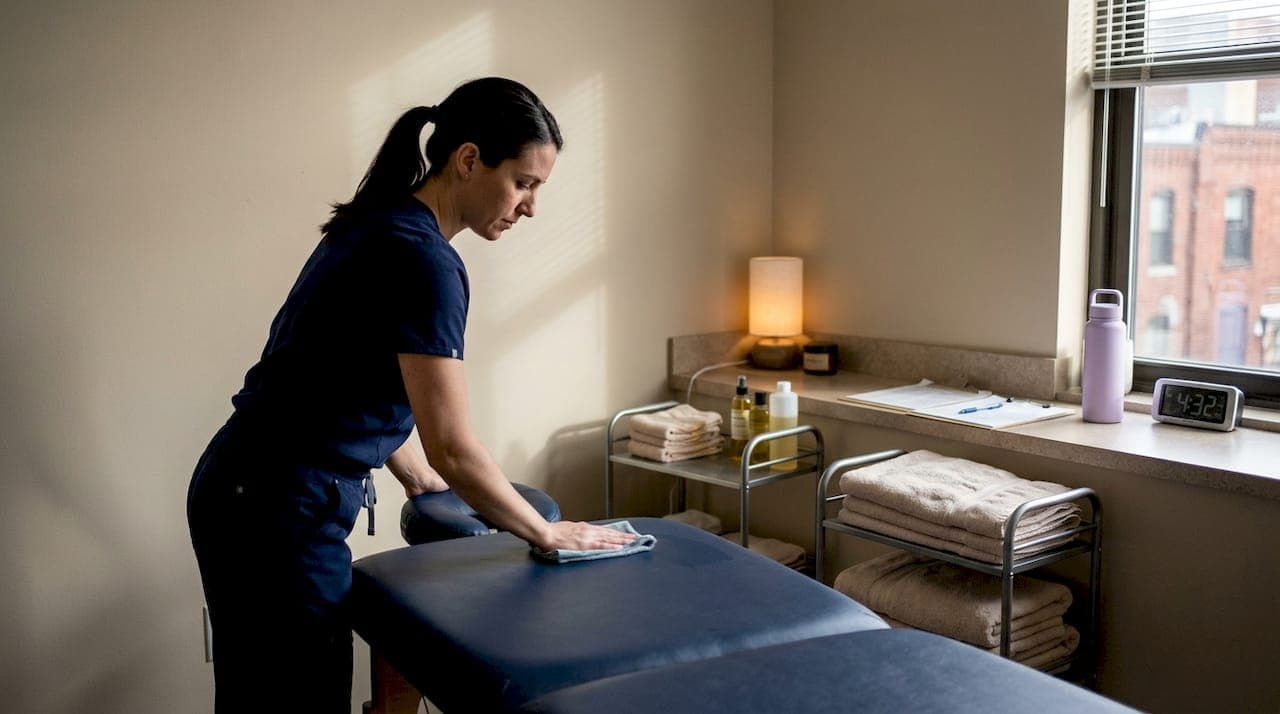
If you live in Austin and deal with persistent tension, chronic pain, or the physical demands of pregnancy or injury recovery, you already know how exhausting it is to just get through the day. Massage therapy is often dismissed as a luxury, but when approached with intention and structure, it becomes a legitimate tool for relief and healing. Meta-analyses confirm modest pain/fatigue relief in chronic conditions, and prenatal clients show significant pain reduction with proper care. This guide walks you through every stage of the process, from setting your goals to tracking your progress, so you can get the most out of every session.
Table of Contents
- Understand your needs and goals before your session
- Prepare for your massage: What to bring and what to expect
- The core massage therapy workflow: Step-by-step guide
- Aftercare and tracking your results: Maximizing the impact
- What most massage therapy guides overlook: Expert workflow secrets
- Ready to experience a tailored massage therapy workflow in Austin?
- Frequently asked questions
Key Takeaways
| Point | Details |
|---|---|
| Set personalized goals | Defining your needs and sharing them with your therapist leads to better outcomes and satisfaction. |
| Prepare for optimal results | Hydrate, bring necessary info, and communicate your history for more effective, safe sessions. |
| Follow the workflow steps | Each session should include assessment, targeted work, and shared feedback to maximize benefit. |
| Aftercare is crucial | Continue hydration, stretch, and track how you feel for lasting results and progress. |
| Expert input matters | Experienced therapists adapt techniques based on feedback and research, improving your experience. |
Understand your needs and goals before your session
Before you book anything, take a moment to get honest with yourself about what you actually need. That clarity shapes everything that follows. Are you managing a chronic condition like lower back pain or sciatica? Are you pregnant and looking for relief from hip pressure or swollen legs? Are you recovering from a sports injury or a car accident? Or are you simply carrying months of stress in your shoulders and jaw?
Each of these situations calls for a different approach. A therapist who knows your goal upfront can select the right techniques, apply appropriate pressure, and focus on the areas that matter most to you. Without that context, even a skilled therapist is working with one hand tied behind their back.
Here are the most common goals clients bring into a session:
- Reducing chronic muscle tension or pain
- Supporting range of motion and joint mobility
- Easing prenatal discomfort, including hip, back, and leg tension
- Recovering from a specific injury or post-surgical tightness
- Reducing stress-related holding patterns in the body
- Post-exercise recovery and soreness management
Once you identify your primary goal, write it down. Then add any relevant medical history: past surgeries, current medications, areas to avoid, and any conditions your doctor has flagged. If you are exploring massage therapy for injury recovery, sharing recent test results or physical therapy notes can help your therapist work more precisely.
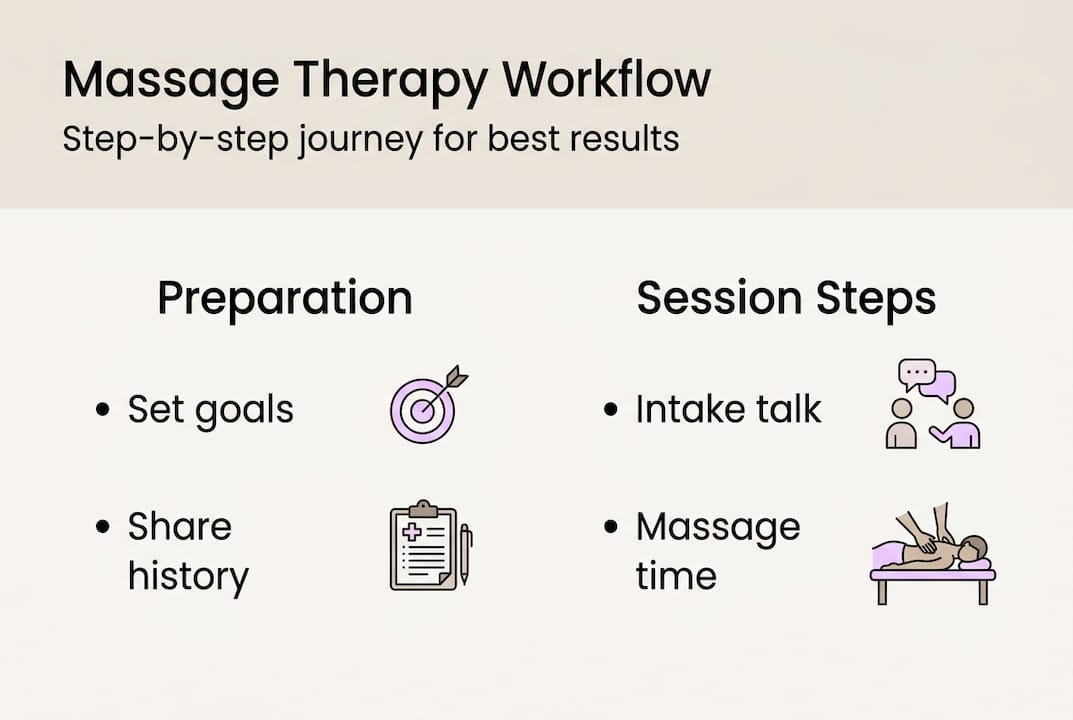
Pro Tip: Before your first session, rate your pain or tension on a scale of 1 to 10 and note where you feel it most. Bring this to your intake conversation. It gives your therapist a clear baseline and helps you measure progress over time.
Why does this step matter so much? Because prenatal massage shows significant pain reduction when protocols are matched to the client's specific stage and symptoms. The same principle applies across all conditions. Customized care consistently outperforms generic treatment.
Prepare for your massage: What to bring and what to expect
Preparation is not complicated, but skipping it can affect your comfort and your results. Showing up organized helps your therapist spend less time gathering information and more time actually working with your body.
Here is a simple checklist to bring to your appointment:
- Your appointment confirmation and any intake forms completed in advance
- Comfortable, loose clothing you can change out of easily
- A list of current medications or supplements
- Your pain or tension notes from your self-assessment
- Water to drink before and after your session
If you are pregnant, also bring your prenatal care provider's contact information and any notes about positioning preferences or complications. Many practitioners use specialized bolsters and side-lying setups to keep you safe and comfortable throughout.
If you are recovering from an injury, bring any imaging results, physical therapy discharge notes, or a list of movements that currently cause pain. Efficacy depends on timing, duration, and pressure, so the more your therapist knows about your history, the better they can calibrate your session.
| Consideration | General wellness | Prenatal | Injury recovery |
|---|---|---|---|
| Positioning | Face down or up | Side-lying with bolsters | Varies by injury site |
| Pressure | Moderate to firm | Light to moderate | Light initially, adjusted |
| Areas of focus | Full body or tension areas | Hips, back, legs, feet | Specific injury zone + surrounding tissue |
| What to bring | Tension notes | Prenatal provider info | Imaging or PT notes |
| Session frequency | Monthly or as needed | Every 2 to 4 weeks | Weekly during acute phase |
Pro Tip: Drink 16 to 20 ounces of water in the hour before your session and avoid a heavy meal for at least 90 minutes beforehand. Well-hydrated tissue responds better to manual work, and a full stomach makes lying face down uncomfortable.
When you arrive, expect a brief intake discussion where your therapist reviews your goals and any concerns. You will be given privacy to disrobe to your comfort level, and you will always be draped appropriately throughout the session. A good therapist creates a space where you feel safe to relax fully.

The core massage therapy workflow: Step-by-step guide
Understanding what actually happens during a session removes the uncertainty that keeps some people from fully letting go. Here is how a well-structured session typically unfolds:
- Intake and goal review: Your therapist revisits your goals, checks in on any changes since your last visit, and confirms areas of focus and pressure preferences.
- Initial assessment: The therapist may observe your posture, palpate key areas, or ask you to move through a range of motion to identify restrictions.
- Technique selection: Based on your goals, the therapist selects from methods like effleurage (long gliding strokes), petrissage (kneading), deep tissue work, or myofascial release.
- Feedback check-ins: Throughout the session, your therapist will ask about pressure and comfort. This is not just politeness. It is essential for safe, effective work.
- Closing and aftercare guidance: Sessions typically end with lighter strokes to signal the nervous system to settle, followed by stretching recommendations or self-care advice.
Proper communication during your session is essential to achieve optimal relief and avoid discomfort.
For those focused on post-exercise recovery, post-exercise massage reduces DOMS (delayed onset muscle soreness), improves flexibility, and supports blood flow when performed within 30 minutes to two hours after activity. Sessions of 15 to 30 minutes using effleurage and petrissage are particularly well-supported by research.
| Client type | Typical duration | Pressure level | Primary techniques |
|---|---|---|---|
| General wellness | 60 minutes | Moderate | Effleurage, petrissage, trigger point |
| Prenatal | 60 minutes | Light to moderate | Side-lying effleurage, gentle compression |
| Injury recovery | 30 to 60 minutes | Light, graduated | Myofascial release, cross-fiber friction |
| Post-exercise | 15 to 30 minutes | Moderate | Effleurage, petrissage |
It is also worth noting that manual vs percussive massage techniques differ in how they engage the nervous system. Manual work offers a level of sensory feedback and adaptability that devices simply cannot replicate.
Aftercare and tracking your results: Maximizing the impact
What you do in the 24 hours after a session matters more than most people realize. Your body continues processing the work long after you leave the table.
Here are aftercare recommendations tailored to each group:
General wellness clients:
- Drink at least 2 liters of water throughout the day
- Avoid intense exercise for 12 to 24 hours
- Apply gentle heat to any areas that feel tender
Prenatal clients:
- Rest if you feel tired. Your body is doing significant work.
- Avoid lying flat on your back for extended periods
- Gentle walking or light stretching is fine if you feel up to it
Post-injury or stress recovery clients:
- Follow any specific movement guidance from your therapist
- Avoid activities that aggravate the injury site
- Note any changes in pain, mobility, or sensation and report them at your next visit
Tracking your progress is one of the most underused tools in massage therapy. Massage lowers CK by 20 to 25% and improves range of motion in post-exercise recovery, which means measurable change is happening even when it is subtle. Creatine kinase (CK) is an enzyme released when muscle tissue is stressed; lower levels indicate less muscle damage.
Pro Tip: Keep a simple log after each session. Rate your pain or tension on a 1 to 10 scale, note your range of motion in problem areas, and record how long relief lasts. Share this at your next appointment. It helps your therapist adjust frequency, pressure, and technique for better outcomes over time.
For those using massage protocols for recovery, consistent follow-up is what separates temporary relief from lasting change. If your pain returns within a few days, more frequent sessions may be appropriate during the acute phase. As symptoms stabilize, you can space sessions further apart.
What most massage therapy guides overlook: Expert workflow secrets
Most articles tell you to drink water and communicate with your therapist. That is good advice, but it only scratches the surface of what separates an average session from a genuinely transformative one.
The most skilled professional massage therapy practitioners do not just follow a script. They constantly reassess mid-session, adjusting depth, speed, and focus based on how your tissue responds in real time. A tight spot that needed firm pressure at the start of a session may need something gentler once it begins to release. That kind of adaptation requires both training and attentiveness that no tool or device can replicate.
Research also points to gaps in massage therapy research around standardized protocols, which means there is no universal formula. The evidence supports individualized care, not cookie-cutter routines. And when it comes to percussive vs manual therapy, manual work consistently offers superior proprioceptive feedback, meaning your nervous system learns and responds differently when a skilled human hand is involved.
The takeaway? Always speak up during your session. Tell your therapist what feels effective and what does not. The best outcomes come from that two-way conversation, not from passively receiving whatever technique is applied.
Ready to experience a tailored massage therapy workflow in Austin?
You now have a clear picture of how to prepare, what to expect, and how to track your results. The next step is finding a therapist who brings all of this together with skill, intuition, and genuine care.
EveryKnot Massage in Austin offers personalized sessions designed around your specific needs, whether you are managing chronic pain, navigating pregnancy, or recovering from an injury. Caitlin's approach blends evidence-informed technique with an intuitive, human-centered presence that helps your body feel safe enough to actually let go. Book your session today and experience what a truly customized massage therapy workflow feels like.
Frequently asked questions
What is the ideal duration for a massage therapy session?
For specific goals like post-exercise recovery, 15 to 30 minutes is well-supported by research. For full-body work or complex chronic pain, a 60-minute session is generally more effective.
How soon after exercise or injury should I get a massage?
Timing is critical. Post-exercise massage is most effective for soreness reduction when received shortly after activity, ideally within a few hours rather than the day before.
Is prenatal massage safe throughout pregnancy?
Yes, in most cases. When performed by a certified prenatal therapist using proper positioning and protocols, prenatal massage shows significant pain reduction with a strong safety profile.
How can I tell if massage therapy is working for me?
Track your pain score, range of motion, and how long relief lasts after each session. Massage improves ROM and reduces muscle stress markers measurably, so consistent tracking will reveal real trends over time.
Are tools like foam rollers as effective as manual massage?
Not quite. Evidence shows manual therapy provides superior sensory feedback and proprioceptive engagement compared to percussive or self-massage tools, though tools can still support your routine between sessions.