
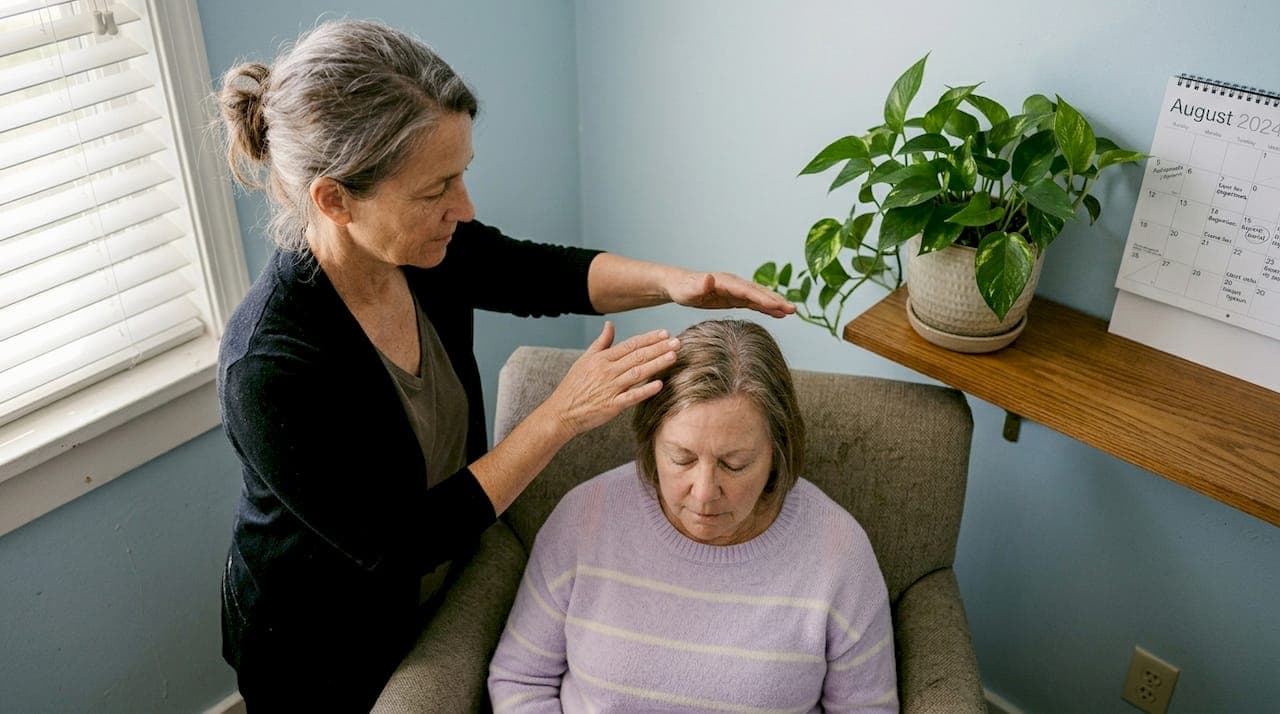
Energy-based therapies have passionate followers and equally passionate skeptics. Healing Touch Therapy sits right at that intersection. Some people swear it reduced their chronic pain and anxiety when nothing else worked. Others dismiss it as unproven. The truth, as with most integrative therapies, is more nuanced than either camp admits. This guide breaks down what Healing Touch Therapy actually is, what the research says, how it compares to Reiki and Therapeutic Touch, and what you can realistically expect if you try it in Austin.
Table of Contents
- Understanding healing touch therapy: Origins and philosophy
- Key techniques: What happens during a healing touch session?
- Healing Touch vs. other energy therapies: What's different?
- Does Healing Touch work? Science, skepticism, and client experiences
- How to get started with Healing Touch in Austin
- Our perspective: What most people miss about Healing Touch therapy
- Explore Healing Touch therapy options in Austin
- Frequently asked questions
Key Takeaways
| Point | Details |
|---|---|
| Holistic approach | Healing Touch Therapy supports pain, stress, and emotional wellness using evidence-informed energy methods. |
| Hands-on techniques | Sessions use centering, energy scanning, and balancing chakras to promote well-being. |
| Evidence and limits | Research finds some real benefits, but results are mixed and should be considered alongside conventional care. |
| Personalized care | Every session can be tailored to client needs, promoting an individualized healing experience. |
Understanding healing touch therapy: Origins and philosophy
Healing Touch Therapy was developed in the late 1980s by Janet Mentgen, a registered nurse who wanted to formalize energy-based care within a clinical setting. Unlike some alternative therapies that grew outside conventional medicine, Healing Touch has nursing roots. That origin matters because it shaped the therapy's emphasis on structured protocols, practitioner training, and client-centered care.
At its core, Healing Touch operates on the belief that every person has a biofield, an energy field that surrounds and flows through the body. When that field becomes disrupted or blocked, physical and emotional symptoms can follow. Practitioners work to restore balance to this field through intentional touch and movement.
Here is what distinguishes Healing Touch from other energy therapies:
- It uses structured, repeatable techniques developed through formal training programs
- Practitioners are often certified through Healing Touch International or Healing Beyond Borders
- It integrates whole-person care, addressing physical, emotional, mental, and spiritual dimensions
- Sessions follow a consistent framework, from intake through integration
- It is frequently offered in hospital and hospice settings alongside conventional care
As one widely cited description puts it:
"Core methodologies include centering, assessment and scanning the energy field with hands, clearing stagnant energy via sweeping motions, balancing chakras or energy centers, and grounding to integrate changes; techniques like Chakra Connection and Magnetic Passes are common."
This structured approach is part of what makes Healing Touch distinct. It is not improvised. Practitioners follow a defined sequence, which gives sessions a predictable, reassuring quality that many clients find calming. You can explore how holistic healing procedures like these are applied in an Austin context to understand what a session might look and feel like.
Key techniques: What happens during a healing touch session?
If you have never experienced Healing Touch, you might wonder what actually happens in the room. Sessions typically last 45 to 60 minutes and take place in a quiet, comfortable setting. You remain fully clothed and lie on a massage table.
Here is a general step-by-step overview of how a session unfolds:
- Intake conversation — The practitioner asks about your current physical and emotional state, wellness goals, and any areas of concern.
- Centering — The practitioner takes a few moments to focus inward, settling their own energy before working with yours.
- Energy field assessment — Using slow, intentional hand movements a few inches above your body, the practitioner scans for areas that feel different in temperature, density, or flow.
- Technique application — Based on the assessment, the practitioner applies specific techniques. Chakra Connection and Magnetic Passes are among the most commonly used.
- Integration and grounding — The session closes with grounding techniques to help your body absorb the work and return to a settled state.
- Debrief — You and the practitioner briefly discuss what was noticed and how you feel.
Sessions are highly personalized. Someone coming in for stress relief will receive a different focus than someone managing chronic pain or recovering from an emotional setback.

Pro Tip: Before your first session, write down three specific goals, whether that is reducing tension in your shoulders, calming anxiety, or improving sleep. Sharing these with your practitioner helps them tailor the session to what your body and nervous system actually need.
You can also ask your Austin energy therapy provider about which techniques they prioritize and why, which tells you a lot about their training and approach.
Healing Touch vs. other energy therapies: What's different?
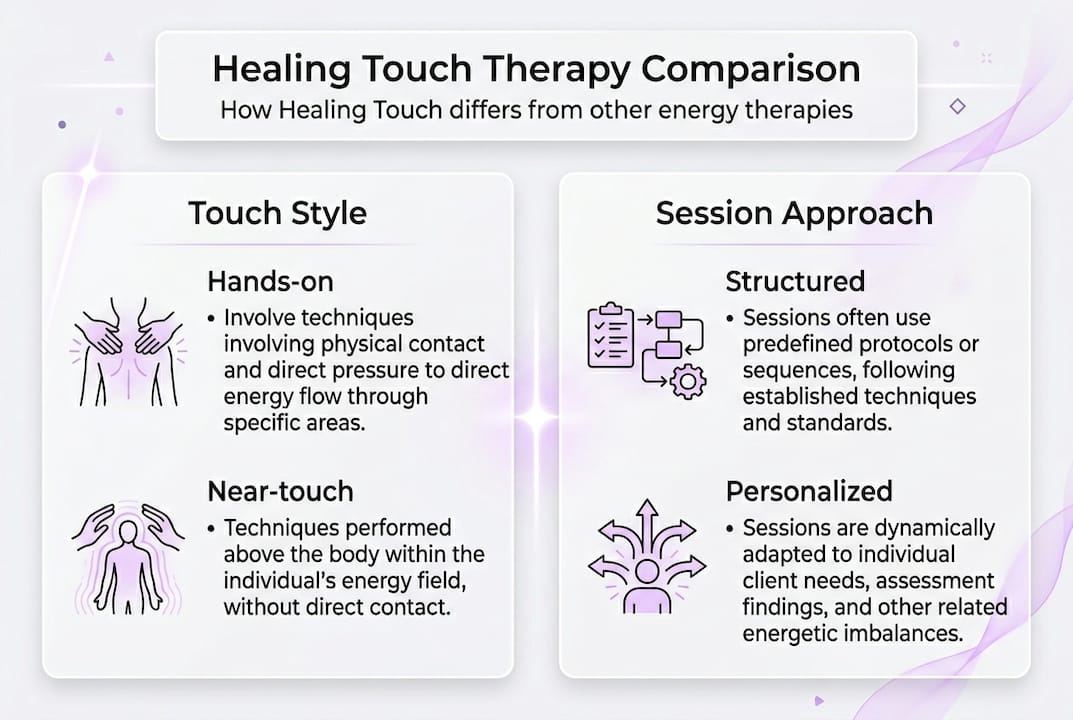
If you have looked into energy-based healing, you have probably encountered Reiki and Therapeutic Touch as well. They share some similarities with Healing Touch, but the differences matter when you are choosing what to try.
| Therapy | Touch level | Structure | Verbal interaction | Setting |
|---|---|---|---|---|
| Healing Touch | Hands-on and near-body | Highly structured protocols | Moderate to high | Clinical and wellness |
| Reiki | Light hands-on or no-touch | Practitioner-guided, less formal | Minimal | Wellness and spiritual |
| Therapeutic Touch | Primarily no-contact | Moderate structure | Interactive | Often clinical |
Healing Touch is more hands-on and structured than either Reiki or Therapeutic Touch. Therapeutic Touch tends to be non-contact and more conversational. Reiki focuses on channeling energy with less verbal exchange and is often rooted in spiritual tradition.
Key distinctions worth knowing:
- Healing Touch has a standardized curriculum and certification pathway
- Reiki attunements are spiritually based and vary widely by lineage
- Therapeutic Touch was also developed by nurses but relies more on intuitive scanning without physical contact
- All three share the biofield concept, which remains scientifically unverified
The honest caveat here is that scientific scrutiny applies to all three. Critics note that biofields lack a confirmed physical basis, and a well-known study by then-nine-year-old Emily Rosa, published in JAMA, found that Therapeutic Touch practitioners could not reliably detect a human energy field under controlled conditions. Skeptics apply similar reasoning to Healing Touch. The Merck Manual notes insufficient high-quality evidence for broad efficacy claims across these modalities.
That does not mean people do not benefit. It means the mechanism is still debated.
Does Healing Touch work? Science, skepticism, and client experiences
This is the question most people actually want answered. The honest answer is: it depends on what you are measuring.
| Outcome measured | What research found | Evidence quality |
|---|---|---|
| Pain reduction | Moderate effect size (ES = 0.784) | Moderate, mixed RCTs |
| Anxiety and stress | Significant reductions in some studies | Low to moderate |
| Cancer symptom relief | 1 to 2 point improvement on VAS | Pilot level |
| Wound healing | No robust evidence | Insufficient |
Some RCTs and meta-analyses show real reductions in pain, anxiety, and stress. One nurse pilot study recorded a 3.8-point decrease in self-reported stress scores. Cancer patients receiving Healing Touch or Reiki during infusion reported meaningful symptom relief. These are not nothing.
But Cochrane reviews have not found robust evidence for wound healing, and high-quality evidence remains limited for many claimed benefits. The placebo effect is real and powerful. Relaxation alone, produced by a calm environment and attentive care, can reduce cortisol and ease perceived pain.
As one research summary put it:
"Touch-based biofield therapies show stronger pain effects than non-touch versions, suggesting physical contact itself contributes to outcomes."
This is actually useful information. It suggests that the human element, being touched with intention and care, may be doing real work even if the biofield mechanism is unproven. For people managing chronic stress or pain, that distinction may matter less than the relief they feel.
Healing Touch is considered safe with no known contraindications, but it should support, not replace, conventional medical care for serious or acute conditions.
How to get started with Healing Touch in Austin
Austin has a growing wellness community, and finding a qualified Healing Touch practitioner is more straightforward than it used to be. Here is how to approach it thoughtfully.
- Verify credentials — Look for practitioners certified through Healing Touch International or Healing Beyond Borders. These programs require supervised practice hours and ongoing education.
- Ask about their approach — A good practitioner will explain their methods clearly. Ask how they use centering, energy scanning, and grounding in a typical session.
- Discuss your specific needs — Whether you are dealing with chronic pain, anxiety, grief, or recovery from illness, share your context. Healing Touch sessions are customized, and your input shapes the work.
- Set realistic expectations — One session may leave you feeling noticeably calmer. Deeper or longer-term benefits usually build over multiple visits.
- Track your experience — Keep a simple journal after each session. Note your stress level, sleep quality, and any physical changes. This helps you and your practitioner refine the approach.
- Ask about integration with other care — A reputable practitioner will support your existing medical or therapeutic treatment, not discourage it.
Pro Tip: After your first session, give yourself 30 minutes before jumping back into a busy schedule. Your nervous system may need a little time to settle, and that quiet window often amplifies the calming effect.
Connecting with professional Healing Touch practitioners in Austin who also understand bodywork and massage can offer an especially integrated experience, since many clients benefit from combining energy work with physical therapeutic touch.
Our perspective: What most people miss about Healing Touch therapy
Most conversations about Healing Touch get stuck in a binary: either it is miraculous or it is fake. Neither framing is useful.
What we have observed is that expectation and mindset shape outcomes more than most people realize. Clients who arrive open, curious, and willing to rest tend to report the most meaningful shifts. That is not proof that biofields are real. It is proof that the therapeutic relationship, the intention behind touch, and the permission to slow down all matter deeply.
The uncomfortable truth is that conventional medicine is not always great at treating chronic stress, emotional pain, or the kind of exhaustion that lives in your body after years of pushing through. Healing Touch does not cure those things either. But it can create a container for your nervous system to feel safe enough to release some of what it has been holding.
Transparency matters here. We think you deserve to know what the evidence does and does not support. Healing Touch works best as a complement to, not a replacement for, conventional care. When chosen with clear eyes and realistic goals, it can be a genuinely supportive part of your healing path.
Explore Healing Touch therapy options in Austin
If what you have read resonates, the next step is simple: find a practitioner in Austin who can work with your specific needs and goals.
At EveryKnot Massage, Caitlin brings a certified, intuitive approach to energy-informed bodywork that blends deep tissue techniques with intentional presence. Whether you are managing chronic pain, processing stress, or simply ready to feel more at ease in your body, sessions are customized to meet you where you are. You do not have to have everything figured out before you arrive. Book a Healing Touch session and experience what attentive, whole-person care feels like in a calm Austin studio environment.
Frequently asked questions
Is Healing Touch Therapy scientifically proven?
Research shows moderate benefits for stress and pain reduction, but evidence is mixed and more rigorous, large-scale studies are still needed before broad efficacy claims can be made.
What should I expect during my first Healing Touch session?
You can expect a calm, welcoming environment with hands-on or near-touch techniques guided by centering, energy scanning, and grounding, all tailored to your personal wellness goals.
Are there any risks or side effects to Healing Touch Therapy?
Healing Touch is considered safe with no known major contraindications, though it should complement rather than replace conventional medical treatment for serious conditions.
How is Healing Touch different from Reiki or Therapeutic Touch?
Healing Touch is more hands-on and structured than both alternatives, while Reiki involves less verbal interaction and Therapeutic Touch is primarily a no-contact modality.
How many sessions are typically needed to see benefits?
Many people notice relaxation and a sense of calm after just one session, but consistent benefits for chronic pain or stress typically build over several visits.