
Sciatica doesn't just hurt. It follows you through every part of your day, from the moment you get out of bed to the way you sit at your desk or reach for something on a high shelf. The sharp, radiating pain that travels from your lower back down through your leg can make even simple movements feel like a negotiation. Massage isn't a cure, and it won't fix a compressed disc overnight. But when it's applied thoughtfully and consistently, it can reduce the muscle tension that amplifies nerve irritation, help you move more freely, and make the rest of your recovery plan feel more manageable. This guide walks you through everything you need to know to use massage for sciatica relief safely and effectively.
Table of Contents
- Understanding sciatica and massage's role in relief
- What you need before starting massage for sciatica
- Step-by-step: How to use massage for sciatica relief
- How to verify results and avoid common pitfalls
- Why massage alone isn't the silver bullet for sciatica relief
- Personalized massage for sciatica relief in Austin
- Frequently asked questions
Key Takeaways
| Point | Details |
|---|---|
| Massage is an adjunct | Massage works best alongside other care like exercise and movement, not on its own. |
| Short-term benefits | Most people feel relief after several sessions, but long-term benefits require combining approaches. |
| Preparation matters | Checking with your doctor and tracking pain helps tailor massage for your needs and safety. |
| Technique and safety | Gentle, professional guidance and communication with your therapist prevent common mistakes and enhance results. |
Understanding sciatica and massage's role in relief
Sciatica is not a diagnosis on its own. It's a symptom, specifically the result of irritation or compression of the sciatic nerve, which is the longest nerve in your body. It runs from your lower back, through your hips and glutes, and down each leg. When something presses on it, whether that's a herniated disc, a tight piriformis muscle, or spinal stenosis, you feel it. Common symptoms include a burning or shooting pain that travels down one leg, tingling or numbness in the leg or foot, muscle weakness, and pain that worsens when sitting for long periods.
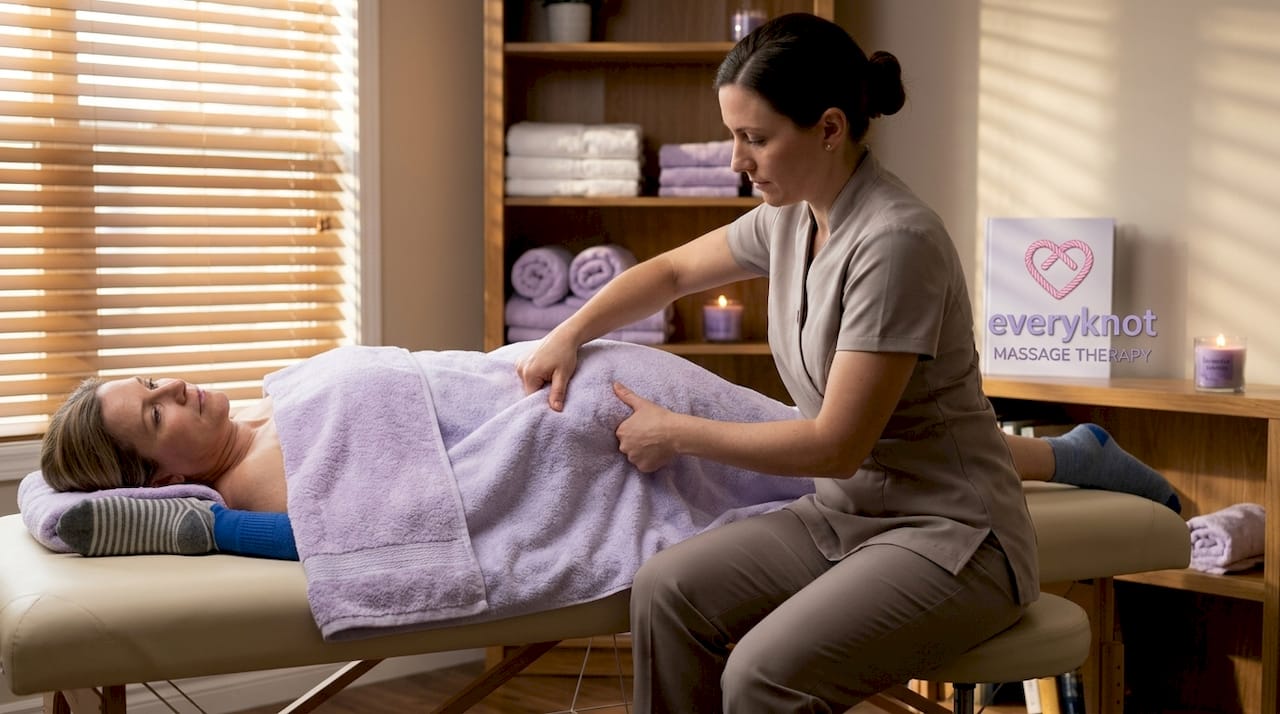
The soft tissue surrounding the sciatic nerve plays a significant role in how much pain you feel. Tight muscles in the glutes, hip flexors, and lower back can increase pressure on the nerve even when the original structural issue is minor. This is exactly where massage therapy can step in. By releasing tension in those surrounding muscles, massage reduces the mechanical load on the nerve and helps your nervous system feel safe enough to let go of protective guarding patterns.
Here's a quick look at how sciatica symptoms and massage targets connect:
| Sciatica symptom | Soft tissue contributor | Massage target area |
|---|---|---|
| Radiating leg pain | Piriformis tightness | Glutes and hip rotators |
| Lower back ache | Erector spinae tension | Lumbar and thoracic muscles |
| Sitting discomfort | Hip flexor shortening | Iliopsoas and anterior hip |
| Numbness in foot | Hamstring compression | Posterior thigh and calf |
| Morning stiffness | General fascial restriction | Full posterior chain |
Understanding why massage relieves tension at a tissue level helps set realistic expectations. Massage increases circulation, reduces inflammatory byproducts in the muscle, and activates the parasympathetic nervous system, which is your body's rest-and-repair mode.
That said, massage works best when it's part of a broader plan. As one clinical guideline notes:
"The best-supported role for massage is as a soft-tissue/manual adjunct to a broader care plan, helping reduce spasm and making exercise easier." (Medscape, 2022)
This framing matters. Massage is a supportive tool, not a standalone solution. When you go in with that understanding, you're more likely to use it in ways that actually move the needle.
What you need before starting massage for sciatica
Before you book a session or try any self-massage, there are a few things worth sorting out. Some situations genuinely require medical clearance before massage is appropriate, and skipping this step can make things worse.
When to see a doctor first:
- New or sudden onset of sciatica, especially after a fall or injury
- Loss of bladder or bowel control (this is a medical emergency)
- Severe leg weakness or sudden increase in numbness
- Acute disc herniation that hasn't been evaluated yet
- Sciatica accompanied by fever or unexplained weight loss
- Any history of cancer, blood clots, or osteoporosis in the spine
If none of those apply and your sciatica is a familiar, recurring pattern, you're likely in a good position to begin massage therapy. Here's a simple preparation checklist to help you get the most out of your sessions:
| Preparation step | Why it matters |
|---|---|
| Medical clearance (if needed) | Rules out serious causes requiring different treatment |
| Pain diary started | Helps identify patterns, triggers, and progress |
| Comfortable, loose clothing ready | Allows access to hips, glutes, and lower back |
| Therapist briefed on symptoms | Enables customized pressure and technique selection |
| Realistic schedule planned | Consistency drives results; sporadic sessions don't |
| Hydration habit established | Supports tissue flushing post-session |
| Movement plan in place | Massage works best alongside gentle activity |
Research comparing massage to self-care for persistent low back pain found that massage shows measurable short-term advantages over self-care for disability at 10 weeks. That's meaningful, but notice the phrase "short-term." It reinforces the idea that regular, intentional cycles of massage produce results, not one-off sessions when pain spikes.
Pro Tip: Keep a simple pain diary before your first session. Note your pain level each morning and evening on a scale of 1 to 10, which activities triggered flares, and how long discomfort lasted. After a few weeks of massage, this log becomes your most reliable tool for measuring whether the work is actually helping.
Scheduling matters more than most people realize. Weekly sessions for six to ten weeks tend to produce more consistent relief than monthly visits. Think of it like physical therapy: frequency during the early phase builds momentum.
Step-by-step: How to use massage for sciatica relief
With your preparation in place, here's how to approach massage for sciatica in a way that's both safe and effective.
1. Start with an honest assessment. Before your first session, take stock of where your pain lives. Is it primarily in the lower back, the glutes, or down the leg? Does it worsen with sitting, standing, or movement? This self-awareness helps you communicate clearly with your therapist and guides which techniques are most appropriate.
2. Communicate openly with your therapist. Tell your therapist exactly what you're experiencing, including which leg is affected, what movements trigger pain, and whether you've had any imaging done. A skilled therapist will use this information to adjust pressure, positioning, and technique. Don't minimize your symptoms to seem polite.
3. Choose the right technique for your stage of pain. Not all massage is the same. Here's how common techniques apply to sciatica:
- Swedish massage: Gentle, flowing strokes that increase circulation and calm the nervous system. Good for acute flares or first sessions.
- Trigger point therapy: Focused pressure on specific tight spots in the glutes and piriformis that refer pain down the leg. Effective for targeting the root of nerve irritation.
- Deep tissue massage: Slower, more sustained pressure into the deeper muscle layers. Best for chronic tightness when acute inflammation has settled.
- Assisted stretching: Passive lengthening of the hamstrings, hip flexors, and piriformis to reduce mechanical tension on the nerve.
4. Stay communicative during the session. Pain during massage is not the same as productive discomfort. A "hurts so good" sensation in a tight muscle is normal. Sharp, radiating, or electric sensations down your leg are not. Speak up immediately if anything feels wrong.
5. Rest and hydrate after each session. Your muscles need time to integrate the work. Avoid intense activity for a few hours post-session and drink water to support tissue recovery.
6. Follow up with gentle movement. As clinical guidance confirms, massage's main benefit is reducing muscle tightness and helping the body tolerate exercise-based recovery. A short walk, gentle yoga, or prescribed physical therapy exercises after your session reinforces the relief.
"Massage's main benefit is reducing muscle tightness and helping the body tolerate exercise-based recovery." (Medscape, 2022)
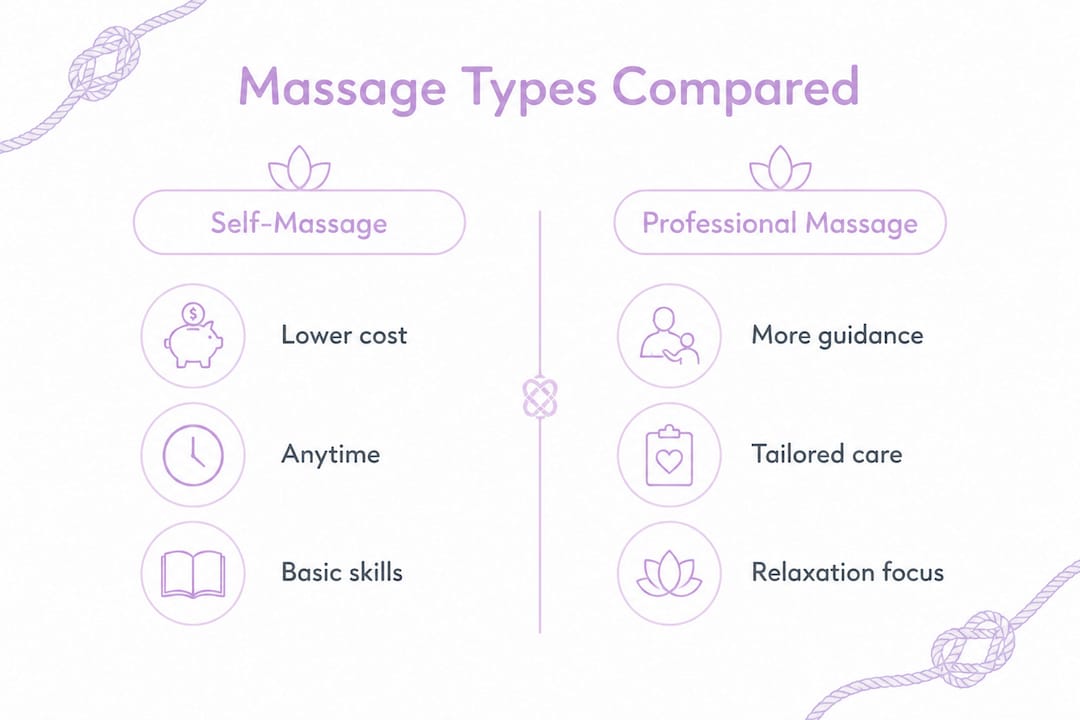
Self-massage vs. professional massage: a practical comparison
| Factor | Self-massage | Professional massage |
|---|---|---|
| Cost | Low | Moderate to higher |
| Accessibility | Anytime, anywhere | Requires scheduling |
| Customization | Limited by reach and skill | Highly tailored to your needs |
| Technique depth | Surface level | Deep tissue and targeted |
| Safety oversight | Self-monitored | Professionally guided |
| Best for | Daily maintenance | Primary treatment sessions |
Pro Tip: Never apply deep pressure or use strong massage tools directly over the spine. The vertebrae and surrounding nerves are not meant to be compressed from the outside. If you're unsure where to apply pressure, work with a professional massage in Austin before attempting self-massage at home.
How to verify results and avoid common pitfalls
Knowing whether massage is working takes more than just asking yourself if you feel better after a session. Post-session relief is real but temporary. What you're looking for are cumulative changes over time.
Simple ways to gauge improvement:
- Your morning pain level drops by two or more points on average after four to six weeks
- You can sit, stand, or walk for longer before symptoms flare
- Everyday activities like putting on shoes or getting in and out of a car feel easier
- You need less pain medication or other interventions to get through the day
- Sleep quality improves because you're not waking up from discomfort
Common pitfalls to avoid:
- Expecting an instant cure. Sciatica that has been building for months won't resolve in one or two sessions. Give your plan at least six weeks before evaluating.
- Inconsistent scheduling. Sporadic sessions break the momentum that consistent work builds. Treat your massage appointments with the same priority as physical therapy.
- Skipping movement. Massage loosens the tissue, but movement is what keeps it that way. Gentle walking, stretching, and any prescribed exercises are non-negotiable companions.
- Ignoring worsening symptoms. If your pain increases significantly after sessions or new symptoms appear, tell your therapist and follow up with your doctor.
- Treating massage as the whole plan. It's one piece. Exercise, posture awareness, ergonomic adjustments, and sometimes medical intervention are the other pieces.
Research comparing long-term outcomes found that long-term superiority of massage over self-care was not evident at one year, which supports a short-to-medium-term adjunct framing. This is not discouraging news. It simply means massage is a powerful tool for getting you through the hardest phase of recovery, not a permanent replacement for a well-rounded care plan. Working with massage for chronic pain relief means understanding this distinction from the start.
If you're three or four weeks into a consistent schedule and seeing no change at all, that's worth discussing with your therapist and your doctor. Adjusting technique, frequency, or adding complementary care may be what shifts the trajectory.
Why massage alone isn't the silver bullet for sciatica relief
Here's something that doesn't get said enough in wellness spaces: massage feels so good that it's easy to use it as a substitute for the harder work of recovery. We've seen this pattern repeatedly. Someone comes in with significant sciatica pain, gets meaningful relief after a few sessions, and then stops doing their stretches or walking because the pain has quieted down. A few weeks later, they're back to square one.
Massage is remarkable at interrupting the pain cycle. It reduces spasm, calms the nervous system, and gives you a window of comfort that makes movement possible. But that window is only useful if you walk through it. The real work happens in how you use the relief you gain.
Consider a realistic scenario: someone dealing with chronic sciatica starts weekly sessions alongside a simple daily routine of hip flexor stretches and a 20-minute walk. After six weeks, their pain has dropped significantly, they're sleeping better, and they've reduced their reliance on anti-inflammatories. The massage didn't do that alone. The combination did.
"Massage should be framed as a short-to-medium-term adjunct, not a stand-alone cure, and works best in combination with broader care." (Medscape, 2022)
The science of massage relief is clear on this point. Soft tissue work creates conditions for healing. It doesn't do the healing on its own. The best practitioners will tell you this honestly and help you build a plan that includes movement, rest, and professional support as needed. If a therapist promises to fix your sciatica with massage alone, that's a red flag.
Pro Tip: When evaluating a massage therapist for sciatica support, ask them how they incorporate movement recommendations into their work. A therapist who engages with your full recovery picture, not just the hour you're on the table, is the kind of partner who actually helps you get better.
Personalized massage for sciatica relief in Austin
Living with sciatica in Austin means you need care that works around your real life, not a generic protocol that treats everyone the same. At EveryKnot Massage, Caitlin brings a customized, intuitive approach to every session, blending deep tissue techniques, trigger point work, and assisted stretching to address the specific patterns driving your pain.
Whether you're in the middle of a flare or managing a long-standing pattern of sciatic discomfort, the goal is always the same: help you feel better, move better, and build toward lasting relief. Caitlin takes the time to understand your history, your symptoms, and your goals before every session, so the work is always intentional and targeted. If you're ready to take a consistent, supported step toward relief, book a custom massage and start building a plan that actually fits your needs.
Frequently asked questions
How often should I get massage for sciatica relief?
Massage is usually most effective in short, regular cycles, like weekly sessions for 6 to 10 weeks, then reevaluated based on progress. As clinical guidance confirms, massage offers measurable short-term benefit but works best as part of a broader care plan.
Is massage safe if I have severe leg numbness or weakness?
No. Severe or sudden leg numbness and weakness may signal a serious condition like cauda equina syndrome, which requires urgent medical attention before any massage is considered.
Can I do self-massage for sciatica at home?
Yes, gentle self-massage on the glutes, hips, and lower back is safe for most people with chronic sciatica, but avoid applying deep pressure directly over the spine and stop immediately if symptoms worsen.
Do the benefits of massage last long term for sciatica?
Research shows that long-term superiority versus self-care was not evident at one year, meaning massage works best as a short-term relief tool and a supplement to exercise and self-care, not as a permanent fix on its own.