
If you've ever dismissed massage as something purely luxurious or lightly soothing, deep tissue massage will change that picture entirely. Unlike the gentle, flowing strokes most people associate with a spa day, deep tissue massage targets deeper muscle and connective tissue to address real, persistent pain. For anyone in Austin managing chronic tension, recovering from injury, or simply feeling like their body hasn't let go in years, understanding how this therapy actually works can make all the difference in finding meaningful relief.
Table of Contents
- How deep tissue massage works: the fundamentals
- Therapeutic benefits for pain, stress, and recovery
- Risks, contraindications, and who should avoid deep tissue massage
- Deep tissue vs. Swedish massage: which is right for you?
- What most people get wrong about deep tissue massage
- Experience intuitive deep tissue care in Austin
- Frequently asked questions
Key Takeaways
| Point | Details |
|---|---|
| Targets deep pain | Deep tissue massage breaks down muscle adhesions for pain relief and improved mobility. |
| Short-term benefits | Most users see quick, noticeable relief but outcomes vary for chronic conditions. |
| Not for everyone | Those with clot disorders, osteoporosis, or recent surgery should avoid this technique. |
| Experienced therapists matter | Skill, communication, and intuition are key for safe, effective deep tissue work. |
| Holistic well-being boost | Sessions can lower stress hormones and enhance overall recovery and resilience. |
How deep tissue massage works: the fundamentals
Deep tissue massage is often misunderstood as simply a "harder" version of regular massage. That's not quite right. The defining characteristic isn't just pressure, it's intention and precision. A skilled therapist works through the outermost layers of muscle to reach the deeper connective tissue, known as fascia, and the muscle groups that sit beneath. These deeper structures are often where chronic tension lives.
Techniques include slow strokes and firm pressure designed to break down adhesions, which are areas where muscle tissue stiffens and restricts movement or causes pain. Therapists may use their hands, thumbs, knuckles, elbows, or forearms to apply focused, deliberate pressure that moves slowly through tissue layers rather than gliding across the surface. This is one of the most important distinctions from other styles.
Here's a quick comparison to help clarify:
| Feature | Deep tissue massage | Swedish massage |
|---|---|---|
| Pressure level | Firm to intense | Light to moderate |
| Primary target | Deep muscle, fascia | Surface muscle, skin |
| Speed of strokes | Slow, deliberate | Long, flowing |
| Main purpose | Pain relief, rehab | Relaxation, circulation |
| Sensation during | Intensity, some discomfort | Gentle, soothing |
| Post-session feel | Possible soreness | Relaxed, refreshed |
You may notice more intensity during a deep tissue session. That's expected. A brief period of post-massage soreness, lasting 24 to 48 hours, is also normal as your body processes the work done. This isn't damage. It's your tissue responding and readjusting. You can explore the science behind massage relief to understand exactly why this happens at a physiological level.
- Adhesions form when muscle fibers clump together due to overuse, injury, or stress
- Deep strokes physically separate and rehydrate these stuck fibers
- Pressure applied slowly allows tissues to respond without guarding or tensing up
- Focused work on specific areas yields more targeted outcomes than broad surface massage
Pro Tip: Before your session begins, tell your therapist which areas feel most tender or restricted. This lets them customize the pressure and approach to your specific needs, so the session is productive and comfortable for you.
Therapeutic benefits for pain, stress, and recovery
Now that we know how deep tissue massage works, let's look at the physical and holistic benefits that set it apart.
Deep tissue massage is used across a wide range of conditions and situations. According to Cleveland Clinic, massage aids chronic pain relief, injury recovery, and improved mobility, making it relevant for far more than general wellness. For Austin residents dealing with the physical demands of active lifestyles, desk jobs, or ongoing conditions, these benefits are especially meaningful.
Conditions that respond well to deep tissue work include:
- Chronic low back pain, one of the most common reasons people seek this type of therapy
- Fibromyalgia, where widespread muscle tenderness benefits from careful, consistent pressure
- Osteoarthritis, particularly when surrounding muscle tension worsens joint discomfort
- Repetitive strain injuries from activities like running, climbing, or extended computer use
- Sports-related injuries, including muscle pulls and overuse syndromes
- Sciatica, where nerve compression through tight muscles creates radiating pain down the leg
Research supports these applications. Manual therapy for low back pain including massage improves short-term pain and disability outcomes, which matches what many clients report after consistent sessions. The key word here is consistent. A single session can provide relief, but regular work builds on itself.
"Massage therapy works best as part of a broader approach to managing pain, not as a stand-alone fix. It supports the body's own recovery processes rather than replacing them."
Physiologically, deep tissue massage improves blood flow to affected areas, which delivers oxygen and nutrients while flushing out metabolic waste products that accumulate in tight tissue. It also reduces local inflammation, enhances range of motion, and helps regulate the nervous system. That last point matters more than people realize. Chronic pain keeps your nervous system in a heightened state. Consistent, skilled touch can help it ease back into a calmer baseline, letting your muscles release more completely over time.

The holistic benefits extend beyond muscle. Deep tissue work reduces cortisol, supports recovery and aids lymphatic drainage, which supports your immune system and helps reduce overall inflammation in the body. For those managing stress-related tension alongside physical pain, this dual effect is genuinely valuable.
To get the most from each session, follow these steps:
- Hydrate well before your appointment. Hydrated tissue is more pliable and responds better to pressure.
- Arrive a few minutes early to settle in and share any updates about your pain levels or new symptoms.
- Communicate throughout the session. Tell your therapist if pressure needs to increase or decrease.
- Drink water afterward to support the flushing of metabolic byproducts released during the massage.
- Avoid intense exercise for 24 hours post-session to let your tissue rest and integrate the work.
- Stretch gently the day after your session to extend the benefit and maintain the increased range of motion.
If you're managing massage for sciatica pain, following these steps is especially important since the nerve tissue involved benefits greatly from consistent aftercare.
Risks, contraindications, and who should avoid deep tissue massage
While the benefits are compelling, deep tissue massage isn't for everyone. Here's how to stay safe and informed.
Deep tissue work involves real pressure on real tissue. For most people, that's safe and beneficial. But certain conditions make this type of massage inappropriate or potentially harmful. Knowing your own health picture before booking a session protects you.
Conditions where deep tissue massage should be avoided or approached with caution include:
- Deep vein thrombosis (DVT) or blood clots: Pressure over clots can dislodge them, creating serious risk
- Severe osteoporosis: Deep pressure on fragile bones can cause fractures
- Acute injuries: Fresh sprains, strains, or fractures need rest, not manipulation
- Active infections, open wounds, or skin conditions in the area to be worked
- Fever or illness: Massage increases circulation, which can worsen systemic illness
- Cancer, particularly in areas near tumors or affected lymph nodes, without oncologist clearance
- Pregnancy, unless you're working with a therapist trained in prenatal massage and your doctor has given clearance
- Recent surgery in the targeted area
According to Mayo Clinic, contraindications include clotting disorders, osteoporosis, pregnancy without clearance, and recent surgery, among others. These aren't arbitrary cautions. They're grounded in how pressure affects vulnerable tissue.
Possible side effects after a legitimate, safe session can include temporary soreness, mild bruising in sensitive individuals, and fatigue. These typically resolve within one to two days. If you experience severe pain, numbness, or bruising that doesn't improve, contact your healthcare provider.
Working with qualified massage therapists in Austin who take a thorough health history before every session helps you stay on the right side of these considerations. A good therapist will ask the right questions and will never pressure you into a style of work that doesn't suit your current health status.
Pro Tip: If you're ever unsure whether deep tissue massage is appropriate for your condition, ask your doctor first. Then bring that information to your first session so your therapist can customize their approach with full context.
Deep tissue vs. Swedish massage: which is right for you?
Choosing the right kind of massage can maximize your results. Let's compare your main options.
The difference between deep tissue and Swedish massage goes beyond pressure level. Each serves a distinct purpose and produces a different kind of outcome. Swedish massage is gentler and best suited for relaxation, stress reduction, and general circulation, while deep tissue uses focused, intense techniques to address structural and pain-related issues.
| Factor | Deep tissue | Swedish |
|---|---|---|
| Best for | Chronic pain, injury, rehab | Stress, general relaxation |
| Pressure | Firm, targeted | Light to moderate |
| Technique | Cross-fiber friction, deep strokes | Effleurage, petrissage |
| Sensation | Intense, occasionally uncomfortable | Gentle, calming |
| Session goal | Structural change, pain relief | Nervous system reset |
| Who benefits most | Athletes, chronic pain sufferers | Stress, anxiety, first-timers |
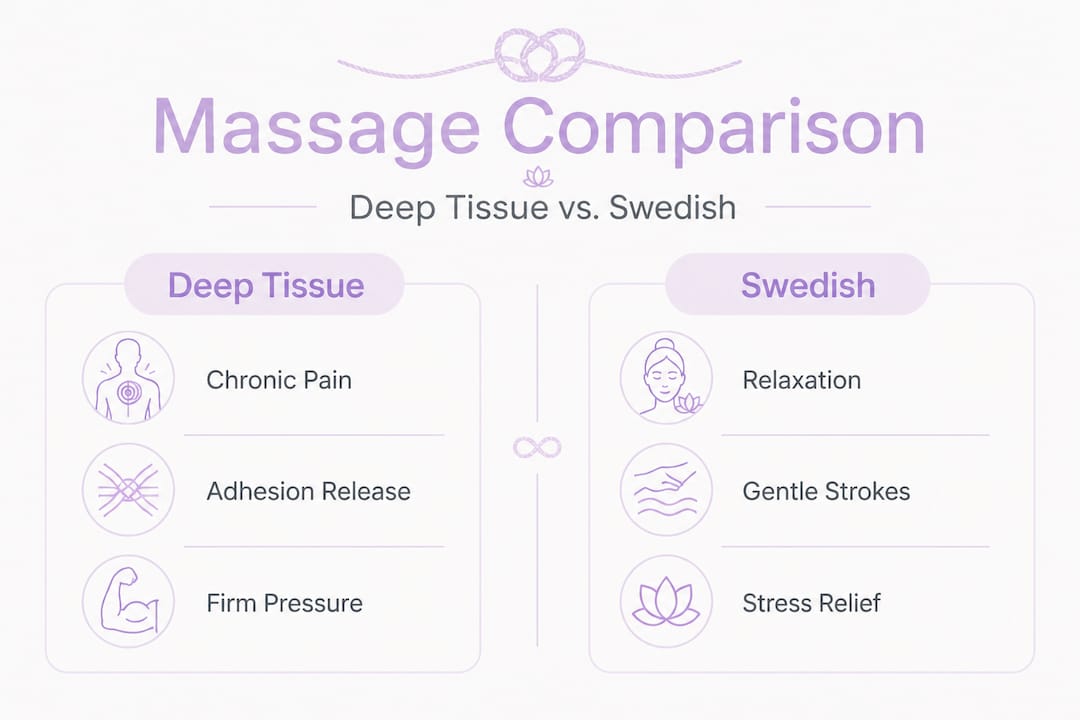
Research shows that deep tissue outperforms Swedish for pain and chronic issues, though individual experiences vary and therapist skill plays a critical role in outcomes. This matters because the same technique applied with different levels of care and attention produces very different results.
Here's a simple way to choose:
- If your primary concern is pain, restricted movement, or recovery, deep tissue is likely the better fit
- If you're managing stress, anxiety, or general tension without structural issues, Swedish provides wonderful results
- If you're new to massage or unsure about pressure tolerance, starting with Swedish and transitioning over time is a sensible approach
- If you want the best of both, ask about integrated sessions that blend modalities based on what your body needs that day
Many experienced therapists blend techniques intuitively, reading your tissue in real time. A session might begin with lighter Swedish-style work to warm the tissue and calm the nervous system, then shift into deeper work once your body has relaxed enough to receive it. This kind of integrated approach often leads to lasting relief with massage therapy, especially for people who have been dealing with pain for a long time.
What most people get wrong about deep tissue massage
Now that you know the options, let's get real about what actually matters in deep tissue massage and where popular thinking misses the mark.
The most common misconception is this: harder equals better. Many people believe that if a massage isn't painful, it isn't working. This is simply not true, and it's worth saying clearly. Therapist skill is critical, and user experiences vary enormously because the quality of technique matters far more than the amount of force applied.
Pressing hard into a muscle that's guarding will cause it to tighten further. A skilled therapist knows how to ease tissue open, using sustained pressure and thoughtful positioning to invite release rather than force it. Pain is not a measure of progress. Productive intensity, meaning that "good hurt" sensation where you feel a release happening, is different from sharp or alarming pain.
Another overlooked truth is that your body changes from session to session. A one-size-fits-all approach, where every session follows the same routine regardless of what's happening in your body that day, often produces mediocre results. Intuitive, attentive care, which is a hallmark of practitioners in Austin's holistic wellness community, means reading your tissue, listening to your feedback, and adjusting in real time. That responsiveness is what separates a truly effective session from a generic one.
Aftercare is also underestimated. What you do in the 24 to 48 hours after a session significantly affects how much benefit you carry forward. Rest, hydration, gentle movement, and avoiding re-aggravating the treated area all extend the results of your session meaningfully.
When evaluating therapists, look for credentials across multiple modalities, not just a single certification. Ask about their experience with your specific condition. Notice whether they take a thorough health history and ask questions about your goals. An experienced Austin massage therapist will treat you as a whole person, not just a set of tight muscles.
Experience intuitive deep tissue care in Austin
Ready to put what you've learned into practice? Here's how to access expert care locally.
Finding the right therapist can feel overwhelming, especially when you're already dealing with pain or stress. You deserve someone who listens, adapts, and brings genuine skill to every session.

At EveryKnot Massage in Austin, Caitlin brings certification across multiple modalities, including deep tissue, chronic pain work, and prenatal massage, alongside an intuitive approach that honors what your body is communicating in each session. New clients can expect a thorough intake process, clear communication throughout their session, and a calming environment designed to help your nervous system feel safe enough to let go. Whether you're managing sciatica, recovering from injury, or simply carrying years of accumulated tension, personalized deep tissue care is available to you right here in Austin.
Frequently asked questions
How painful is a deep tissue massage supposed to be?
Deep tissue massage may feel intense in areas of tension, but it should never be unbearably painful. Communicate any sharp or alarming discomfort immediately so your therapist can adjust technique and pressure to match your tolerance.
Who should not get deep tissue massage?
You should avoid deep tissue massage if you have blood clots, severe osteoporosis, recent surgery, active infections, or are pregnant without your doctor's clearance, as these contraindications present real risk when pressure is applied.
How long does pain relief from deep tissue massage last?
Relief varies by individual and condition. Some people feel improvement for a few hours, while others notice lasting changes over several days, and relief duration varies widely depending on the chronicity of the issue and how consistently they receive treatment.
Can deep tissue massage help with stress as well as pain?
Yes. Deep tissue massage reduces cortisol and supports overall well-being, making it effective for both stress-related tension and chronic physical pain, often addressing both in a single session.
Recommended
- EveryKnot Massage | Professional Massage Therapy in Austin, TX
- Massage therapy benefits: Relieve pain and stress effectively
- Why massage relieves tension: Science, benefits, and real relief
- Discover Why Massage Therapy Matters for Lasting Relief
- Non-invasive treatments: Evidence and holistic benefits