
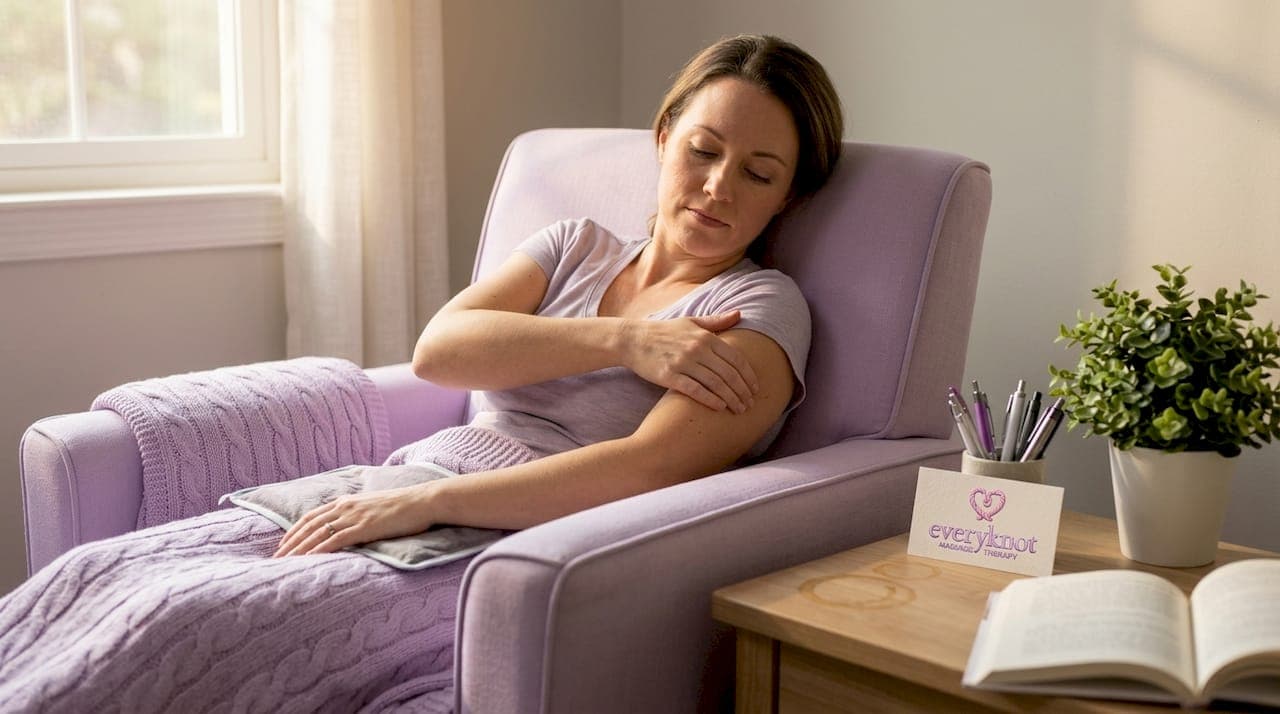
Muscle tension has a way of quietly taking over your day. That familiar tightness in your shoulders, the ache along your lower back, the stiffness that greets you every morning. If you are looking for real ways to ease muscle tension safely and effectively, you are in the right place. This article walks you through the causes behind what you are feeling, the tools you actually need, and step-by-step techniques that work. No overcomplicated routines, no equipment you do not have. Just practical, honest guidance that respects where your body is right now.
Table of Contents
- Key takeaways
- How to ease muscle tension: causes and what to watch for
- Setting yourself up for success
- Step-by-step techniques for at-home muscle relief
- Common mistakes that make tension worse
- Daily habits that reduce future tension
- My honest take on what actually works
- When professional massage therapy is worth it
- FAQ
Key takeaways
| Point | Details |
|---|---|
| Understand your tension first | Knowing whether your tension is acute or chronic helps you choose the right relief method. |
| Sequence your techniques | Massage or foam rolling before stretching yields better results than stretching cold muscles. |
| Use heat and cold with purpose | Specific dosing like 11 to 15 minutes of cold exposure makes a measurable difference in recovery. |
| Avoid pushing through pain | Tension relief should feel like release, not more discomfort. Modify any technique that causes pain. |
| Daily habits matter most | Hydration, sleep, posture, and movement breaks reduce muscle tension before it builds. |
How to ease muscle tension: causes and what to watch for
Muscle tension happens when your muscle fibers stay partially contracted instead of fully releasing. That contraction can be triggered by physical stress like poor posture at a desk, repetitive movement, or a recent injury. It can also be triggered by emotional stress. Your nervous system responds to anxiety and overwhelm the same way it responds to physical threat: by bracing your muscles. That is why people who are under pressure at work often carry it in their neck and shoulders without realizing it.
There is an important distinction between acute tension and chronic tension. Acute tension shows up after a hard workout, a long drive, or a stressful afternoon. It tends to resolve within a day or two with basic care. Chronic tension is different. It lingers, returns in the same spots, and often comes with a low-grade ache that you have learned to live around. Chronic tension in particular benefits from a consistent, layered approach rather than a single fix.
Common signs that your muscle tension needs attention include:
- Stiffness that does not improve with gentle movement
- A dull, constant ache in the neck, shoulders, or lower back
- Headaches that seem to originate at the base of the skull
- Reduced range of motion in a joint or muscle group
- Muscles that feel noticeably harder or "knotted" to the touch
Pro Tip: If your muscle tension is accompanied by numbness, tingling, sharp shooting pain, or sudden weakness, stop any self-treatment and consult a healthcare provider. These symptoms may signal nerve involvement or a more serious underlying condition.
Self-care is appropriate for most everyday tension. But some situations call for professional support, including pain that has persisted for more than a few weeks, tension following a recent injury, or discomfort that worsens with movement.
Setting yourself up for success
Before you start any technique, a few simple preparations will make your efforts more effective and safer.
Tools worth having on hand:
- A foam roller (medium density works for most people)
- A tennis ball or lacrosse ball for targeted pressure
- A heat pack or warm towel
- A cold pack or bag of frozen peas wrapped in a thin cloth
- A yoga mat or soft rug for floor work
| Tool | Best use |
|---|---|
| Foam roller | Large muscle groups like quads, hamstrings, upper back |
| Tennis ball | Smaller areas like the base of the skull, shoulder blade, foot arch |
| Heat pack | Relaxing tight muscles before movement or stretching |
| Cold pack | Reducing inflammation and soreness after activity |
Your environment matters too. Find a quiet space where you will not be interrupted. Dim the lights if you can. Even five minutes of focused, intentional practice in a calm space produces better results than twenty minutes of rushed effort in front of a screen.
Pro Tip: Warm up the area before you begin. A warm shower or a heat pack applied for 10 minutes softens the tissue and makes self-massage and stretching significantly more comfortable and effective.
The mindset piece often gets skipped, and it should not. Pay attention to how your body responds at each step. Tension relief is not about forcing your muscles to release. It is about creating the conditions where your nervous system feels safe enough to let go.
Step-by-step techniques for at-home muscle relief
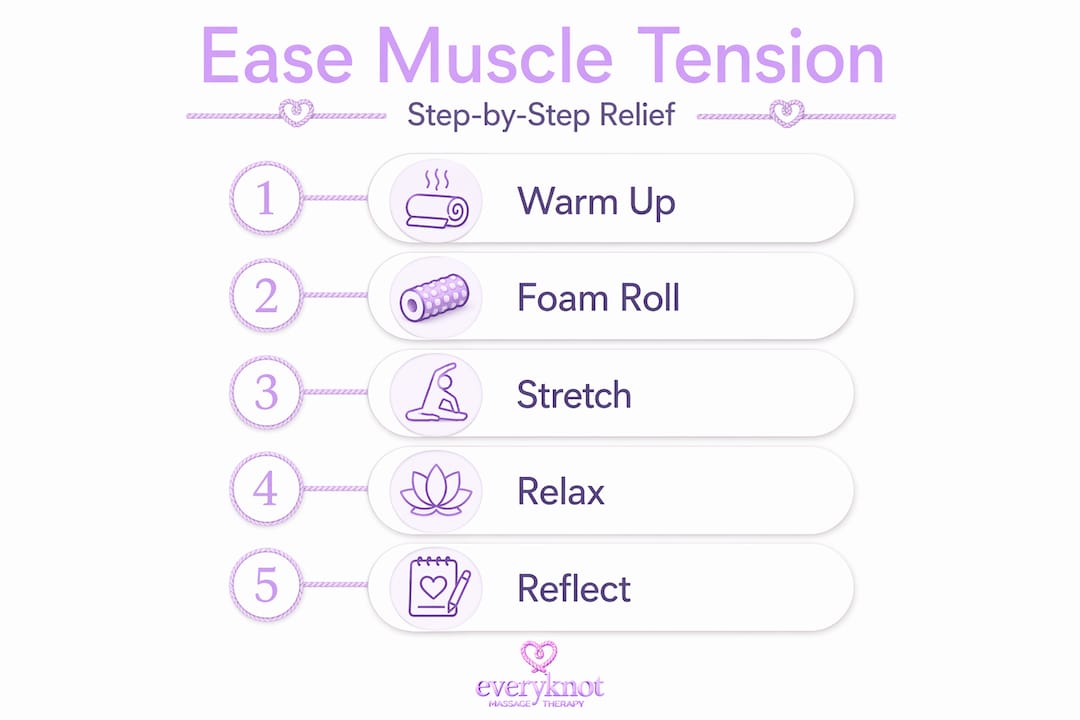
This is where the practical work begins. The techniques below are organized in the order you should use them for the best results, because proper sequencing matters. Massage or foam rolling first relaxes muscle fibers and reduces resistance, so your stretching actually reaches the tissue you are targeting.
Foam rolling and self-massage
- Position the foam roller under the muscle group you want to address (upper back, calves, hamstrings, or glutes are good starting points).
- Use your bodyweight to apply moderate pressure. Roll slowly, about one inch per second.
- When you find a tender spot, pause there for 20 to 30 seconds rather than rolling back and forth quickly.
- Breathe steadily. Exhale as you apply pressure.
- Spend 10 to 15 minutes total before moving on to stretching.
For smaller areas like the base of your skull or the muscles around your shoulder blade, a tennis ball works better than a foam roller. Place it between your body and the wall or floor, and use small side-to-side motions rather than direct rolling. Never roll directly over your spine. The pressure belongs on the muscles alongside the bone, not on the vertebrae themselves.
Stretching after you roll
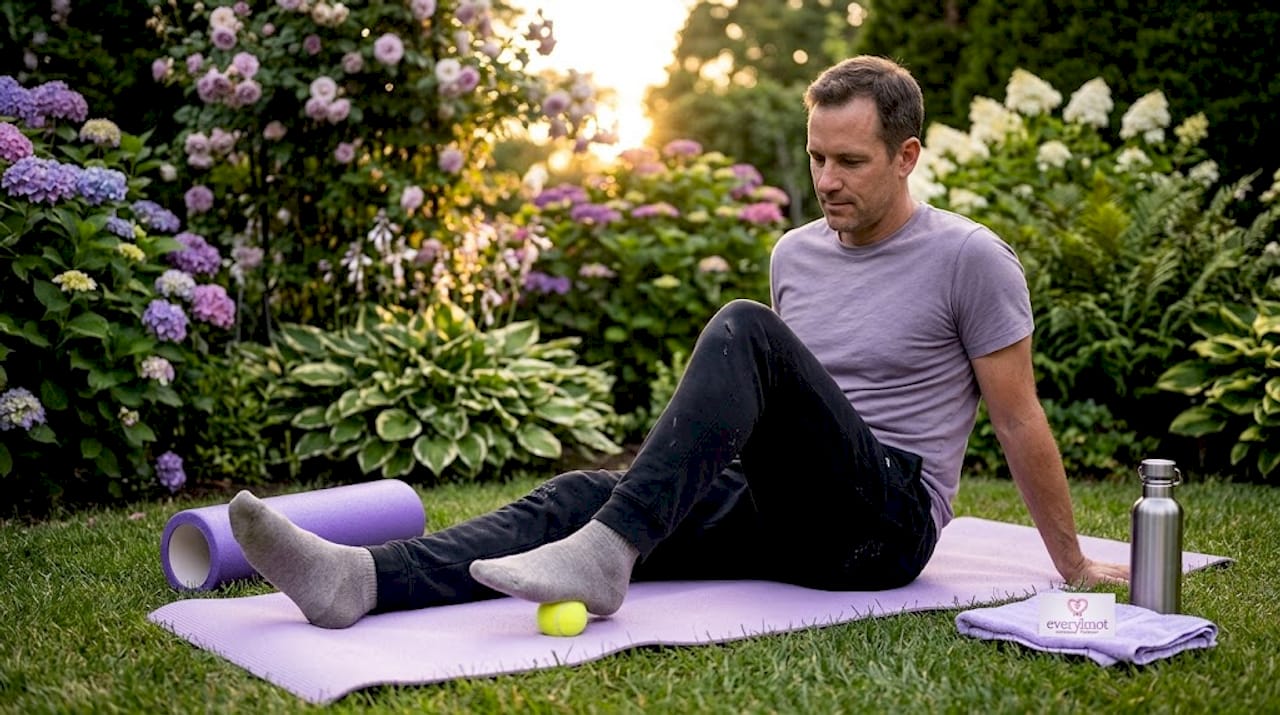
Once your muscles are warmed up and softened from rolling, stretching becomes much more productive. Hold each stretch for 30 to 60 seconds. Do not bounce. Breathe through it. A static stretch held with steady breath signals your nervous system to release the contraction instead of protecting against it.
Target the areas that carry your tension most often. For most adults, that is the neck flexors, chest and shoulders, hip flexors, and hamstrings. If you experience lower back tension regularly, the best stretches for muscle tension in that area typically include a supine knee-to-chest stretch, a seated spinal twist, and a supported child's pose.
Progressive muscle relaxation (PMR)
PMR is one of the most evidence-supported techniques for relief for muscle tightness. It works on a simple principle: you cannot be deeply tense and deeply relaxed at the same time. By intentionally tensing and releasing each muscle group, you train your body to recognize and let go of held tension.
PMR works by tensing then releasing muscle groups systematically, starting at the feet and moving upward. Here is how to do it:
- Lie down comfortably on your back. Close your eyes.
- Begin with your feet. Curl your toes tightly and hold for a few seconds.
- Exhale slowly and release. Notice the difference between the tension and the release.
- Move to your calves, then thighs, then abdomen, hands, forearms, shoulders, neck, and face.
- Follow a feet-to-head sequence, tensing without causing pain and then releasing with a slow breath out.
The key detail most people miss: the hold phase. The point is not just to tense and release. It is to pay attention to the sensation of letting go. Over time, PMR builds awareness so you can identify tension earlier and reach relaxation more quickly. One important note: if tensing a particular area causes pain or cramping, skip it. Avoid tensing if it causes pain or worsens an existing injury.
Heat and cold therapy
| Situation | Recommended approach |
|---|---|
| Muscle stiffness before activity | Heat pack for 10 to 15 minutes |
| Post-workout soreness | Cold pack or cool water immersion |
| Chronic low-grade ache | Heat to increase blood flow and relax tissue |
| Acute inflammation (first 48 hours after injury) | Cold only to reduce swelling |
Research shows that cold-water immersion at 11 to 15°C for about 11 to 15 minutes produces measurable reductions in post-exercise muscle tension. You do not need a specialized tub. A cold shower held on the affected area for that duration achieves a similar effect. For heat, a moist heat pack tends to penetrate tissue more effectively than a dry heating pad.
Common mistakes that make tension worse
Even with the best intentions, certain habits slow down your progress or create new problems. Recognizing them early saves you a lot of frustration.
- Overstretching before the muscle is warm. Pulling a cold, contracted muscle into a deep stretch often triggers a protective reflex that makes the tension worse, not better.
- Applying too much pressure during self-massage. More pressure does not mean faster relief. Aggressive pressure on already irritated tissue causes bruising and increased soreness.
- Skipping the breathing. Holding your breath while applying pressure or stretching keeps your nervous system in a guarded state. The exhale is not optional. It is part of the technique.
- Being inconsistent. One good session does not undo months of accumulated tension. Regular, shorter sessions outperform occasional intense ones every time.
- Ignoring the signal. If a technique consistently produces sharp pain in a specific spot, that is your body asking for professional evaluation, not more pressure.
When in doubt, do less and do it more often. A gentle, consistent approach to ways to reduce muscle stress will take you further than aggressive, infrequent sessions.
For people managing chronic pain conditions, injuries, or post-surgical recovery, some of these techniques need modification. Working with a therapist who understands your specific history, like the injury-adapted approach used at Everyknotmassage, helps you get results without setting yourself back.
Daily habits that reduce future tension
The best long-term strategy is making your body less prone to tension accumulating in the first place. These habits are not dramatic. They are consistent.
- Adjust your posture and workspace. Your monitor should be at eye level, your chair should support your lower back, and your shoulders should not be reaching forward toward your keyboard. Small corrections create a big change over time.
- Take movement breaks every 45 to 60 minutes. Sustained static posture, even good posture, creates compression and tension. Stand, walk, or do a few shoulder rolls every hour.
- Prioritize sleep. Your muscles repair and release during deep sleep. Getting 7 or more hours of quality sleep each night makes a direct difference in how your body feels the next morning.
- Stay hydrated. Muscle tissue that is dehydrated is more prone to cramping and stiffness. Aim for the recommended daily intake of around 104 oz for men and 73 oz for women.
- Manage stress actively. Breathwork, walking, time outdoors, and short mindfulness practices all lower the baseline level of muscle guarding your nervous system holds throughout the day.
My honest take on what actually works
I have worked with many people who come in after months of trying to self-manage tension that just kept returning. And almost every time, I notice the same pattern: they were doing the right things, but out of order, without enough consistency, or while ignoring signals their body was clearly sending.
What I have learned from working with clients dealing with chronic tension is that the sequence matters more than most people think. Stretching before you soften the tissue is one of the most common mistakes I see, and it is an easy fix once you know. Foam roll or use a ball first. Then stretch. Then breathe. You will feel the difference the first time you do it in that order.
The other thing I feel strongly about: do not white-knuckle through discomfort in the name of progress. Tension release should feel like a slow exhale, not a grind. If a technique leaves you feeling worse the next day, adjust the pressure, shorten the duration, or switch methods. Your body is communicating. Listening to it is not weakness. It is the actual skill.
And finally, some tension needs more than you can give yourself at home. That is not a failure. Persistent tension often has layers to it, physical, emotional, postural, that respond best to skilled, intentional hands and a therapeutic relationship built over time. Knowing when to reach for that kind of support is part of taking care of yourself well.
— Caitlin
When professional massage therapy is worth it
Self-care techniques are genuinely powerful. But for persistent tension that keeps coming back, or tension layered with chronic pain, anxiety, or a past injury, professional massage therapy adds something you cannot replicate on your own.
At Everyknotmassage in Austin, TX, Caitlin combines deep tissue work, energy work, and intuitive presence to address tension at its source rather than just its surface. Sessions are customized to where you are that day, whether you are recovering from an injury, managing stress, or simply trying to release what your body has been holding for too long. If your tension keeps returning despite your best at-home efforts, book a session and experience what intentional, personalized care can do. You deserve more than temporary relief.
FAQ
What causes muscle tension in the body?
Muscle tension is caused by physical stress like poor posture, repetitive movement, and injury, as well as emotional stress, which triggers the nervous system to keep muscles in a braced state. Both acute and chronic tension are common in adults who lead sedentary or high-stress lives.
How do you release muscle tension at home?
The most effective approach is to foam roll or self-massage the affected area first, then follow with slow, held stretches and progressive muscle relaxation. Applying heat before movement and cold after exertion also reduces muscle soreness and stiffness noticeably.
How long should you hold a stretch to relieve muscle tightness?
Hold each stretch for 30 to 60 seconds with steady breathing. Shorter holds do not give the nervous system enough time to release the protective contraction.
When should I see a professional for muscle tension?
If tension persists for more than two to three weeks, worsens with movement, or comes with numbness, tingling, or sharp pain, it is worth consulting a healthcare provider or licensed massage therapist rather than continuing to self-treat.
Does progressive muscle relaxation really reduce muscle tension?
Yes. PMR has strong research backing for reducing both physical muscle tension and anxiety-related tension. Consistent practice builds body awareness and helps you reach a relaxed state more quickly over time.