
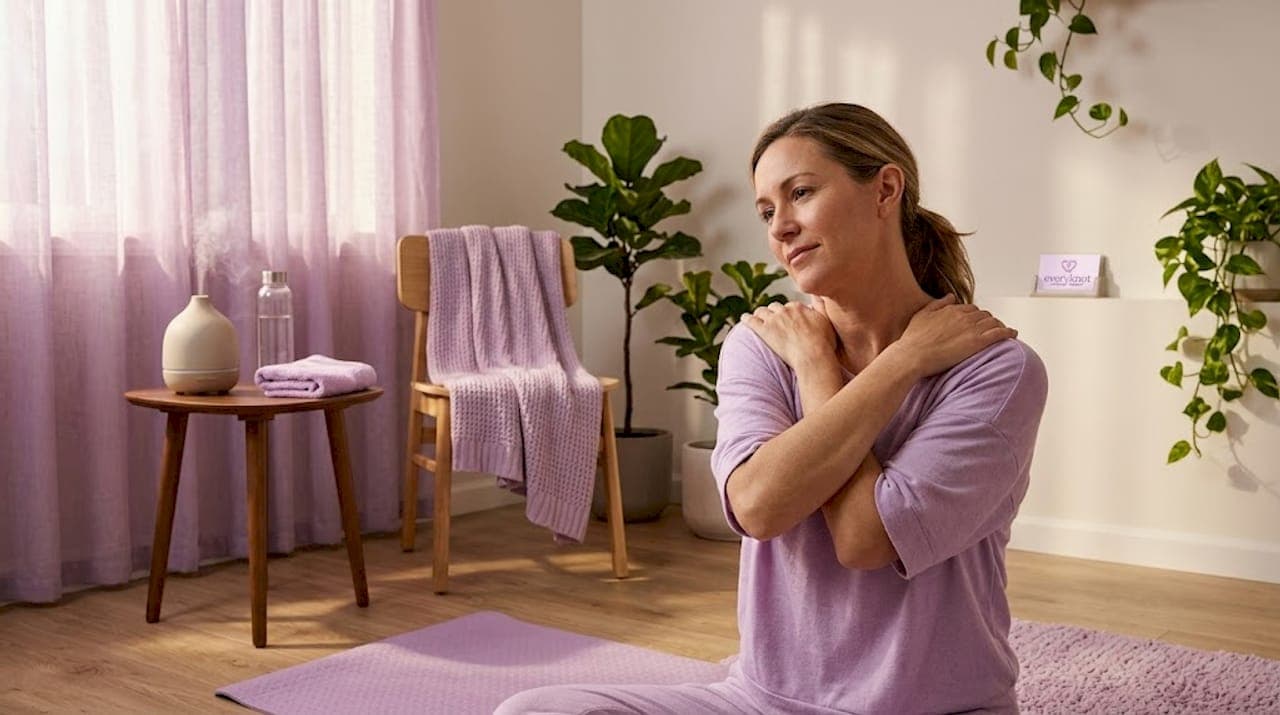
You're exhausted, your shoulders feel like concrete, and the tension headache that started Monday is still with you on Friday. You've tried the usual approaches, but nothing seems to stick. The truth is, stress relief through massage works best when it's intentional and matched to your specific needs. Therapeutic massage has no single standard routine; every session should be shaped around your health goals. This guide walks you through the entire process, from setup to specialized techniques, so you can get results that actually last.
Table of Contents
- Understanding stress reduction massage: Why personalization matters
- What you need for effective massage: Tools, environment, and mindset
- Step-by-step stress reduction massage routine
- Specialized techniques: Head, jaw, and lymphatic approaches
- Common mistakes and how to troubleshoot your routine
- How to know it's working: Signs of relaxation and next steps
- What most guides miss: Why the 'right' stress reduction massage evolves with you
- Try professional stress reduction massage for deeper relief
- Frequently asked questions
Key Takeaways
| Point | Details |
|---|---|
| Personalization is key | Tailor your massage approach to your specific stress or pain for better results. |
| Right environment matters | Calm lighting, gentle music, and a relaxing atmosphere amplify massage benefits. |
| Techniques must fit the goal | Choose gentle or deeper techniques based on whether you seek relaxation, pain relief, or targeted support. |
| Monitor your progress | Look for relaxed muscles, restful sleep, and calmer mood as signs your routine is working. |
| Professional care enhances results | Expert massage therapists adjust each session for the ultimate personalized stress relief experience. |
Understanding stress reduction massage: Why personalization matters
Generic massage advice often misses the point. A routine designed for someone recovering from a sports injury looks very different from one meant to calm a nervous system wound tight from chronic work stress. The starting point for any effective session is identifying exactly what you're dealing with: Is it muscle tension localized in your neck and upper back? Disrupted sleep? General anxiety that keeps your body in a constant state of alert?
The massage therapy benefits you experience depend significantly on matching the session to your specific concern. As therapists tailor sessions to individual health needs and goals, the right approach for you won't be the same as for someone else, even if your symptoms look similar on the surface.
Here's a quick comparison to illustrate why this matters:
| Session goal | Technique focus | Pressure level | Session length |
|---|---|---|---|
| General relaxation | Long, sweeping strokes | Light to medium | 30 to 60 minutes |
| Chronic muscle tension | Deep kneading, trigger point work | Medium to firm | 60 to 90 minutes |
| Stress with poor sleep | Relaxation-oriented strokes, slow pacing | Light to medium | 45 to 60 minutes |
| Localized pain or injury | Targeted focused release, myofascial work | Varies by area | 30 to 60 minutes |
Key personalization factors to consider before you start:
- Your primary complaint: Is it physical tension, emotional stress, or both?
- Session scope: Whole-body relaxation or targeted area focus?
- Environment sensitivity: Some people need near-silence; others benefit from soft ambient sound.
- Time available: Even 20 minutes of focused, intentional work beats an unfocused hour.
Understanding why massage relieves tension at a physical level also helps you make smarter choices about technique. When you're informed, you become a more active participant in your own relief.
What you need for effective massage: Tools, environment, and mindset
Preparation is not optional. A well-prepared space makes it significantly easier for your nervous system to shift into a relaxed state, and that shift is where the real relief begins. Starting with relaxation-oriented conditions like low lighting, soft music, and a comfortable surface creates the foundation for effective technique.
Here's what to gather before your session:
| Supply | Why it matters | Recommended option |
|---|---|---|
| Massage oil or lotion | Reduces friction, supports smooth strokes | Jojoba, sweet almond, or unscented lotion |
| Supportive pillow or bolster | Keeps the body in a neutral, comfortable position | Body pillow or rolled towel under knees |
| Soft music or white noise | Down-regulates the nervous system | Nature sounds, low-tempo ambient music |
| Warm room or blanket | Warmth relaxes muscles before touch even begins | Room at 72 to 76 degrees, warm blanket nearby |
| Dimmed or warm lighting | Reduces visual stimulation and cortisol response | Salt lamp, candles, or dimmer switch |
Beyond the physical setup, your mindset going into a session makes a real difference. If you're mentally rehearsing your to-do list while getting a massage, your body will have a harder time letting go. A few slow, intentional breaths before starting can begin shifting your physiology before the first stroke.
Check out this massage therapy workflow guide for a more detailed look at how session structure supports outcomes.
Essential supplies checklist:
- Massage oil or unscented lotion
- Warm, quiet, softly lit room
- Comfortable surface (massage table, firm bed, or mat)
- Supportive pillow for neck, knees, or ankles
- Optional: eye pillow, light blanket, essential oil diffuser
Pro Tip: Warm your hands (or the practitioner's hands) before starting. Cold hands on tense muscles can trigger a protective tightening response, working against your relaxation goals right from the start.
Step-by-step stress reduction massage routine
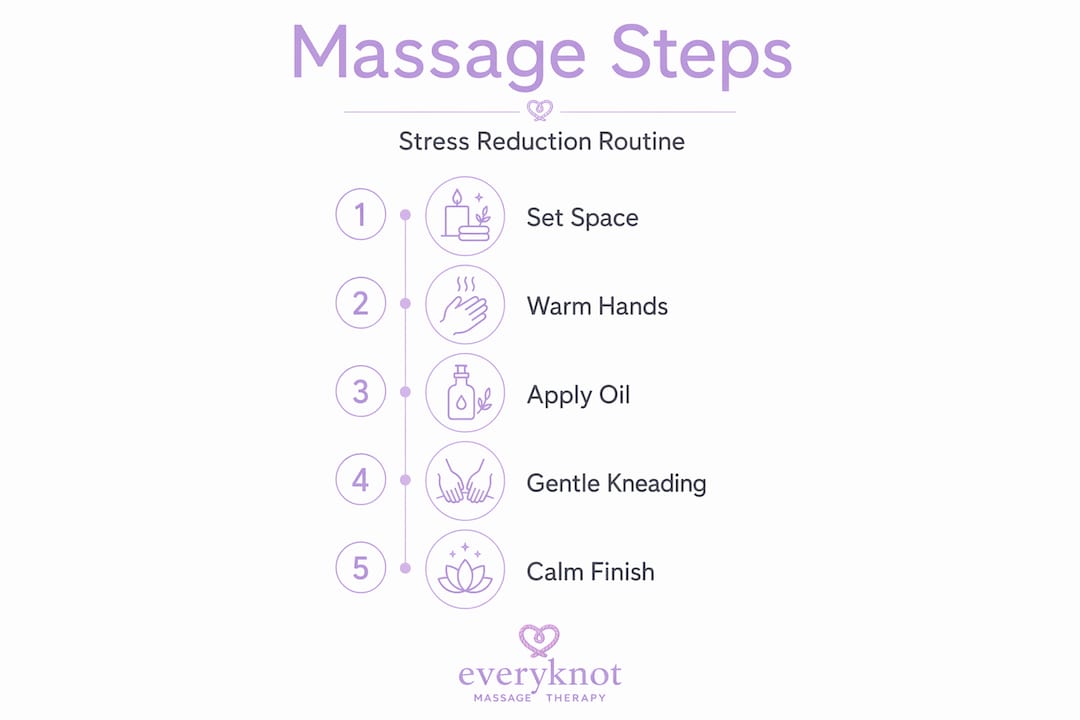
With your environment set and supplies ready, it's time to move through the actual session. This routine is designed to be adaptable, whether you're guiding a partner or learning techniques for self-massage.
-
Begin with grounding breath work (2 to 3 minutes). Before any touch, take three to five slow, full breaths. Inhale for four counts, hold for two, exhale for six. This activates the parasympathetic nervous system and signals the body that it's safe to release.
-
Apply effleurage strokes to warm the tissue (5 minutes). Long, slow, gliding strokes along the back, shoulders, or legs increase circulation and prepare muscles for deeper work. Apply light to medium pressure and move in the direction of the heart.
-
Move into petrissage kneading for tension areas (10 to 15 minutes). Use both hands to gently lift and roll muscle tissue, focusing on areas of notable tightness. The shoulders, upper back, neck base, and calves are common tension zones. Adjust pressure based on comfort and real-time feedback.
-
Add targeted work for specific concerns (5 to 10 minutes). If there's localized pain or chronic tightness, this is where you slow down and apply restorative massage techniques like sustained pressure on trigger points or gentle myofascial stretching.
-
Return to effleurage to close out the work (3 to 5 minutes). Finishing with lighter strokes signals the nervous system that the work is complete and supports integration of the physical changes.
-
Allow a rest period (5 to 10 minutes). Don't rush off the table or couch. Lying still after the session lets the nervous system fully settle. This rest period is often where the deepest sense of relaxation takes hold.
Research published in a randomized controlled trial on poor sleepers found that relaxation-oriented massage produced significant improvements in self-reported relaxation and showed measurable EEG changes associated with reduced pre-sleep arousal. In other words, a well-structured massage can shift how your brain functions before sleep.
"Not all massage techniques produce the same effect. Evidence in fibromyalgia shows myofascial release has large effects on pain and medium effects on anxiety and depression, while Swedish massage may not improve outcomes for the same condition."
This is a powerful reminder: technique matters. Your stress-reduction routine should match your specific needs, not default to whatever is easiest.
Pro Tip: When kneading tense areas, check in verbally or mentally every few minutes. If the pressure feels too intense, your muscles will guard rather than release. Slightly lighter pressure with longer duration almost always outperforms aggressive work on wound-up tissue.
How massage supports wellness long-term becomes clearer when you approach each session as a practice rather than a one-time fix.
Specialized techniques: Head, jaw, and lymphatic approaches
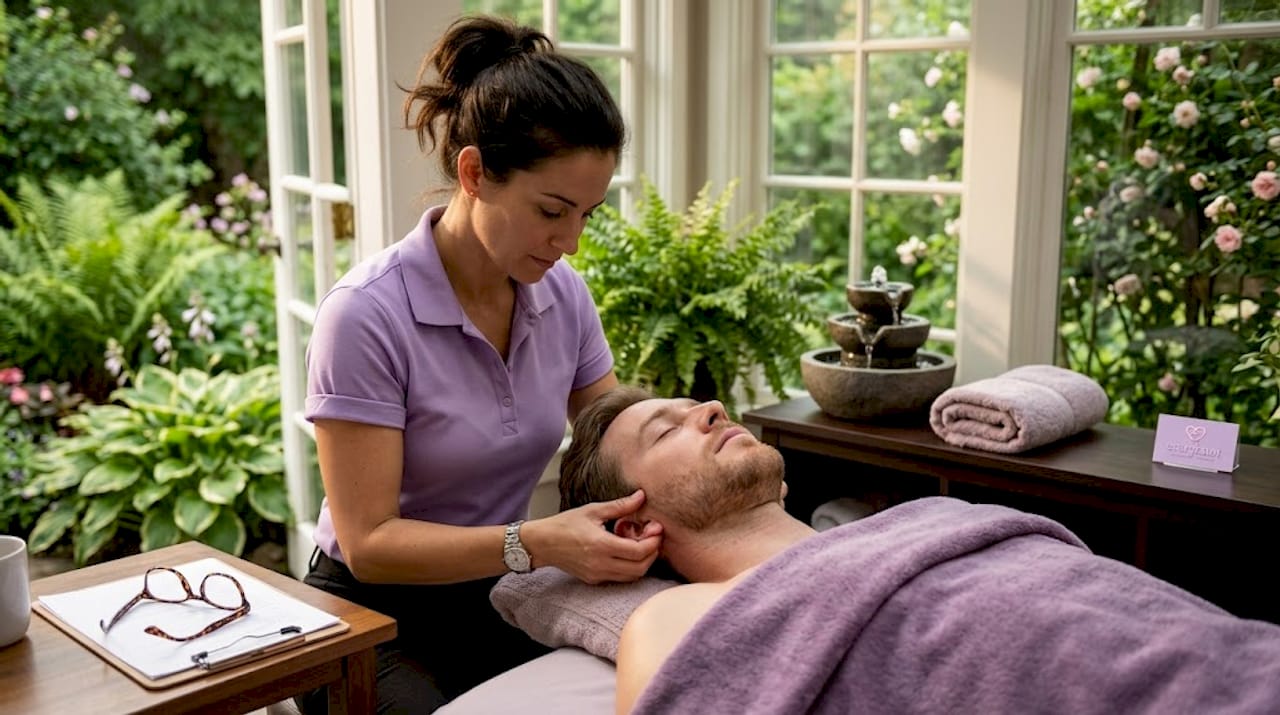
Some of the most stress-loaded areas in the body require a lighter, more specific touch. The jaw, temples, and lymphatic pathways don't respond well to the firm kneading used on larger muscle groups. Here, precision and gentleness are the tools.
TMJ and jaw tension massage:
- Locate the masseter muscle just in front of your earlobes, where your jaw meets your cheekbones.
- Using your fingertips, apply circular kneading motions to this area with light to medium pressure.
- Work in small circles for 30 to 60 seconds, then open and close your jaw slowly to release.
- Move up toward the temples and repeat with very light pressure.
- Finish by gently pressing along the jaw line from ear to chin.
Lymphatic drainage self-massage:
- Begin at the sides of the neck, just below the ear, and use very light, gentle pressure with the flat of your fingers.
- Stroke downward toward the collarbone in slow, rhythmic movements.
- Pair each stroke with a slow exhale to support the body's natural lymphatic flow.
- Repeat each movement five to seven times before moving to the next area.
- Work from the face and neck downward, always directing movement toward the nearest lymph nodes.
"Lymphatic drainage self-massage uses explicit stepwise movement toward lymph nodes and repeated gentle cycles paired with breathing, distinguishing it clearly from standard muscle-focused massage."
The key difference here is pressure. Too much force on lymphatic pathways can congest rather than clear them. The goal is gentle encouragement of fluid movement, not muscle manipulation.
Pro Tip: For jaw tension specifically, do the masseter massage before bed rather than in the morning. Many people clench or grind during sleep, so a targeted evening routine can interrupt that pattern and support deeper rest.
Learning the difference between deep tissue massage benefits and these lighter approaches helps you choose the right tool for each area of the body.
Common mistakes and how to troubleshoot your routine
Even well-intentioned technique can fall flat if a few key habits are missing. These are the most common mistakes people make, and how to correct them.
- Using too much pressure too soon. Starting with firm pressure on cold, tense muscles triggers a guarding response. Always warm the tissue first with lighter strokes before going deeper.
- Skipping the environment setup. Harsh lighting, phone notifications, and a cold room all keep your nervous system on alert. The context and pacing of a session are just as important as technique.
- Rushing through the routine. Spending only 30 seconds on a tight spot rarely produces lasting change. Slow, sustained work in each area gives the tissue time to respond.
- Ignoring real-time feedback. If a technique doesn't feel right, it probably isn't working. Adjust pressure, angle, or location based on what you feel in the moment.
- Treating every session identically. What worked last week may not be what your body needs today. Check in with yourself before each session rather than defaulting to a fixed script.
"Effective stress relief massage combines down-regulating the nervous system through pacing and context with technique selection matched to the goal, with explicit tailoring rather than one fixed routine."
Pro Tip: Set a timer for each phase of the session so you don't unconsciously rush through uncomfortable areas. Structure helps you stay present and consistent without having to think about time.
For a deeper look at how skilled practitioners approach this, the massage therapist's care approach offers helpful context.
How to know it's working: Signs of relaxation and next steps
Real relaxation shows up in the body in specific, recognizable ways. After a session, pay attention to these markers:
- Slower, deeper breathing without consciously trying to control it
- Muscle softness in previously tight areas, especially the neck, shoulders, and jaw
- A sense of heaviness or warmth in the limbs, which reflects improved circulation
- Improved sleep quality that same night or the nights following
- Mood shift toward calm, reduced irritability, or a sense of ease
A randomized controlled trial found measurable improvements in relaxation and pre-sleep EEG patterns for poor sleepers who received relaxation-focused massage. These aren't just subjective feelings; the body shows real, trackable changes.
Here's how to track your progress over time:
| Marker | How to measure | Frequency |
|---|---|---|
| Sleep quality | Sleep tracking app or simple journal rating (1 to 10) | Nightly |
| Muscle tension level | Self-check on a 1 to 10 scale before and after sessions | Each session |
| Mood and stress level | Brief journal note or mood tracking app | Daily |
| Headache frequency | Count days per week with tension headaches | Weekly |
If you're consistently doing sessions and not noticing improvement within two to three weeks, it may be time to seek professional support. Chronic tension, pain that radiates, or sleep disruption that doesn't improve with self-care warrants a session with a trained therapist. Information on massage for injury recovery can also guide you if pain is a significant component.
What most guides miss: Why the 'right' stress reduction massage evolves with you
Most articles give you a routine and imply that if you follow it consistently, you'll get consistent results. That's not quite true, and I want to be honest about why.
Your body is not static. Stress levels shift with work, relationships, sleep, and seasons. A technique that melted tension out of your shoulders in the fall may do almost nothing when you're running on adrenaline during a high-pressure work period. Your nervous system's readiness to respond to touch changes too. This is something professional therapists understand deeply, but it rarely makes it into general guides.
The massage therapy benefits you get over time come from staying curious about what your body needs now, not from following last month's routine on autopilot. Skilled therapists reassess at the start of every session. They notice when a client is holding more tension in their hips than usual, or when the neck responds differently than it did two weeks ago. That real-time adaptation is what separates genuinely therapeutic work from routine rubbing.
You can apply this same principle at home. Before each session, take one minute to scan your body and honestly identify where tension lives today, not where it usually lives. Ask yourself what kind of session you actually need: Is it deep, focused work? Or does your nervous system need something slower and more nurturing right now? The answer will often surprise you.
The best routines are not fixed. They are frameworks that bend to meet you where you are.
Try professional stress reduction massage for deeper relief
There's a real ceiling to what self-massage can accomplish, especially when stress is chronic, pain is layered, or your nervous system needs expert guidance to finally let go.
At EveryKnot Massage in Austin, Caitlin brings a certified, intuitive approach to every session, blending deep tissue techniques, energy work, and genuine presence to create the kind of relief that lingers well beyond the treatment table. Whether you're carrying chronic tension, recovering from an injury, or simply need space to reset, each session is designed completely around you. Explore restorative massage techniques and discover what personalized care can do for your stress, your sleep, and your overall sense of well-being. Booking is easy, and your first session starts a conversation about what your body actually needs.
Frequently asked questions
How long should a stress reduction massage session last?
A session typically lasts between 30 and 90 minutes, depending on whether you're focusing on a targeted area or doing whole-body work. Most people find 60 minutes to be a practical and effective starting point.
What is the best massage technique for reducing stress?
Gentle, relaxation-oriented strokes and kneading work well for general stress, but technique choice matters by condition. Myofascial release shows strong evidence for deeper chronic conditions like fibromyalgia, while Swedish-style work suits lighter stress relief goals.
Can self-massage provide the same stress relief as professional treatment?
Self-massage is genuinely helpful with consistent, focused technique, but professional therapists tailor sessions to your specific health needs in ways that are difficult to replicate on your own.
Are any safety precautions needed with stress reduction massage?
Always start with gentle pressure, avoid applying direct pressure to inflamed or injured areas, and consult a healthcare provider before beginning massage if you have a medical condition or are pregnant.
How do I know if massage is reducing my stress?
Signs include relaxed muscles, slower breathing, improved mood, and better sleep. A randomized controlled trial found measurable improvements in both self-reported relaxation and EEG pre-sleep arousal patterns following a structured relaxation massage.