
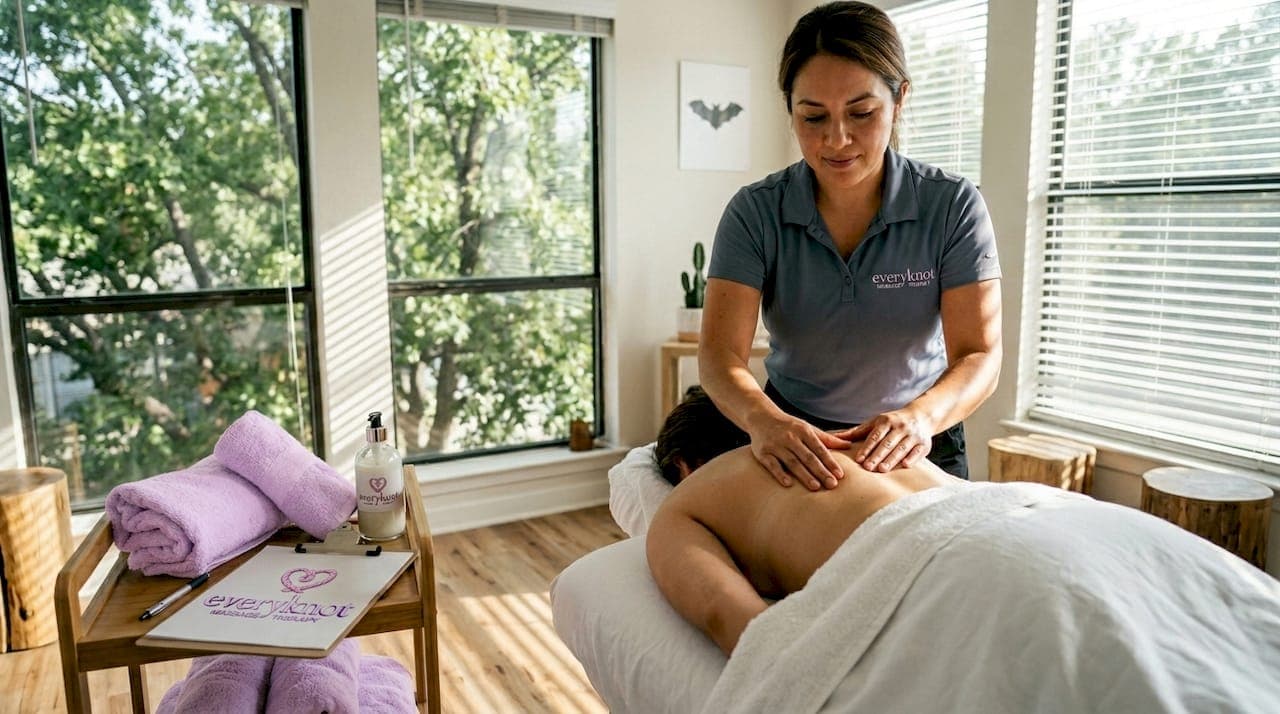
When you're dealing with a sprain, strain, or soft tissue injury, deciding which massage approach will actually help can feel overwhelming. There are dozens of options, and not every technique is suited to every injury. Getting this wrong can slow your recovery or even make things worse. This article breaks down the most evidence-backed massage therapies available in Austin, explains how each one works, and helps you choose the right approach with confidence so you can move through recovery with intention and support.
Table of Contents
- How to evaluate massage options for injury recovery
- Deep tissue massage: Targeting muscle and soft tissue healing
- Sports massage: Fast-tracking functional recovery and flexibility
- Myofascial and trigger point therapies: Relieving chronic pain and improving mobility
- When massage is recommended — and when to use caution
- The real path to lasting recovery: What most experts overlook
- Explore Austin's leading massage therapy for injury recovery
- Frequently asked questions
Key Takeaways
| Point | Details |
|---|---|
| Criteria matter most | Evaluating massage options using evidence and therapist credentials ensures safe, effective injury recovery. |
| Deep tissue and sports massage | These therapies offer proven benefits for pain relief, mobility, and functional healing post-injury. |
| Combine therapies for results | Personalized approaches including myofascial release and exercise deliver the best outcomes for complex injuries. |
| Know contraindications | Medical guidance is crucial, as some injuries require caution or adapted massage therapy. |
| Austin expertise available | Local therapists provide evidence-based care, blending science and hands-on experience for injury recovery. |
How to evaluate massage options for injury recovery
Before choosing a technique, it helps to know what you're actually evaluating. Not all massage therapies work the same way, and what helps one type of injury may not be appropriate for another. A clear framework protects you from wasted sessions and keeps your progress moving forward.
Here's what to look for when reviewing your options:
- Clear recovery goals: Are you targeting pain reduction, improved range of motion, reduced swelling, or faster return to activity? Different goals call for different methods.
- Therapist credentials: Look for clinical training, certifications in specific modalities, and documented experience working with injury rehabilitation rather than general relaxation.
- Method suitability: Soft tissue injuries like muscle strains respond differently to treatment than nerve-related pain or post-surgical recovery. The method must match your injury type.
- Initial evaluation: A quality therapist will assess you before starting, noting your injury history, pain patterns, and physical limitations. This is the foundation of any personalized plan.
- Progress tracking: Effective therapist care for recovery includes checking in after each session and adjusting the approach based on how your body responds.
Understanding the science behind massage also matters. Research shows that massage improves blood flow and oxygenation, reduces metabolic byproducts, decreases soreness and swelling, and positively influences muscle stiffness. These aren't just comfort benefits. They are direct physiological drivers of faster tissue repair.
Pro Tip: Before booking any session, ask the therapist how they typically structure an initial evaluation for injury clients. A good therapist will want to know your injury history, current medications, and any imaging results before they begin.
With evaluation criteria in mind, we can now go through the most evidence-backed massage options for recovery.
Deep tissue massage: Targeting muscle and soft tissue healing
Deep tissue massage is one of the most recognized options for injury recovery, and for good reason. It uses slow, firm pressure applied to deeper layers of muscle and connective tissue. This approach is especially effective for muscle strains, chronic tension patterns, and soft tissue injuries that haven't resolved with lighter touch.
Here is how deep tissue massage supports healing:
- It breaks up adhesions (dense bands of scar-like tissue) that can restrict movement after injury
- It promotes circulation to areas that may be guarded or underused during recovery
- It reduces muscle stiffness that develops when your body compensates around a painful area
- It helps your nervous system release protective tension that lingers even after tissue has healed
The timing of deep tissue work matters. In the acute phase, meaning the first 48 to 72 hours after an injury, this technique is generally not appropriate because the tissue is still in the initial inflammatory phase. Once that phase passes, deep tissue work becomes a valuable tool for speeding the repair process.
Research confirms that massage enhances muscle repair by improving blood flow, reducing metabolic byproducts, and decreasing both soreness and stiffness. This isn't just temporary relief. It's an active contribution to the biology of healing.
For chronic conditions like recurring back pain or old sports injuries that never fully healed, restorative deep tissue work can address the layers of tension that have built up over time. Many clients in Austin are surprised to discover that a persistent ache from an injury years ago can still respond to this kind of intentional, targeted work.
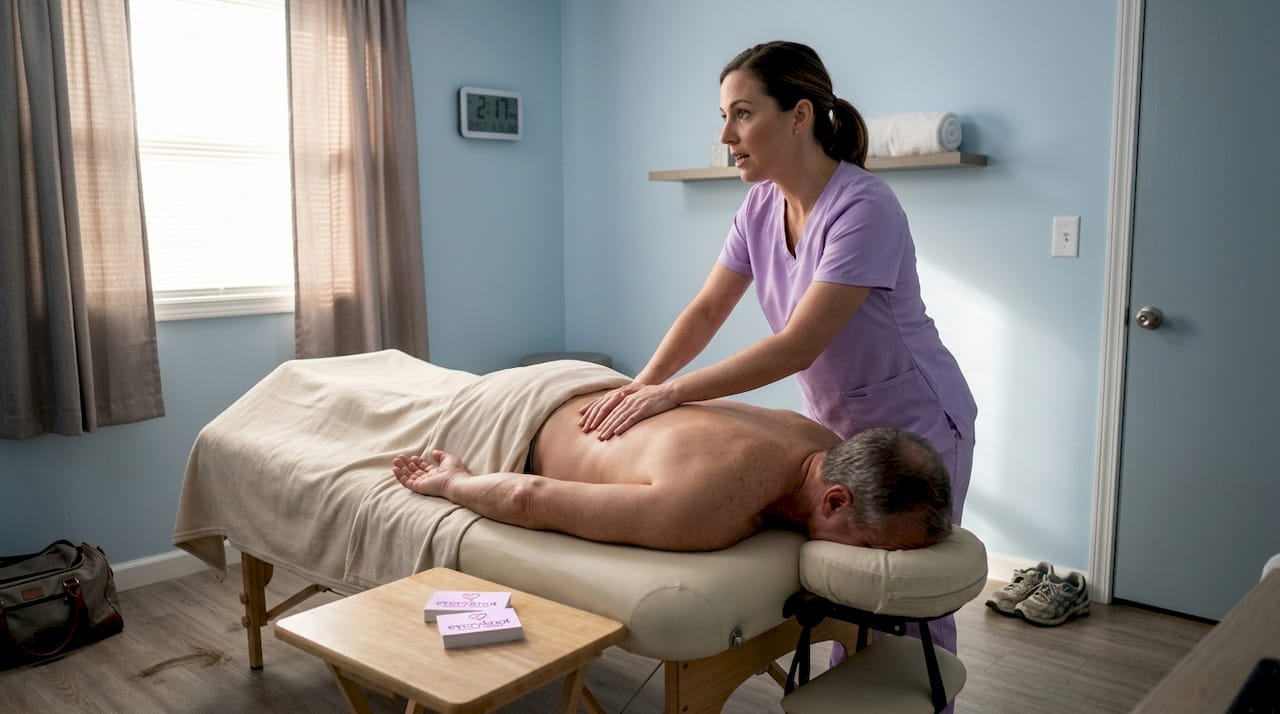
Pro Tip: Communicate openly during your session. Deep tissue massage should feel like "good pain," a productive discomfort. If it crosses into sharp or shooting pain, tell your therapist immediately. The most skilled practitioners adjust in real time based on your feedback.
Sports massage: Fast-tracking functional recovery and flexibility
Deep tissue is powerful, but sports massage offers targeted benefits, especially for active Austinites and quick rehab goals.
Sports massage is specifically designed to support the physical demands of athletic activity and injury recovery. It uses a combination of compression, cross-fiber friction, range of motion work, and stretching techniques to restore function. The focus isn't just on relieving pain. It's on getting your body moving properly again.
The evidence here is strong. A meta-analysis covering 23 studies with 1,456 participants found that sports massage reduces pain by a meaningful 1.8 points on the Visual Analog Scale (a standard pain rating system) and increases range of motion by 12.4 degrees on average. These are clinically significant numbers, not minor effects.
Key stats at a glance:
| Outcome | Sports massage result |
|---|---|
| Pain reduction (VAS) | 1.8 points (p < 0.001) |
| Range of motion increase | 12.4 degrees (p < 0.001) |
| Optimal session frequency | 2 to 3 times per week |
| Ideal session length (acute phase) | 15 to 30 minutes |
| Best injury types supported | Strains, contusions, delayed onset muscle soreness |
For most people recovering from a muscle strain or sports-related injury in Austin, scheduling two to three massage sessions per week in the early recovery phase gives the most consistent results. Shorter, more frequent sessions tend to outperform single long sessions in the acute phase.
What makes sports massage particularly effective is its dual approach. It addresses both local tissue health and neuromuscular control. Meaning your muscles learn to move and fire properly again, not just feel less painful.
Myofascial and trigger point therapies: Relieving chronic pain and improving mobility
For those dealing with chronic pain or mobility challenges, specialized therapies like myofascial and trigger point approaches offer unique advantages.
Myofascial release works on the fascia, the web of connective tissue that surrounds and connects every muscle, bone, and organ in your body. After injury, fascia can thicken and restrict movement in ways that standard massage doesn't always reach. Myofascial techniques use slow, sustained pressure to encourage this tissue to soften and release.
Trigger point therapy targets specific hyperirritable spots in muscle tissue, commonly called "knots," that refer pain to other areas. For example, a trigger point in your hip flexor can cause pain that feels like it's coming from your lower back. Resolving these spots often produces immediate, noticeable relief.
Here's when these therapies are most useful:
- Chronic low back pain that hasn't responded to general massage
- Fibromyalgia, where widespread pain and sensitivity are present throughout the body
- Myofascial pain syndrome, a condition involving persistent muscle pain and trigger points
- Recovery from injuries with prolonged immobility that has left fascia stiff and restricted
- Sciatica and hip pain related to fascial restriction
The research supporting these approaches is encouraging. A VA evidence map covering six reviews found moderate certainty evidence that massage benefits chronic low back pain, fibromyalgia, and myofascial pain, particularly when added to exercise. This is important because it frames massage as part of a broader recovery plan, not a standalone cure.
A separate analysis of 10 randomized controlled trials confirmed that adding manual therapy to exercise improved short-term pain and disability in chronic low back pain better than exercise alone in eight out of ten studies. The takeaway: massage and movement together are more effective than either on its own.
Comparing therapy approaches:
| Therapy type | Best for | Mechanism | Combined with exercise? |
|---|---|---|---|
| Myofascial release | Fascial restriction, chronic pain | Sustained pressure on connective tissue | Highly recommended |
| Trigger point therapy | Referred pain, muscle knots | Compression of hyperirritable points | Recommended |
| Deep tissue massage | Muscle tension, strains | Pressure on deep muscle layers | Recommended |
| Sports massage | Active recovery, mobility | Multi-technique functional approach | Essential |
If you're managing conditions like sciatica, combining myofascial release with a targeted stretching program can address both the tissue restriction and the nerve irritation that often contributes to ongoing pain. These approaches support long-term wellness in a way that a single-session, single-technique approach simply cannot match.
When massage is recommended — and when to use caution
Understanding benefits is vital, but knowing when massage is appropriate, or risky, is just as essential for safe recovery.
Conditions commonly supported by massage therapy:
- Chronic low back pain — supported by multiple guidelines as a first-line non-pharmacological treatment
- Fibromyalgia — moderate evidence for symptom relief
- Myofascial pain syndrome — direct application of trigger point and myofascial techniques
- Post-operative pain (after clearance from your surgeon) — helps manage guarding and scar tissue formation
- Muscle strains and contusions — most appropriate after the acute inflammatory phase
- Tension headaches and neck pain — commonly addressed with cervical and upper back work
VA guidelines clarify that medical massage is considered necessary for back pain, fibromyalgia, myofascial pain, post-operative pain, and complicated injuries, with documented progress required for continued treatment. This is a meaningful benchmark for what constitutes therapeutic massage versus simple relaxation.
Absolute contraindications (do not receive massage if you have):
- Deep vein thrombosis (DVT), a blood clot in the deep veins
- Acute infection, fever, or active inflammation in the treatment area
- Fractures or broken bones, especially near the injury site
- Open wounds or skin conditions at the treatment area
Relative contraindications (proceed only with medical guidance):
- Osteoporosis, where bones are more fragile
- Use of blood thinners or anticoagulant medications
- Recent surgery, depending on how much time has passed and the type of procedure
- Cancer, particularly if the affected tissue is near lymph nodes
Pro Tip: Always tell your massage therapist about your full medical history before your first session. A certified therapist will screen for contraindications and may consult with your doctor when your case involves complex factors. This is not an extra step. It is essential professional practice.
Progress documentation also matters. If your sessions are not producing measurable improvement after a reasonable number of visits, that's meaningful information. Good therapists treat this as a signal to adapt the approach, not continue the same plan indefinitely.
The real path to lasting recovery: What most experts overlook
Most articles on massage for injury recovery stop at "here are the techniques and the research." That's useful, but it misses something important. The actual experience of recovering from an injury in Austin doesn't look like a research study.
Real people have complicated histories. They have old injuries that were never fully treated, muscle patterns shaped by years of sitting at a desk, high-stress lives that keep their nervous system in a constant state of alert, and often a deep distrust of their own body after a painful experience. These factors shape how tissue responds to treatment in ways that a protocol-based approach can't account for.
What actually works in practice is this: an experienced therapist who listens carefully, evaluates before they treat, and adjusts continuously. Not someone who applies the same sequence regardless of what they're feeling under their hands. The therapist who spends five minutes at the start of every session asking how you're feeling, reviewing your progress, and noticing changes in tissue quality will outperform one following a rigid template every time.
Integrating massage with corrective movement is also non-negotiable for lasting relief. Tissue changes from massage are real, but they're reinforced and made permanent through functional movement. When your muscles remember how to fire and lengthen correctly, the pain patterns have much less room to return. The best Austin therapists will tell you this directly and often collaborate with physical therapists, personal trainers, or yoga instructors to support your full recovery.
The honest truth is that generic protocols exist because they're scalable. They're not always what gets people well. Personalized, responsive care is harder to standardize, but it's what your body actually needs.
Explore Austin's leading massage therapy for injury recovery
If you're ready to move from information to action, EveryKnot Massage in Austin offers exactly the kind of intentional, personalized care this article describes. Caitlin brings clinical expertise across multiple modalities including deep tissue, myofascial release, trigger point therapy, and assisted stretching, all tailored to your specific injury history and recovery goals.
Every session at EveryKnot starts with a thorough evaluation so your treatment plan is built around your body, not a general template. Whether you're recovering from a recent strain or managing a chronic condition that has been limiting you for years, professional massage in Austin at EveryKnot is designed to meet you where you are. Booking is straightforward and you can schedule your first injury recovery massage directly through the website. Your recovery deserves this level of care.
Frequently asked questions
How often should you get massage for injury recovery?
During the acute phase, 2 to 3 sessions per week lasting 15 to 30 minutes each produces the best outcomes for pain relief and functional recovery, based on analysis of 23 studies with over 1,400 participants.
Are there injuries where massage should be avoided?
Massage should be avoided with deep vein thrombosis, acute inflammation, fractures, and active infections, and used with caution if you have osteoporosis, are on anticoagulants, or have had recent surgery.
Does massage therapy help chronic pain in injury recovery?
Yes, moderate certainty evidence supports massage for chronic low back pain, fibromyalgia, and myofascial pain, particularly when it's combined with an exercise program.
What is the difference between deep tissue and sports massage?
Deep tissue massage focuses on releasing chronic muscle tension and breaking up adhesions in deeper layers of tissue, while sports massage targets functional recovery and range of motion, making it especially useful for athletes and post-injury rehabilitation.
What credentials should an Austin massage therapist have for injury recovery?
Look for clinical certifications in therapeutic modalities like deep tissue, myofascial release, or sports massage, along with documented experience assessing and treating injury rehabilitation clients rather than only general relaxation clients.