
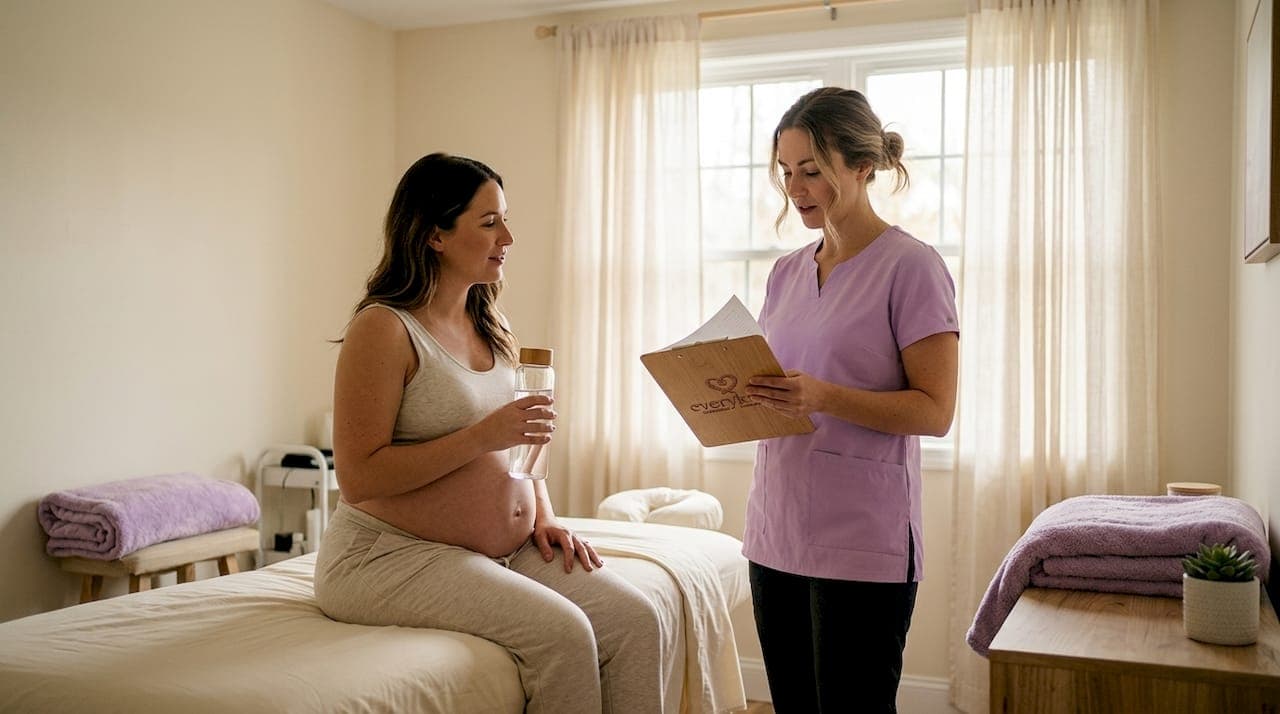
Pregnancy brings profound physical and emotional changes, and for many women, the discomforts compound quickly. Back pain, swollen ankles, restless nights, and mounting anxiety can make each week feel heavier than the last. The restorative massage process for expectant mothers is designed specifically to meet these challenges with care, adapting every technique, position, and pressure choice to your changing body. This article walks you through what to know before your first session, how a prenatal massage actually unfolds, how to prepare, and what to expect afterward so you can approach this form of self-care for expectant mothers with confidence and clarity.
Table of Contents
- Key takeaways
- Safety first: what to know before your first session
- How the restorative massage process actually works
- How to prepare for your prenatal session
- What to expect after your prenatal massage
- My perspective on prenatal massage
- Experience prenatal care at Everyknotmassage
- FAQ
Key takeaways
| Point | Details |
|---|---|
| Medical clearance comes first | Get verbal or written approval from your OB-GYN or midwife before scheduling, especially with high-risk factors. |
| Side-lying is the gold standard | After the first trimester, supported side-lying protects your circulation and keeps your spine aligned during sessions. |
| Light to moderate pressure is intentional | Prenatal massage avoids deep tissue work to prevent bruising and reduce clot risks while still relieving pain effectively. |
| Communication shapes your session | Telling your therapist what feels good or uncomfortable in real time is what keeps prenatal massage both safe and effective. |
| Benefits extend beyond the table | Research connects massage therapy for pregnant women to reduced anxiety, lower back pain relief, and better sleep quality. |
Safety first: what to know before your first session
Before scheduling a session, your first step is a conversation with your healthcare provider. Medical clearance is standard before prenatal massage when any risk factors are present, including hypertension, gestational diabetes, or a history of preterm labor. This is not a bureaucratic hurdle. It is a meaningful check that keeps you and your baby protected.
Equally important is understanding which conditions make massage inadvisable until a doctor gives the green light. Absolute contraindications include preeclampsia, placenta previa, deep vein thrombosis, and active vaginal bleeding. A reputable therapist will screen for all of these during your intake conversation.
Here is a quick reference for common contraindications and screening items:
| Condition | Massage status |
|---|---|
| Preeclampsia | Avoid until medically cleared |
| Placenta previa | Avoid until medically cleared |
| Deep vein thrombosis (DVT) | Avoid until medically cleared |
| Active vaginal bleeding | Avoid until medically cleared |
| Gestational hypertension | Requires written provider clearance |
| Uncomplicated pregnancy | Generally safe after week 13 |
On timing, many clinics begin prenatal massage after week 13 to reduce first-trimester miscarriage risk. Some therapists will work in the first trimester with caution and documented provider approval, but the second trimester is generally considered the safest window to start.
The therapist's training matters just as much as your own health status. Certified prenatal massage therapists complete 100 to 150 additional hours of specialized training in pregnancy anatomy, positioning, and contraindications beyond standard licensure. This is not the kind of session where a general massage therapist simply avoids your belly. Genuine prenatal training changes the entire approach.
Pro Tip: Ask your therapist directly about their prenatal certification before booking. A qualified practitioner will welcome the question and explain their training background without hesitation.
How the restorative massage process actually works
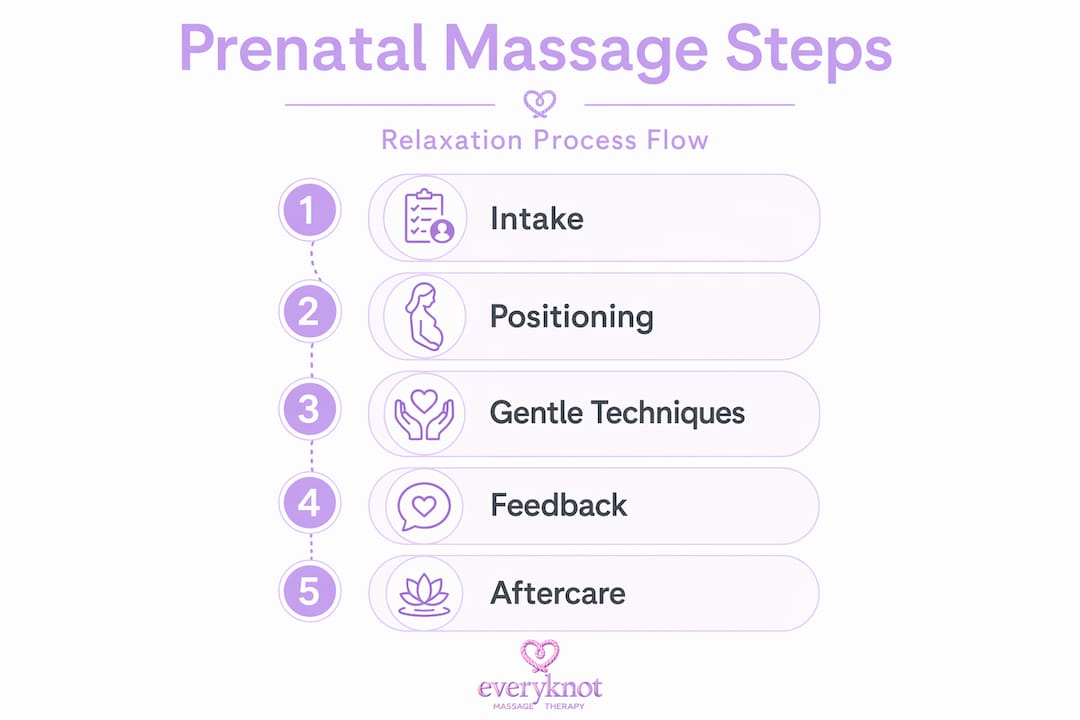
Understanding the session step by step takes away the uncertainty and lets your body actually relax. Here is how a well-designed prenatal session unfolds.
Intake and positioning
Every session begins with a short intake conversation. Your therapist will ask about your current symptoms, trimester, any conditions flagged by your provider, and what you are hoping to address. This is the moment to mention swollen feet, sciatic pain, shoulder tightness, or any areas you want avoided.
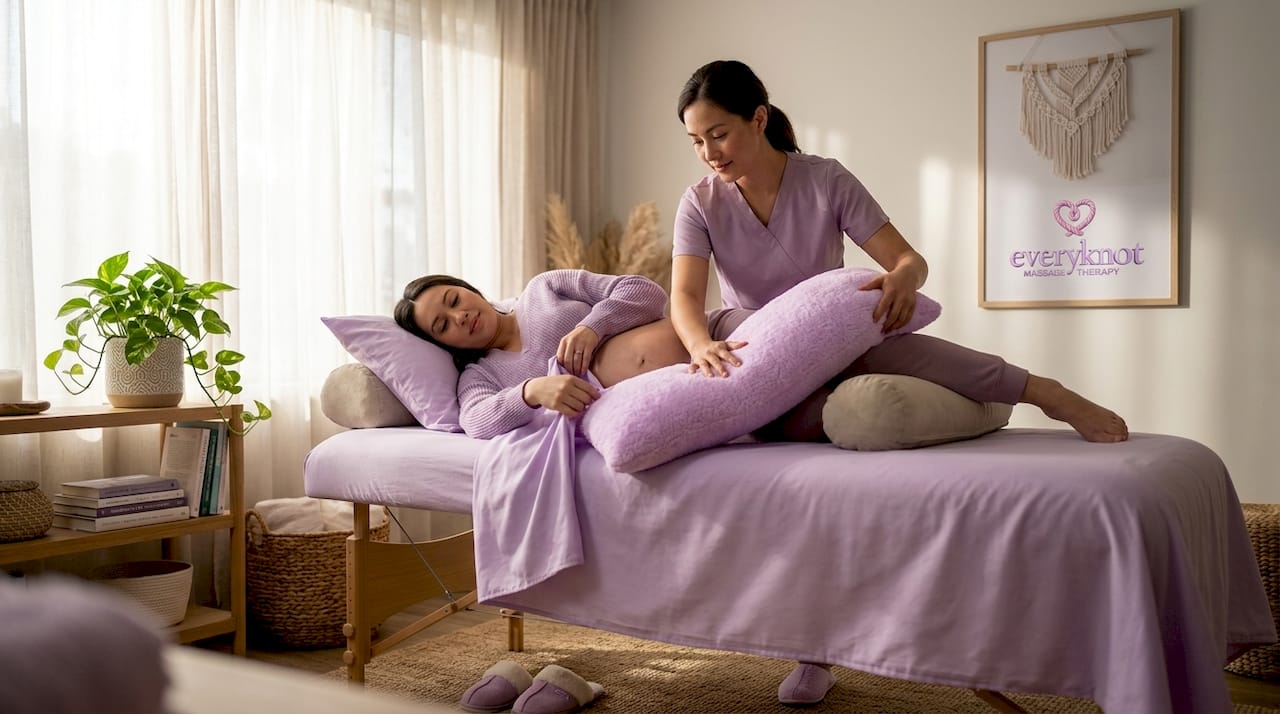
Positioning is where prenatal massage separates itself most clearly from standard practice. Side-lying with bolsters and pillows is the gold standard after the first trimester. Lying on your side with support under your head, between your knees, and beneath your belly keeps your spine in neutral alignment, protects blood flow, and removes pressure from your uterine ligaments. Prone (face-down) positioning becomes impossible comfortably after around 12 to 14 weeks. Supine (face-up) positioning is avoided or significantly limited after 20 weeks because lying flat on the back can compress the vena cava, reducing circulation and causing dizziness or breathlessness.
Techniques used in a prenatal session
The techniques for pregnancy massage are deliberately gentler than standard massage. Here is how a typical session progresses:
- Opening strokes: Long, slow effleurage (gliding) strokes warm the tissue and begin signaling safety to your nervous system.
- Back and hip work: Gentle kneading and circular friction address the lower back and hips, where pregnancy-related strain concentrates as your center of gravity shifts.
- Leg and calf work: Light petrissage and lymphatic strokes move fluid upward along the legs, which helps reduce edema in the calves and ankles.
- Shoulder and neck release: Careful, moderate-pressure work across the upper back and shoulders addresses the tension that builds from postural changes in later pregnancy.
- Foot and ankle work: Light massage stimulates circulation in the feet and reduces swelling, while certain acupressure points are deliberately avoided.
- Closing strokes: The session ends with slow, connecting strokes that return your nervous system to a calm resting state.
Light to moderate pressure with lymphatic techniques is the standard approach for managing pregnancy swelling safely. Deep tissue pressure on the legs is avoided because of increased clot risk during pregnancy.
The table below shows how prenatal techniques compare to standard massage:
| Technique element | Standard massage | Prenatal adaptation |
|---|---|---|
| Positioning | Prone and supine | Side-lying with bolsters |
| Pressure | Light to deep | Light to moderate only |
| Leg work | Deep tissue acceptable | Lymphatic strokes, no deep pressure |
| Abdominal work | Sometimes included | Avoided or very gentle only |
| Session focus | Full body, varied | Back, hips, legs, shoulders, feet |
| Reflex points | May be used freely | Specific points avoided |
Session duration and frequency
Sessions typically run 30 to 60 minutes, with frequency adjusted to your stage of pregnancy and symptom severity. If you are managing significant lower back pain or sciatic discomfort, weekly sessions may provide the most consistent relief. For general wellness and maintenance, every two to four weeks tends to work well. Your therapist will help you calibrate this based on how your body responds.
Pro Tip: If your symptoms shift noticeably between trimesters, treat each new trimester as a reason to reassess your session frequency with your therapist. What your body needs at 20 weeks is genuinely different from what it needs at 34 weeks.
Throughout the session, open client communication guides every pressure adjustment. You should never feel you need to "tough out" discomfort. Speak up, and a skilled therapist will adapt immediately.
How to prepare for your prenatal session
Good preparation shapes how much benefit you get from each appointment. A few focused steps before and after each session make a real difference.
Before your session:
- Drink plenty of water in the hours leading up to your appointment. Massage moves fluids and metabolic waste through your tissues, and hydration helps your body process this efficiently.
- Eat a light meal or snack at least one hour beforehand. Arriving on an empty stomach can cause light-headedness, while a very full stomach is uncomfortable in side-lying position.
- Wear loose, comfortable clothing that is easy to adjust. Most sessions involve draping, but relaxed clothing helps with the transition.
- Write down your current symptoms, including pain location, intensity, and anything new since your last session. Sharing this at intake helps your therapist personalize your treatment.
- Bring any notes from your OB-GYN or midwife if clearance was documented.
After your session:
- Rest for at least 20 to 30 minutes before resuming activity. Your body needs time to integrate the work.
- Continue drinking water throughout the day.
- Avoid strenuous exercise immediately following your session.
- Notice how your body feels over the next 24 to 48 hours and track any changes in pain, swelling, or sleep quality to share with your therapist at your next visit.
Pro Tip: Keep a brief symptom journal during your prenatal massage series. Patterns in what improves, and how quickly, give your therapist genuinely useful data to refine your sessions over time.
What to expect after your prenatal massage
Most women leave a prenatal session feeling calmer, lighter, and noticeably more comfortable. That is the expected response, and it often lasts for several days after a well-executed session.
Prenatal massage reduces lower back pain, swelling, anxiety, and improves sleep quality in pregnant women, according to multiple studies. These are not minor benefits. For many expectant mothers, reduced anxiety and better sleep affect the entire quality of their third trimester.
Mild muscle soreness in the hours following your session is normal, similar to what you might feel after gentle exercise. Feeling emotionally tender or fatigued for a short period is also common. These responses reflect your nervous system processing the release.
Some signs, however, warrant a call to your healthcare provider:
- Unusual cramping or contractions after your session
- Significant swelling that worsens rather than improves
- Dizziness or persistent headache following your appointment
- Any vaginal bleeding or fluid leakage
These are not common responses to prenatal massage, but they are worth taking seriously if they occur. Prenatal massage is complementary care, not a replacement for your medical team. Your OB-GYN or midwife should always remain your primary point of contact for anything outside the expected range of wellness.
When sessions are working well, you will likely notice improved circulation in your legs, reduced tightness in your lower back, and an easier time falling and staying asleep. These benefits tend to build cumulatively. One session helps. A consistent series helps considerably more.
My perspective on prenatal massage
What I have learned from working with prenatal clients is that the biggest barrier is usually hesitation, not danger. Many expectant mothers assume massage is something they need to avoid entirely during pregnancy, or they wait until the third trimester when they are already in significant pain. Neither of these approaches serves them well.
In my experience, the sessions that make the most difference are the ones built on genuine communication. When a client tells me, "that pressure feels like too much," or "can you spend more time on my left hip?" the outcome of that session changes completely. I am always reading the body, but I can only respond to what you give me. Your feedback is not an inconvenience. It is the foundation of good prenatal work.
I also want to gently push back on the assumption that prenatal massage is just a gentler version of any regular session. The positioning workflow and technique choices are specific, considered, and built around real physiological knowledge of pregnancy. Side-lying positioning done well is not uncomfortable. Done poorly, it can leave a client more tense than when they arrived. The difference lives entirely in the training and attentiveness of the person doing the work.
My advice to you is simple: start earlier than you think you need to, communicate openly throughout every session, and treat your prenatal massage series as a real part of your wellness plan, not an occasional indulgence.
— Caitlin
Experience prenatal care at Everyknotmassage
At Everyknotmassage, prenatal massage is approached with the same intentional, individualized care that shapes every service offered. Caitlin brings specialized prenatal certification, genuine attentiveness, and a calm studio environment specifically designed to help your body feel safe enough to release tension it has been carrying for months.
Every session begins with a thorough intake conversation, incorporates proper bolstered side-lying positioning, and adapts pressure and technique to exactly where you are in your pregnancy. Whether you are managing sciatic pain, struggling with swollen legs, or simply need a few hours of genuine rest, the approach is built around you. Explore the prenatal massage benefits and learn how massage supports wellness through every trimester. When you are ready to take that next step, Everyknotmassage is here.
FAQ
When can I start prenatal massage during pregnancy?
Most therapists begin prenatal massage after week 13, as many clinics wait until the second trimester to reduce first-trimester risk. Some practitioners will work earlier with documented provider clearance.
What position is used during prenatal massage?
Side-lying with supportive bolsters is the standard position after the first trimester. It protects spinal alignment and circulation, replacing the prone and supine positions used in standard massage.
Is deep tissue massage safe during pregnancy?
Deep tissue work on the legs is avoided during pregnancy because of increased DVT risk. Light to moderate pressure with lymphatic techniques is used instead to manage swelling and relieve pain safely.
How often should I get prenatal massage?
Session frequency depends on your symptoms. Sessions every two to four weeks work well for general maintenance, while weekly sessions may help if you are managing significant pain or swelling.
What are the signs I should contact my provider after a session?
Contact your healthcare provider if you experience cramping, worsening swelling, persistent dizziness, or any vaginal bleeding following a prenatal massage session, as these fall outside the normal range of post-massage response.