

Most people assume massage is a luxury, something you treat yourself to once in a while for relaxation. But if you live with chronic pain, are recovering from an injury, or are navigating a pregnancy, a generic full-body rubdown simply does not address what your body actually needs. Research increasingly supports a targeted, individualized approach to massage, one where techniques, pressure, timing, and session frequency are all chosen with your specific condition in mind. This guide walks you through what personalized massage therapy really means, how it works for pain and recovery, and what you can do to get the most out of every session.
Table of Contents
- What is personalized massage therapy?
- How does personalized massage address pain and tension?
- Techniques for injury recovery and special populations
- Personalization in practice: What to expect and how to get started
- Why one-size-fits-all massage misses the mark
- Ready for relief? Experience personalized massage therapy in Austin
- Frequently asked questions
Key Takeaways
| Point | Details |
|---|---|
| Tailored for results | Personalized massage adapts technique and session plan to your unique needs for better outcomes. |
| Evidence-driven benefits | Targeted massage can relieve chronic pain, tension, and aid injury recovery, especially with the right dose. |
| Specialized care matters | Techniques and pressure are adjusted for special groups like pregnant women to ensure safety and effectiveness. |
| Communication is key | Sharing goals and feedback with your therapist leads to the best personalized care and comfort. |
What is personalized massage therapy?
Personalized massage therapy means your session is built around you, not a standard protocol. Your therapist considers your health history, goals, pain patterns, and even your stress levels before choosing which techniques to use and how to apply them. This is different from a routine relaxation massage, where pressure and movement follow a predictable pattern regardless of who is on the table.
Real customization involves several layers:
- Technique selection: Choosing between deep tissue, myofascial release, trigger point therapy, or Swedish based on what your body needs right now
- Pressure and pacing: Adjusting depth and speed based on tissue response and your comfort
- Target areas: Spending more time on specific muscle groups driving your pain instead of treating everything equally
- Session dosing: Deciding on the right number of sessions and session length to achieve meaningful results
According to a Cochrane review on neck pain, therapists often tailor massage delivery by selecting specific techniques and dosing in evidence-based pain contexts. That means dose, meaning how often you come and for how long, is just as important as what happens during the session itself.
Understanding the full massage therapy workflow helps clarify why each decision matters from intake to treatment to follow-up. A thoughtful process is what separates a therapeutic session from a feel-good one.
| Feature | Generic massage | Personalized massage |
|---|---|---|
| Technique selection | Fixed routine | Based on your condition |
| Pressure | Standard or client-requested | Adapted session by session |
| Session length | Uniform (60 or 90 min) | Matched to goals and needs |
| Session frequency | Client-driven | Guided by evidence and progress |
| Target areas | Full body | Focused on problem areas |
"The best session is one that was designed for the person on the table, not the one before them or the one after."
How does personalized massage address pain and tension?
Once you know that massage can be tailored, it is important to see how this personalized approach directly addresses pain and tension, which brings us to the supporting evidence and strategies.
Chronic pain is complicated. It involves not just the muscles and tissues, but also the nervous system, sleep quality, stress hormones, and movement patterns. A session designed around your specific pain has a better chance of disrupting those cycles than one designed around a general template.
Research backs this up. A randomized trial comparing massage versus self-care education found that therapeutic massage showed meaningful benefit for persistent chronic low back pain. Participants who received massage reported lower pain and disability scores, particularly in the first 10 weeks. That is a meaningful window, and it suggests early, consistent care delivers results.
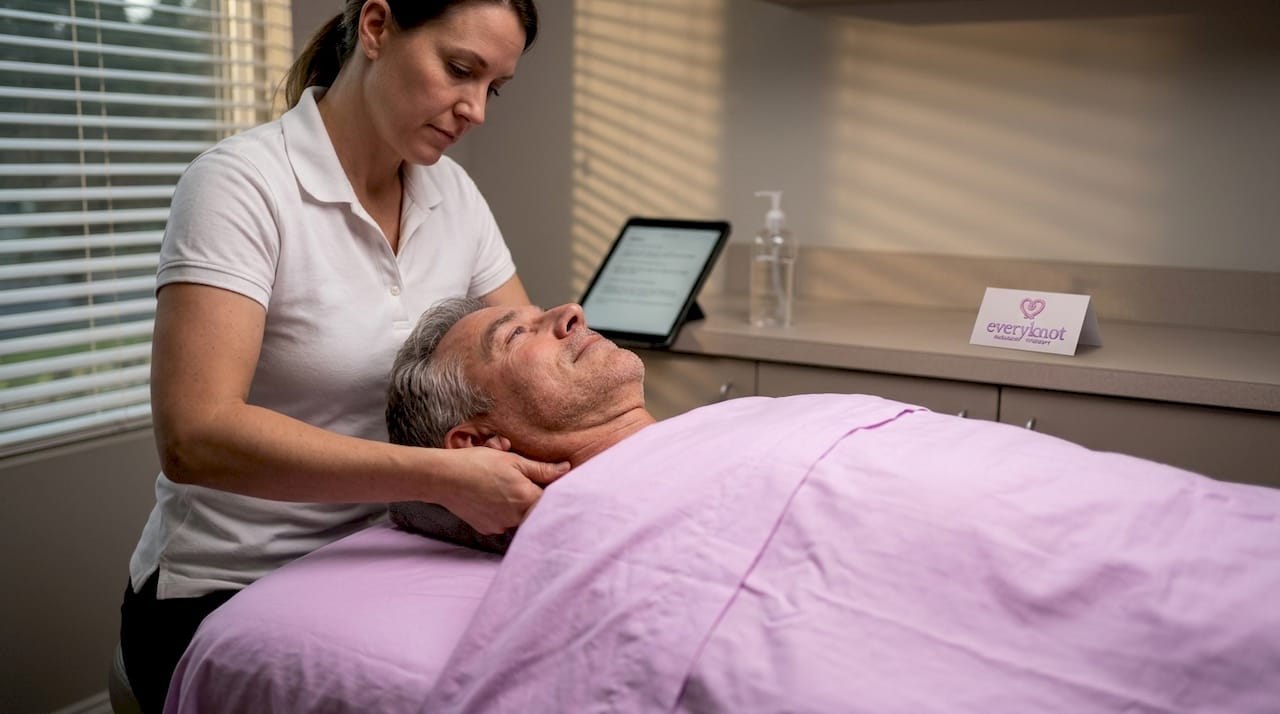
That said, effects can diminish over time depending on how frequently you receive massage and which methods your therapist uses. This is why frequency and method matter just as much as the session itself.
| Approach | Short-term pain relief | Long-term outcomes | Best for |
|---|---|---|---|
| Generic relaxation massage | Moderate | Limited | Mild stress, general tension |
| Personalized deep tissue | High | Sustained with consistency | Chronic pain, tight fascia |
| Targeted trigger point therapy | High | Good with regular sessions | Referred pain, muscle knots |
| Myofascial release | Moderate to high | Strong when ongoing | Postural issues, injury recovery |
Here are practical steps to optimize your massage regimen for pain relief:
- Identify your primary complaint. Be specific about where the pain is, what makes it worse, and how long you have had it.
- Set a realistic goal. Whether it is reducing stiffness in the morning or getting through a workday without headaches, a clear goal guides your therapist.
- Commit to a series of sessions. One session helps. A series changes patterns.
- Track your response. Note pain levels before and after each session to help your therapist refine the approach.
- Combine with movement or stretching. Massage works best when paired with daily habits that support tissue health.
Exploring restorative massage techniques can give you a clearer picture of what a targeted session might feel like for your specific pain type. If back pain is your main concern, understanding the best massage types for back pain in Austin can help you walk into your first appointment with confidence.
Pro Tip: Tell your therapist not just where it hurts, but what your pain feels like and when it occurs. That information helps them choose techniques that work with your nervous system, not just against your tight muscles.
Techniques for injury recovery and special populations
Beyond chronic pain and tension, injury recovery and special populations like pregnant women require an even more individualized approach. Here is how expert therapists deliver it.
When you are recovering from an injury, your tissue is in a different state than when you have everyday muscle tension. There may be scar tissue forming, inflammation settling down, or movement restrictions from guarding patterns your body developed to protect the injured area. The right technique applied at the wrong stage can set recovery back.
A randomized controlled trial in subacute and chronic low back pain confirmed that massage is a valuable adjunct therapy in injury recovery, and that different techniques produce different results. The trial compared several manual therapy approaches and found that outcomes varied significantly depending on the method used.
Therapists working with injury recovery commonly draw from:
- Myofascial release: Slow, sustained pressure applied to the connective tissue layer surrounding muscles, useful for breaking up adhesions and restoring range of motion
- Trigger point therapy: Focused pressure on hyperirritable spots in muscle tissue, which often refer pain to other areas of the body
- Classical Swedish massage: Lighter, circulatory strokes that help manage inflammation and support tissue healing in early recovery stages
- Neuromuscular techniques: Precise work that addresses how the nervous system is contributing to muscle tension or pain signals
For pregnant women, all of these choices require additional consideration. Pressure is adjusted for comfort and safety. Positioning changes to avoid compression of major blood vessels. Side-lying techniques become the norm from the second trimester onward. The goal is not only pain relief but also helping your nervous system feel safe enough to let go of the tension that accumulates during pregnancy.
Statistic to know: In clinical comparisons, myofascial release showed the greatest improvements in functional outcomes and patient satisfaction among tested techniques, with results that held up months after treatment ended.
Ongoing assessment is essential. A good therapist does not apply the same approach in session eight as they did in session one. Tissue changes, your pain levels shift, and your goals evolve. Regular feedback helps your therapist keep the work relevant and effective.
For a deeper look at how these methods apply in real recovery scenarios, the guide on massage for injury recovery covers specific techniques used in Austin for everything from sports injuries to post-surgical healing.
Pro Tip: If you are in early injury recovery, let your therapist know your timeline and what other treatments you are receiving. Massage works best as part of a coordinated plan, not in isolation.
Personalization in practice: What to expect and how to get started
To put these benefits into action, it helps to know how therapists personalize care and what steps you can take as a client.
Your first session begins before you ever get on the table. A thorough intake process covers your health history, current complaints, goals, and any conditions that might affect how the session is structured. This is not a formality. It is the foundation of everything that follows.
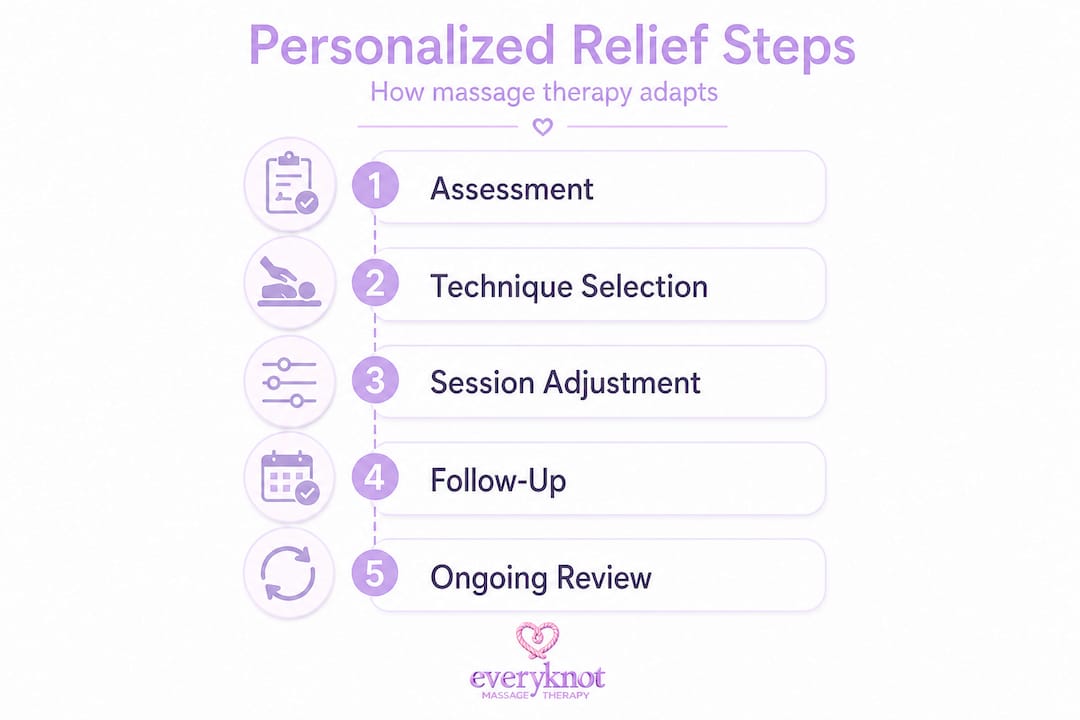
Here is a step-by-step look at how personalization unfolds:
- Intake conversation: Your therapist asks about your pain, injuries, stress levels, medications, and lifestyle. They listen, not just for symptoms, but for patterns.
- Session planning: Based on your intake, they choose techniques, determine target areas, and set the pressure range for the session.
- Active communication during the session: You give feedback on pressure and comfort. The therapist adjusts in real time, adapting to how your tissue responds.
- Post-session check-in: Your therapist shares observations and recommendations, including how often to return and what to do between sessions.
- Ongoing refinement: Each subsequent session builds on the last. What helped, what did not, and where new tension has emerged all shape the next approach.
Higher-dose regimens, meaning more sessions over a shorter period of time, tend to show more clinical impact for conditions like neck pain. This does not mean you need unlimited sessions. It means being intentional about how you schedule your care, especially in the first few weeks.
Understanding the full scope of what a massage therapist does in a clinical context helps set realistic expectations and makes it easier to communicate your needs clearly.
"Personalization is not just about technique. It is about listening carefully enough to understand what each person's body is asking for."
Why one-size-fits-all massage misses the mark
Here is what most people, and even some professionals, overlook about calling a session "personalized."
Labeling a massage as personalized does not automatically make it effective. True personalization requires consistent reassessment. If your therapist uses the same routine every time you come in, adjusts only the pressure when you ask, and never asks how you responded between sessions, you are not receiving genuinely tailored care. You are receiving a customized relaxation massage at best.
The evidence supports this distinction clearly. A Cochrane review on massage therapy found that systematic reviews may show little to no difference versus placebo for some pain types when dose and method are not controlled. Effects are dose-dependent and contingent on the method selected. In other words, the wrong approach at the wrong frequency produces mediocre results, even if the intention was good.
What actually moves the needle is this: session number and duration matched to your condition, a therapist who updates their approach based on your feedback, and a treatment plan that accounts for how your body changes over time. That requires skill, clinical knowledge, and genuine curiosity about the person in front of them.
Exploring the full range of massage therapy benefits makes it clearer why intentional, evidence-informed care produces better outcomes than reflexive routine. The difference between a good massage and genuinely therapeutic work is not always about technique. It is about attention.
Ready for relief? Experience personalized massage therapy in Austin
If you are ready to move beyond generic massage and address your specific needs with evidence-backed care, here is how to get started in Austin.
At EveryKnot Massage, Caitlin offers intentional, deeply customized sessions for chronic pain, stress, injury recovery, and prenatal care. Every session starts with a real conversation about where you are and what your body needs. Whether you are dealing with persistent back tension, recovering from an injury, or navigating the physical demands of pregnancy, the approach adapts to you. If you want to understand the depth of the work before booking, the overview of deep tissue massage techniques gives you a clear sense of what intentional, skilled care looks and feels like. Booking your first session is a straightforward next step toward real, lasting relief.
Frequently asked questions
Is personalized massage therapy more effective than regular massage?
Personalized massage can offer greater symptom relief for certain pain types because it uses targeted methods and dosing based on your specific needs, and higher-dose regimens have been shown to produce stronger clinical results than occasional sessions.
How many sessions of personalized massage are usually needed?
For meaningful benefits, research points to 8 or more sessions over four weeks, each lasting at least 30 minutes, as the threshold where clinically important effects become more consistent.
Is personalized massage therapy safe during pregnancy?
When performed by a trained therapist, prenatal massage adjusted for positioning, pressure, and technique is generally safe and can meaningfully reduce discomfort and stress during pregnancy.
Can massage therapy help with injury recovery?
Clinical trials show that massage, particularly techniques like myofascial release, supports pain reduction and improved function during injury recovery, with the best results coming from a tailored plan updated as healing progresses.
Will insurance cover personalized massage for pain or injury?
Coverage varies by provider and plan, so check with your insurer directly. Some plans reimburse for medically necessary massage when it is part of documented injury recovery or chronic pain management.