
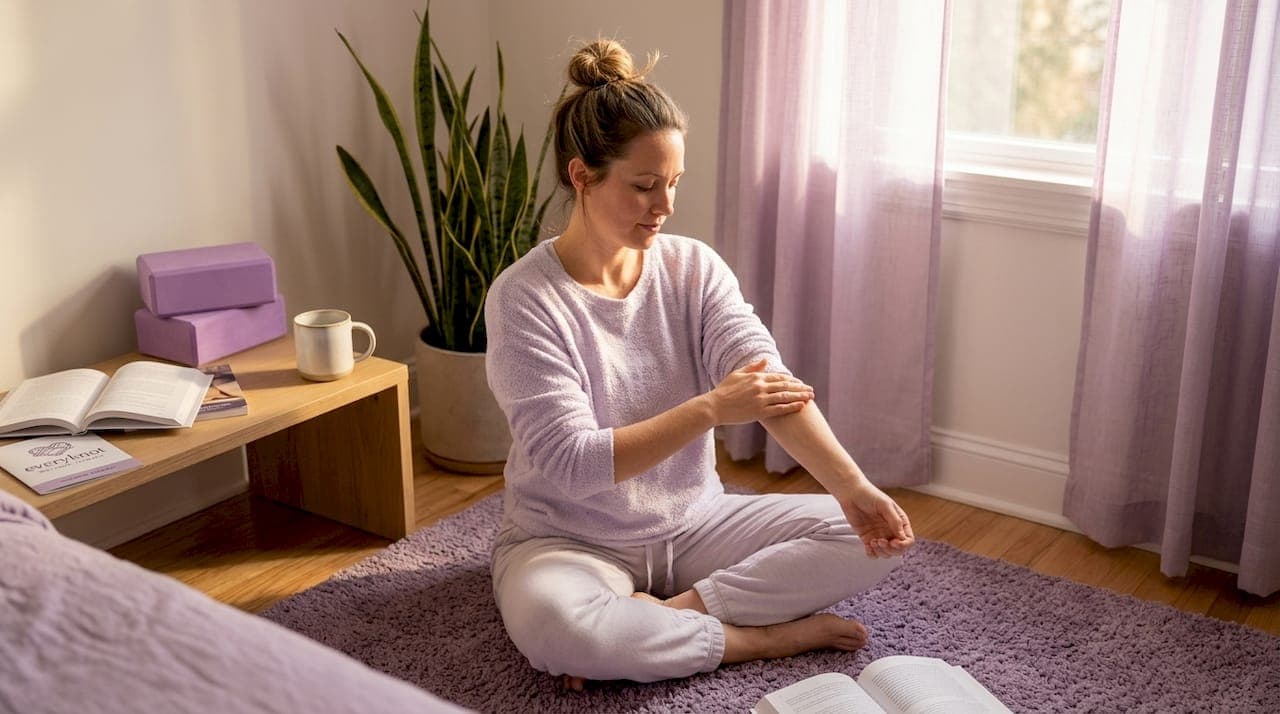
Most people treat massage as something you do when you finally hit a wall. A birthday gift. A post-vacation splurge. But understanding why massage for self-care matters changes that framing entirely. Massage is not a reward for surviving stress. It is one of the most evidence-backed tools you have for managing pain, improving sleep, reducing anxiety, and helping your nervous system feel safe enough to let go. The research is clear, and the applications are more practical and accessible than most people realize.
Table of Contents
- Key takeaways
- Why massage for self-care works on your whole body
- What science says about stress and recovery
- Self-massage techniques for a real self-care routine
- Common challenges with self-massage routines
- Professional massage vs. self-massage: what each does best
- My honest take on massage as a self-care practice
- Ready to take your self-care practice further?
- FAQ
Key takeaways
| Point | Details |
|---|---|
| Massage addresses more than muscle tension | Research shows massage reduces pain, fatigue, anxiety, and sleep disturbances across a wide range of conditions. |
| Nervous system, not just hormones | Massage benefits come primarily from nervous system modulation and pain pathway changes, not cortisol reduction alone. |
| Consistency drives results | Short daily self-massage sessions of 5 to 15 minutes produce real, measurable gains when practiced regularly. |
| Technique and structure matter | Structured, taught self-massage protocols outperform random techniques and reduce the risk of injury. |
| Professional and self-care work together | Self-massage maintains gains between professional sessions; both approaches serve different and complementary roles. |
Why massage for self-care works on your whole body
Massage does something specific to your body that most wellness practices do not. It works at the level of tissue and nervous system simultaneously, and that combination produces benefits you cannot fully replicate with stretching, breathwork, or rest alone.
A 2026 umbrella review that analyzed 15 systematic reviews with 175 primary studies found that therapeutic massage consistently reduces pain, fatigue, anxiety, and sleep disturbances while improving overall quality of life. Adverse events were uncommon and mild. That is a broad evidence base, and it matters for understanding the real role of massage in self-care.
Here is what massage actually does for your body:
- Reduces muscle tension and pain. Sustained manual pressure on soft tissue decreases local tension and interrupts pain signaling. If you carry chronic tightness in your neck, shoulders, or lower back, this is why even a short session shifts how you feel.
- Supports circulation. The mechanical pressure of massage moves blood and lymphatic fluid through tissues, which supports recovery and reduces the kind of stagnant ache that builds up after long hours at a desk.
- Decreases anxiety and fatigue. Multiple studies show reduced anxiety and fatigue following massage therapy. This is not anecdotal. It reflects measurable changes in how your nervous system responds.
- Improves sleep quality. When your body holds less tension and your nervous system feels less activated, sleep becomes easier and more restorative.
"Massage is not just a physical treatment. It is a conversation with your nervous system. When you apply consistent, intentional touch, you are telling your body that it is safe to release what it has been holding."
Understanding how massage improves wellness means recognizing that these benefits are interconnected. Better sleep reduces anxiety. Less pain reduces fatigue. A calmer nervous system makes it easier to manage stress. That is the case for massage as a holistic self-care method, not just a temporary fix.
What science says about stress and recovery
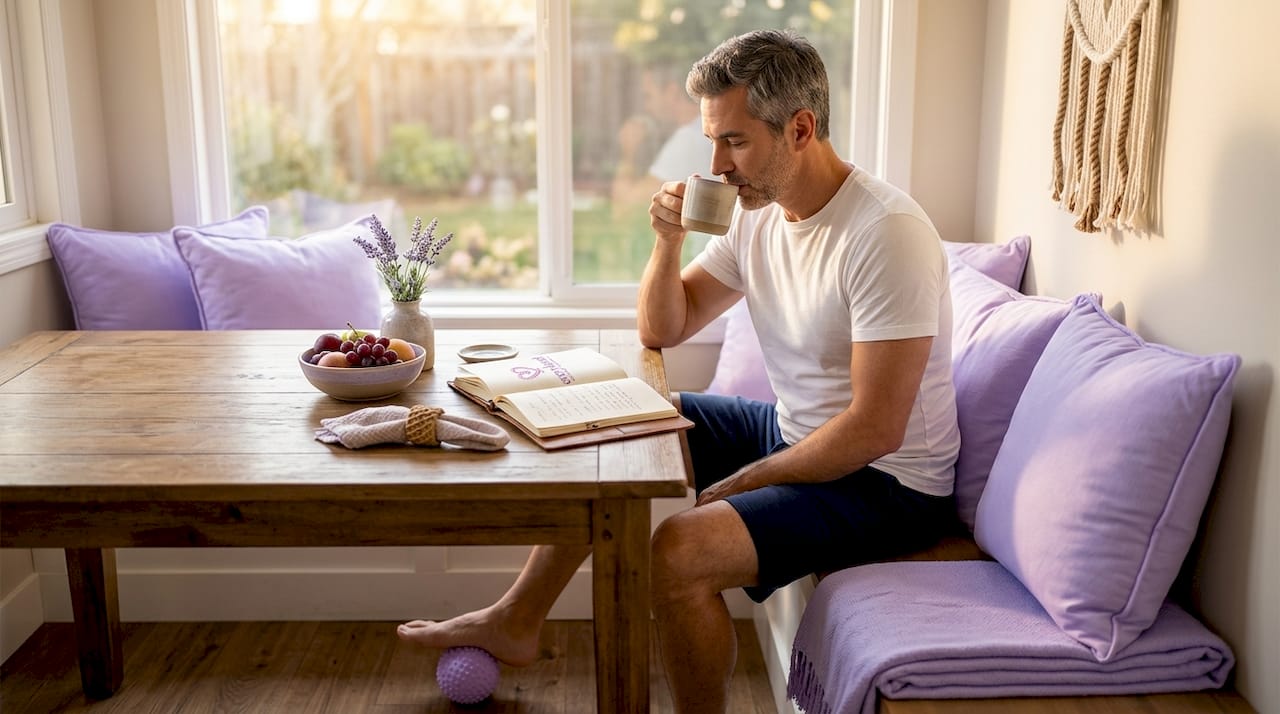
Here is where things get more nuanced. You have probably heard that massage lowers cortisol. That claim is repeated constantly, but the actual research tells a more complicated story.
A 2026 scoping review found that cortisol changes from massage are mixed and largely small or nonsignificant across most studies. The honest takeaway: cortisol reduction is not the primary mechanism behind massage's stress benefits. The review points instead to nervous system modulation, reductions in trait anxiety and depression, and changes in pain pathways as the more clinically meaningful outcomes.
This distinction matters because it shifts where you focus your expectations. If you approach massage purely hoping to see a cortisol number drop, you will miss what it is actually doing for you.
| Mechanism | What it means for you |
|---|---|
| Nervous system modulation | Your body shifts from a threat state to a rest state more easily |
| Pain pathway changes | Chronic pain signals are interrupted, reducing baseline tension |
| Anxiety and depression reduction | Mood and emotional resilience improve with consistent sessions |
| Oxytocin and neuroimmune signaling | Supportive touch activates pathways tied to connection and calm |
Dose and frequency are also more important than most people acknowledge. A single massage session feels good, but the benefits of consistent sessions are what shift your baseline over time. Think of it the way you think about exercise. One session at the gym does not change your fitness. Showing up regularly does.
Pro Tip: If you can only book professional massage once a month, plan structured self-massage sessions between appointments to maintain the nervous system benefits. Even 10 minutes a day sustains the gains.
Self-massage techniques for a real self-care routine
Self-massage is not just improvised rubbing. Structured, teachable protocols produce measurably better results, and research on self-care neck massage has shown that when people are taught technique with attention to safety and positioning, they see significant improvements in chronic neck pain and related disability.
Here is a simple framework for building a daily self-massage routine that actually works:
- Start with 5 to 10 minutes in the morning or evening. Consistency matters more than duration. Short daily sessions of 5 to 15 minutes are practical and effective for maintaining pain relief and sleep quality between professional appointments.
- Focus on your highest-tension areas first. For most people, that is the neck, base of the skull, upper traps, and lower back. Use your fingertips or knuckles to apply slow, firm circular pressure. Avoid pushing directly on your spine.
- Use proper hold times. Research-aligned protocols specify slow, deliberate pressure with hold times of around 10 counts before releasing. This mirrors how trained therapists work and reduces the risk of overstressing tissue.
- Breathe intentionally during each technique. Slow exhales during pressure application help your nervous system accept the release. Holding your breath keeps you tense. This is the difference between effective self-massage and just poking at sore spots.
- Use tools when needed. A foam roller, massage ball, or handheld device extends your reach and provides more consistent pressure than fingers alone. For mid-back tension, a tennis ball against the wall is one of the most effective low-cost options available.
- Track how you feel before and after. You do not need a formal scale. A simple 1 to 10 note on pain or tension levels helps you identify which techniques work best for your body and keeps you engaged in the process.
Pro Tip: For neck work specifically, always perform stretches slowly and with control. A front-of-neck stretch held for a slow 10 count is far more effective and safer than bouncing or forcing range of motion.
Self-massage benefits compound over time. The more consistently you practice, the more your nervous system recognizes that routine as a signal to downregulate. You are building a pattern, not just treating symptoms. To learn how to prepare for each session effectively, even for home practice, a little structure goes a long way.
Common challenges with self-massage routines
The most common reason self-massage routines fail is not lack of motivation. It is unrealistic expectations combined with inconsistent practice.
Here is what gets in the way and how to address it honestly:
- Treating massage as a quick fix. One session, professional or self-administered, will not undo months of accumulated tension. The benefits are dose-dependent, meaning results are tied directly to how often and how consistently you show up. Shift your mindset from treatment to maintenance.
- Using too much pressure too soon. More is not better. Aggressive self-massage on already inflamed or sensitive tissue can worsen pain. Start with lighter pressure and build gradually. If an area feels sharply painful, back off.
- Skipping technique for convenience. Random rubbing does not produce the same outcome as a structured protocol. The importance of proper technique is supported by the research. Taking five minutes to learn correct positioning before you start pays off.
- Not knowing when to stop. Self-massage is not appropriate over acute injuries, inflamed joints, bruising, or areas with nerve symptoms like numbness or tingling. When in doubt, consult a professional before self-treating.
- Setting vague goals. "I want to feel less stressed" is harder to track than "I want to reduce my neck tension from a 7 to a 4 over the next three weeks." Specific targets help you stay consistent and notice real progress.
The importance of self-care practices lies in their consistency, not their intensity. Small, intentional sessions carried out regularly do more for your long-term wellness than occasional marathon efforts.
Professional massage vs. self-massage: what each does best
Both approaches are genuinely useful, but they serve different purposes. Knowing the distinction helps you use each one more effectively.
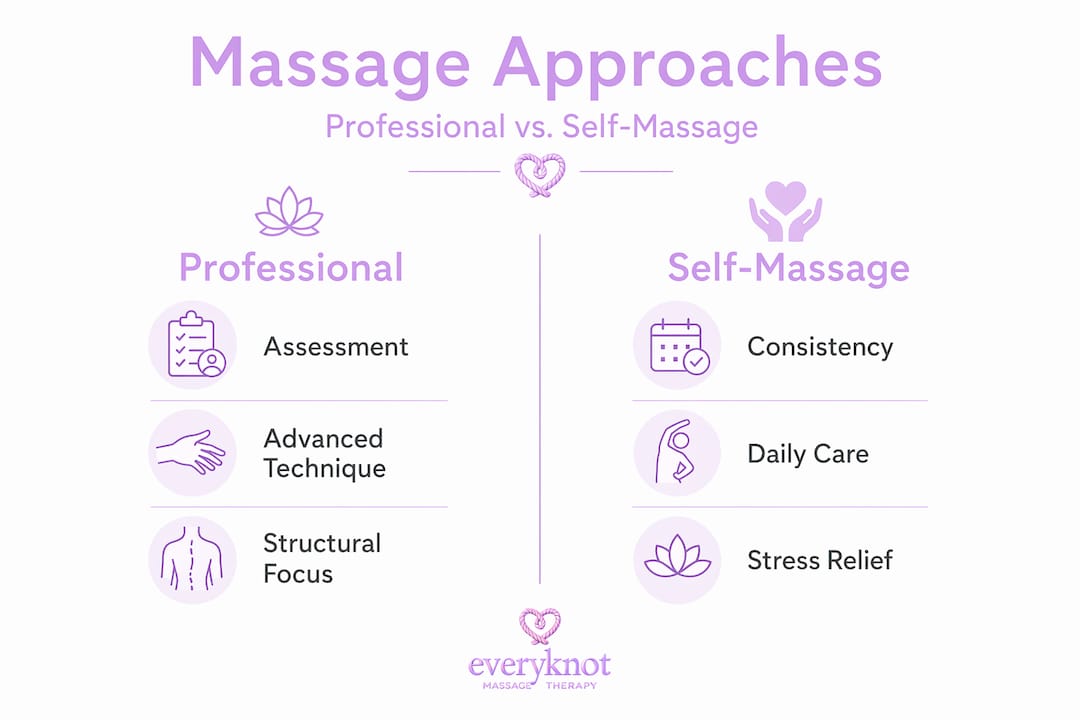
| Factor | Professional massage therapy | Self-massage at home |
|---|---|---|
| Assessment | Trained therapists assess posture, tissue quality, and movement patterns | You work from sensation and feedback only |
| Technique complexity | Deep tissue, myofascial release, trigger point, and structural work | Effleurage, compression, basic stretching, foam rolling |
| Frequency | Typically once or twice a month for maintenance | Daily or several times per week |
| Best for | Complex pain, injury recovery, chronic conditions, significant tension | Maintenance, stress relief, sleep support, routine upkeep |
| Cost | Requires a financial and time commitment | Low cost with minimal equipment |
Professional therapists provide the kind of structural assessment and advanced technique that simply cannot be replicated at home. They identify compensatory patterns, locate tension that you may not even feel consciously, and apply targeted methods to tissues that need skilled hands. For chronic pain, sciatica, injury recovery, or prenatal care, professional care is not optional. It is the foundation.
Self-massage, on the other hand, is best used as a complement to professional sessions. It maintains the progress you make in the studio, manages day-to-day tension, and keeps your nervous system in a more balanced state between appointments. Together, both approaches form the most effective and sustainable path to long-term wellness.
My honest take on massage as a self-care practice
I have worked with a lot of people who arrive at their first session skeptical that massage can do much beyond temporary relief. What I have seen over years of practice is that the skepticism usually comes from trying massage once or twice without intention or structure, and then concluding it did not work.
What I have learned is this: massage works when you treat it as a practice, not a purchase. The clients who experience the most meaningful change are not necessarily the ones who come in the most frequently. They are the ones who stay consistent, who pay attention to how their body responds, and who carry that awareness into how they move and care for themselves between sessions.
The role of massage in self-care is not to replace your other wellness habits. It is to create the physical conditions that make those habits easier. When your body is not fighting chronic tension, you sleep better. When you sleep better, you manage stress more effectively. When you manage stress, your pain threshold improves. Everything connects.
I also want to be direct about something: self-massage is not a lesser substitute for professional care. It is a genuinely different tool. Learning a few structured techniques and applying them daily with intention is one of the most empowering things you can do for your own body. You do not need to wait for an appointment to start feeling better. You just need to start, and then keep going.
— Caitlin
Ready to take your self-care practice further?
If you have been managing tension and stress on your own and feel like you need more support, you do not have to figure it out alone.
At Everyknotmassage, Caitlin combines deep tissue techniques, energy work, and intuitive assessment to create sessions that address your specific patterns of pain and tension. Whether you are dealing with chronic pain, stress accumulation, or recovery from injury, each session is built around what your body actually needs. Professional care and a personalized self-care plan work together, and that combination produces results that either approach alone simply cannot match. If you are ready for relief tailored to you, book a session in Austin and experience what intentional, skilled massage can do.
FAQ
Why choose massage for health and self-care?
Massage reduces pain, anxiety, fatigue, and sleep disturbances through nervous system modulation and pain pathway changes. It is one of the most evidence-backed self-care tools available, with consistent practice producing the most meaningful long-term results.
How often should I do self-massage for real benefits?
Daily sessions of 5 to 15 minutes are considered effective for maintaining gains, improving sleep, and managing stress between professional appointments. Consistency matters more than session length.
Is self-massage as effective as professional massage therapy?
They serve different roles. Professional massage handles complex assessment, advanced technique, and structural issues. Self-massage is most effective for day-to-day maintenance, stress relief, and complementing professional care.
Does massage actually lower cortisol?
The evidence is mixed. Research shows cortisol changes from massage are often small and inconsistent. The more significant and clinically relevant benefits come from reductions in anxiety, depression, and pain, not cortisol levels alone.
What self-massage techniques work best for beginners?
Start with slow circular pressure on the neck and upper traps, use a foam roller or massage ball for mid-back tension, and hold each stretch for a slow 10 count. Learn proper positioning before you start to get results and avoid injury.