

Walking into a massage appointment without preparation is one of the most common reasons people leave feeling underwhelmed, or worse, more tense than when they arrived. If you're managing chronic pain, stress, or stubborn tension in Austin, you deserve more than a one-size-fits-all experience. This guide gives you clear, practical steps to help you prepare physically, mentally, and emotionally so that every session works harder for you. From what to do the night before to how to speak up during your appointment, these strategies are designed to turn your massage into genuine, lasting relief.
Table of Contents
- Assess your needs and health before booking
- What to do in the 24 hours before your massage
- What to bring and expect at the appointment
- Communicate for a customized and safe experience
- What to do after your massage for lasting benefits
- Why preparation and advocacy matter most for chronic pain relief
- Ready for relief? Experience tailored massage in Austin
- Frequently asked questions
Key Takeaways
| Point | Details |
|---|---|
| Assess health needs first | Review medical history and communicate health concerns to ensure safe, tailored massage. |
| Prepare body and mind | Hydrate, rest, and mentally relax before your session for best results. |
| Arrive informed and equipped | Bring relevant health info and arrive early to ensure a smooth appointment experience. |
| Speak up during your massage | Provide feedback so your therapist can adjust techniques and pressure for your comfort and safety. |
| Follow smart aftercare steps | Hydrate, avoid strenuous activity, and watch your body’s response after your massage. |
Assess your needs and health before booking
Start by looking inward and evaluating your unique needs before you schedule anything. This step is more important than most people realize, and skipping it is often what leads to disappointing results.
Think about what you're actually hoping to walk away with. Are you looking for relief from a specific pain point, like lower back tension or sciatica? Do you want to reduce overall stress and feel more relaxed in your body? Or is your goal to improve range of motion after an injury? Being clear on your intention shapes everything, from the service you choose to the information you share with your therapist.
Once you know what you're working toward, take stock of any health factors that could influence your session. Medical clearance and provider guidance are necessary for some clients with chronic pain or preexisting conditions. This isn't meant to discourage you from booking. It just means checking in with your doctor if you have active inflammation, blood clots, certain skin conditions, or recent surgeries. Your therapist needs this information to keep your session safe and effective.
Here's a quick reference to help you sort out what to share before your appointment:
| Health factor | Why it matters | What to do |
|---|---|---|
| Active injury or surgery | May require adjusted pressure or avoided areas | Inform therapist, get provider clearance |
| Chronic pain condition | Affects appropriate technique and depth | Discuss goals for massage for chronic pain |
| Medications (blood thinners, etc.) | Can affect bruising or circulation | List all medications before your session |
| Skin conditions or sensitivities | Affects products and pressure used | Flag specific areas or allergies |
| Pregnancy | Requires specialized positioning and technique | Book a prenatal specialist |
Before your session, ask yourself these core questions:
- Where do I feel the most tension or pain on a daily basis?
- Are there any areas I want the therapist to avoid entirely?
- Do I have any known allergies to massage oils or lotions?
- Have I had a massage before, and what worked or didn't work?
- Is there anything happening in my body right now that feels unusual or new?
"The more specific you can be about your body and your goals, the more your therapist can customize the session to genuinely help you." This is the foundation of personalized massage therapy.
Pro Tip: Write your answers to these questions down before you book. Bring that list to your appointment. It removes the pressure of trying to remember everything in the moment and gives your therapist a clear starting point.
What to do in the 24 hours before your massage
Once you've checked your health and communicated your needs, it's time to set the stage for your body and mind the day before your session. The 24 hours leading up to your massage matter more than most people think.
Reduced anxiety, hydration, and mental quieting are consistent outcomes from good preparation. That means what you eat, drink, and do the night before will show up in your muscles and your nervous system when you're on the table.
Here's a comparison of common pre-massage habits and how they affect your results:
| Habit | What helps | What to avoid |
|---|---|---|
| Hydration | Drink water consistently throughout the day | Alcohol or excessive caffeine |
| Food | Light meal or snack 1 to 2 hours before | Heavy, greasy, or large meals |
| Movement | Gentle stretching or a slow walk | Intense workouts or new physical strain |
| Sleep | A full, restful night | Late nights or disrupted sleep |
| Skin and body | Clean skin, neutral products | Heavy lotions, perfumes, or fragrances |
Follow these steps in order the day before your session:
- Hydrate all day. Muscles that are well hydrated respond better to pressure and release tension more easily. Aim for at least eight glasses of water, and skip the alcohol entirely.
- Eat lightly. A light meal a couple of hours before your appointment keeps you comfortable on the table without feeling sluggish or bloated.
- Do gentle movement. A short walk or a few minutes of gentle stretching helps your body shift out of a rigid, held posture before the session begins.
- Wind down in the evening. If your appointment is the next morning, prioritize rest. Avoid screen time late into the night, and give yourself space to mentally decompress.
- Shower and skip heavy products. Show up clean, but avoid thick lotions, fragrances, or essential oils on your skin. These can interfere with the therapist's grip and the products they use.
- Wear comfortable clothing. Loose, easy clothing makes undressing and re-dressing simpler, and you'll stay comfortable before and after your session.
Understanding why massage therapy matters starts with recognizing that your preparation is the first half of the treatment. When your body arrives rested and hydrated, the work your therapist does goes deeper and lasts longer.
Pro Tip: If you have a morning appointment, set out your comfortable clothes the night before and put a glass of water on your nightstand. These small cues help your mind and body stay in "ease" mode from the moment you wake up.
What to bring and expect at the appointment
Having prepared physically and mentally, knowing what to bring and expect on arrival helps you settle in smoothly and advocate for your comfort.
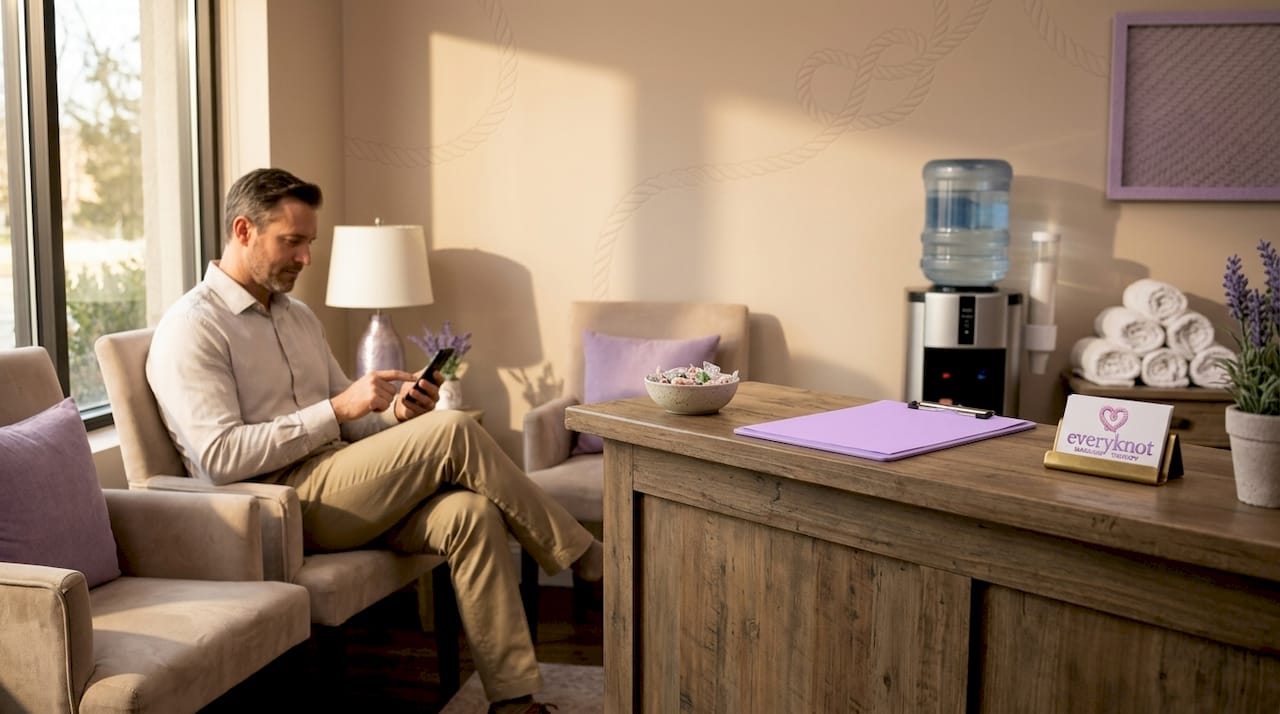
Most people underestimate how much their arrival experience shapes the session. If you rush in late, scramble to remember your health history, or feel unsure about what's about to happen, that anxiety travels straight into your muscles. Arriving informed and prepared allows your nervous system to start relaxing before the therapist even touches you.
What to bring with you:
- A written list of any medications, supplements, or known allergies
- Notes on specific pain areas or concerns you want to address
- Questions for your therapist about technique, pressure, or aftercare
- Comfortable clothing that's easy to change in and out of
- Payment or insurance information if applicable
- An open mindset and willingness to communicate
Plan to arrive about 10 minutes early. This gives you time to complete any intake paperwork, use the restroom, and have a brief conversation with your therapist about your goals for the session. That pre-session conversation is not small talk. It is part of your treatment.
"During deep work, feedback keeps pressure 'therapeutic' rather than painful; speak up if it feels bad." This is one of the most important things to understand before you get on the table.
Expect your therapist to explain draping to you. Draping refers to the use of sheets or towels to cover parts of your body that aren't being worked on. You are always in control of your comfort level. If something doesn't feel right, whether that's the temperature in the room, the music, the pressure, or the positioning, you have every right to ask for an adjustment.
Understanding what a therapist does during a session helps you arrive with realistic expectations and confidence to participate actively in your own care.
Pro Tip: Jot down one or two specific goals for the session on your phone before you arrive. Something like "I want to release the tension in my left shoulder" or "I need help with my lower back." Sharing something this clear sets a strong, focused intention for your therapist.
Communicate for a customized and safe experience
Now that you're ready for your appointment, focus on the role of open, honest communication for the most satisfying and safe experience. This is where many clients fall short, not because they don't want to speak up, but because they don't know they should.
Discomfort may happen with deep tissue work, but it should never be unbearable. The goal is not to power through pain. A skilled therapist adjusts based on your feedback, and that feedback is what separates a session that leaves you sore and frustrated from one that leaves you genuinely relieved.
Here's how to communicate effectively throughout your session:
- Before the session starts, share your top one or two concerns and any areas to avoid. Be specific. "My right hip has been tight for three weeks" is more useful than "my back hurts."
- During the session, speak up the moment something feels off. Sharp pain, numbness, tingling, or dizziness are all signals to pause. Your therapist wants to know.
- When something is working, say so. A simple "that's really helping" tells your therapist to stay in that area or maintain that pressure. It's useful information.
- If your goals shift mid-session, communicate that too. Maybe you came in for back work but realize your neck needs attention. Ask.
- After the session, share what felt most effective and what you'd want adjusted next time. This builds continuity and helps your therapist serve you better at every visit.
"Collaborative communication between you and your therapist is not just courteous. It's therapeutic." The sessions that lead to lasting massage supports wellness are the ones built on trust and honest dialogue.
No concern is too small to mention. If the room is too cold, the music is distracting, or you need to reposition, just say it. Therapists who specialize in restorative massage techniques are trained to work with your body and your voice, not despite them.
What to do after your massage for lasting benefits
Once your session is finished, the right aftercare and habits will help you get the most from your massage. Many people make the mistake of thinking the work ends when they leave the table.
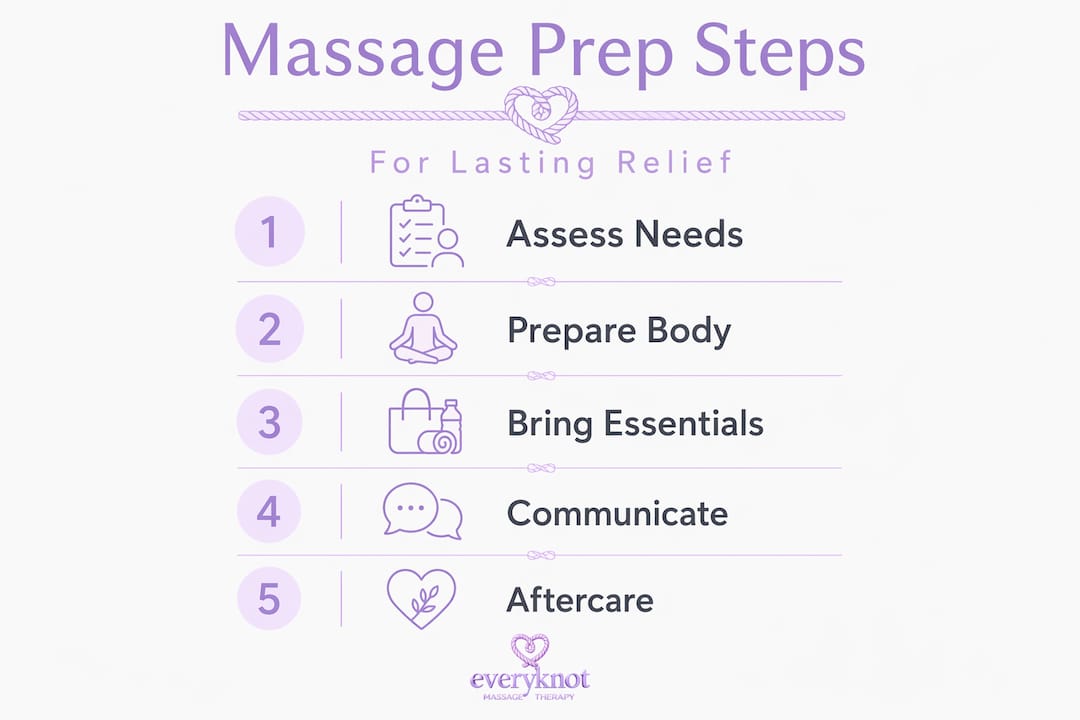
Aftercare influences ongoing relief and recovery, especially for those managing chronic conditions. What you do in the first few hours after a session can either extend or undermine the benefits you just received.
Post-massage care checklist:
- Drink extra water right after your session and throughout the rest of the day
- Avoid strenuous exercise or heavy lifting for at least a few hours
- Eat something light and nourishing if you feel hungry
- Rest if you feel tired. Your body is integrating the work that was just done
- Note any changes in pain levels, flexibility, or mood so you can share them next time
- Follow any gentle stretching or movement recommendations from your therapist
Here's a simple guide to pacing your post-massage activity:
| Time after session | Recommended activity | What to avoid |
|---|---|---|
| 0 to 2 hours | Rest, gentle walking, hydrating | Intense exercise, stress, heavy meals |
| 2 to 6 hours | Light tasks, gentle stretching if advised | High-impact activity, alcohol |
| 6 to 24 hours | Return to normal activity as tolerated | Overexerting newly released areas |
| 24 to 48 hours | Check in with how your body feels | Skipping your follow-up if pain returns |
Scheduling follow-up sessions is also part of your aftercare. For chronic pain and tension, a single session rarely resolves everything. Talk with your therapist about massage for recovery and what a realistic, consistent schedule looks like for your specific needs.
Pro Tip: Keep a simple journal or notes app entry after each session. Write down where you felt relief, any soreness that showed up the next day, and what felt different. Over time, this becomes a valuable record that helps your therapist track your progress and refine your treatment.
Why preparation and advocacy matter most for chronic pain relief
Here's an opinion that most people don't expect to hear: the single biggest factor in whether your massage helps you is not your therapist's technique. It's how prepared and communicative you are as a client.
Too many people arrive at their sessions passively, assuming the therapist will simply "find" what's wrong and fix it. And too many people stay silent when pressure is too deep, when an area feels off-limits, or when something just isn't working. They don't want to seem demanding. They don't want to interrupt the flow. They leave disappointed but don't know why.
What changes everything is understanding that your session is a partnership. The therapist brings skill, intuition, and training. You bring self-knowledge, honesty, and participation. Neither half works without the other.
Research consistently supports this. Massage therapy for lasting relief comes from sessions that are tailored, responsive, and built on clear communication. That's not possible without your input. And for those managing complex or chronic pain, passive receiving is actually a missed opportunity for the nervous system to learn a new pattern of safety and release.
The clients who get the most out of their sessions are not necessarily the ones with the most severe pain. They're the ones who show up prepared, speak honestly, and treat the work as intentional care rather than a service transaction. That shift in mindset, from patient to participant, is what creates consistent, meaningful change.
Ready for relief? Experience tailored massage in Austin
You've done the reading. You know what your body needs, how to prepare, what to say, and how to care for yourself after. Now it's time to put that knowledge into action with someone who's genuinely committed to your well-being.
At EveryKnot Massage, every session is built around you. Whether you're managing chronic pain, recovering from an injury, carrying months of stress in your shoulders, or simply ready to feel at home in your body again, Caitlin brings a blend of deep technical skill and genuine intuitive presence to each appointment. There's no rushed routine here. Just intentional, customized care that supports where you are right now and where you want to be. Austin locals trust EveryKnot because it feels different. Book your session and start experiencing what prepared, communicated, and supported massage can actually do.
Frequently asked questions
Should I eat before my massage appointment?
Have a light meal or snack one to two hours before your session, but skip heavy or greasy foods. Light eating supports comfort and prevents nausea during massage.
What if I feel pain during the massage?
Speak up right away. Massage should never cause sharp or unbearable pain, and your therapist can and will adjust. You should never power through discomfort during deep tissue work.
Can I get a massage if I have a chronic medical condition?
Yes, in most cases, but always disclose your condition, medications, and any recent changes in your health. Medical clearance is recommended for some preexisting conditions before beginning massage therapy.
How soon after my massage should I exercise or return to strenuous activity?
Give yourself at least a few hours of lighter activity before returning to intense exercise. Proper aftercare extends benefits and helps your muscles integrate the work from your session.