
Chronic pain is not just physical. It follows you into your mornings, reshapes your plans, and quietly wears you down. If you live in Austin and have been searching for a pain relief massage guide that goes beyond surface-level advice, you are in the right place. Most people assume massage therapy provides only temporary comfort, a brief window of ease before tension creeps back in. But that is a misconception worth correcting. The research, and the experience of working with people through persistent pain, tells a very different story about what consistent, personalized massage can actually do.
Table of Contents
- Understanding pain relief massage: how it works and what science says
- Self-massage for pain relief: techniques, tools, and guidelines
- Comparing massage types for pain relief: choosing what fits your needs
- Developing a consistent massage routine for lasting pain relief and wellness
- Safety tips and red flags: when to massage and when to seek professional care
- A fresh perspective on pain relief massage: consistency, personalization, and mindfulness
- Find personalized pain relief massage therapy in Austin with EveryKnot Massage
- Frequently asked questions
Key Takeaways
| Point | Details |
|---|---|
| Evidence-backed relief | Massage therapy offers scientifically supported short-term relief for chronic pain when combined with other treatments. |
| Self-massage guidelines | Effective self-massage uses pressure levels of 5-7 out of 10, focusing on safety and consistency. |
| Choose massage type | Different massage styles serve various pain needs; picking the right type enhances results. |
| Consistency matters | Regular massage sessions twice to thrice weekly lead to better long-term outcomes. |
| Safety first | Screen for health risks before massage and communicate openly with your therapist to avoid complications. |
Understanding pain relief massage: how it works and what science says
Before you invest your time and money in massage therapy, you deserve to understand why it works, not just that it works. Massage targets the soft tissues of the body, including muscles, connective tissue, and fascia (the thin sheath of tissue that wraps your muscles). When those tissues are compressed, kneaded, or stretched in a deliberate way, the body responds with real, measurable changes.
Research supports this clearly. Massage provides short-term pain relief for chronic low back pain, fibromyalgia, and myofascial pain, with benefits lasting weeks when combined with exercise. That is moderate-certainty evidence, which means the findings are consistent enough to guide clinical recommendations. This is not wishful thinking.
Here is what massage actually does inside the body:
- Reduces levels of cortisol, the stress hormone linked to increased pain sensitivity
- Stimulates the release of serotonin and dopamine, which improve mood and lower pain perception
- Increases circulation to injured or tense areas, bringing oxygen and clearing waste products
- Reduces localized inflammation by modulating the activity of cytokines (signaling proteins that trigger swelling)
- Helps your nervous system shift from a state of high alert into a calmer, more regulated state
"Massage therapy does not just address symptoms. When applied consistently, it addresses the underlying tension patterns and nervous system responses that keep pain cycles active."
The pain relief massage benefits people experience are not accidental. They are the result of a body responding to intentional, skilled touch. For a deeper look at how this process unfolds, massage therapy for chronic pain relief covers the full picture.
Now that we understand the evidence supporting massage, let us explore how you can apply safe and effective self-massage techniques.
Self-massage for pain relief: techniques, tools, and guidelines
Self-massage is one of the most accessible DIY pain relief massage tools available to you. Done correctly, it extends the benefits of professional sessions and gives you a way to manage flare-ups between appointments. Done incorrectly, it can aggravate already irritated tissue. The difference comes down to a few key principles.
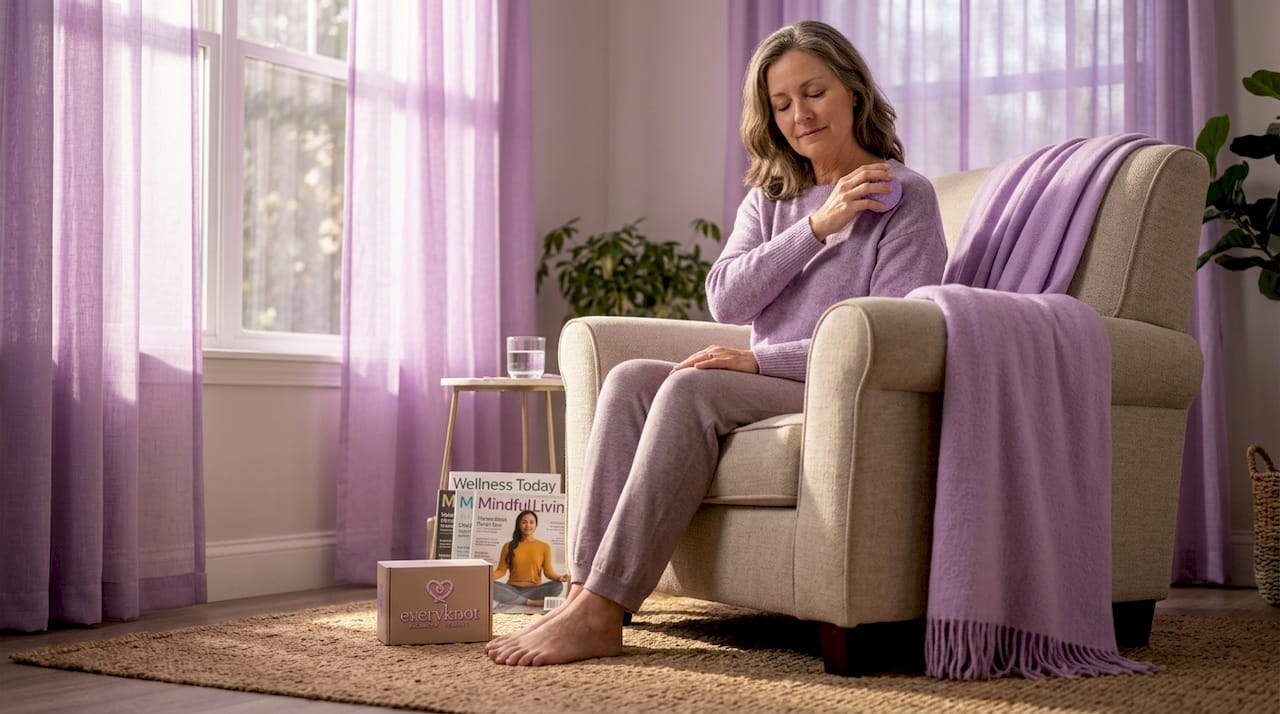
The pressure-not-pain principle is the most important one to understand. You are aiming for a pressure level of 5 to 7 on a scale of 1 to 10. That means noticeable, purposeful pressure, but not sharp or shooting pain. Per targeted self-massage guidelines, sessions for back pain should last 5 to 15 minutes daily, staying away from direct pressure on the spine itself.
Follow these steps for effective self-massage at home:
- Choose your tool. Your fingertips work well for smaller muscles like the neck and scalp. A tennis ball gives moderate pressure for larger areas like the upper back and glutes. A lacrosse ball (slightly firmer) is better for stubborn knots in the hips or shoulders.
- Set up your position. For upper back tension, place a tennis ball between your back and a wall, lean into it, and use small, slow movements to find the tender spot.
- Apply steady pressure. Once you locate a tight area (often called a trigger point, or a concentrated knot of muscle fiber), hold gentle sustained pressure for 30 to 90 seconds rather than aggressively digging in.
- Release and breathe. After holding, take a slow deep breath out and let the area soften. Then move to the next spot.
- Finish with movement. After self-massage, gentle range-of-motion movements like shoulder rolls or a slow cat-and-cow stretch help the muscle reset and reduce post-session soreness.
Pro Tip: Place your tennis ball on a carpeted surface rather than hardwood when working on the floor. The traction prevents the ball from rolling unpredictably, giving you more control over pressure. For upper back knots, the chair-back method works well: press the ball between your back and a firm chair, stay seated, and lean into it gradually.
Key areas to focus on for common Austin complaints, such as desk-related neck tension and lower back pain from long commutes:
- Upper trapezius (top of the shoulder): Use fingertips in a slow, kneading motion for 60 seconds per side
- Chest and pectorals: Cross both arms over your chest and use your fingertips to gently compress the upper chest muscles, easing forward shoulder posture
- Glutes and piriformis: Sit on a tennis ball on a firm chair and slowly shift weight to find tight spots
For guidance on personalized self-massage techniques tailored to your body and pain patterns, working with a skilled therapist makes a meaningful difference in what you target and how.
With self-massage techniques established, let us compare massage types and their roles in managing pain to help you make informed choices.
Comparing massage types for pain relief: choosing what fits your needs
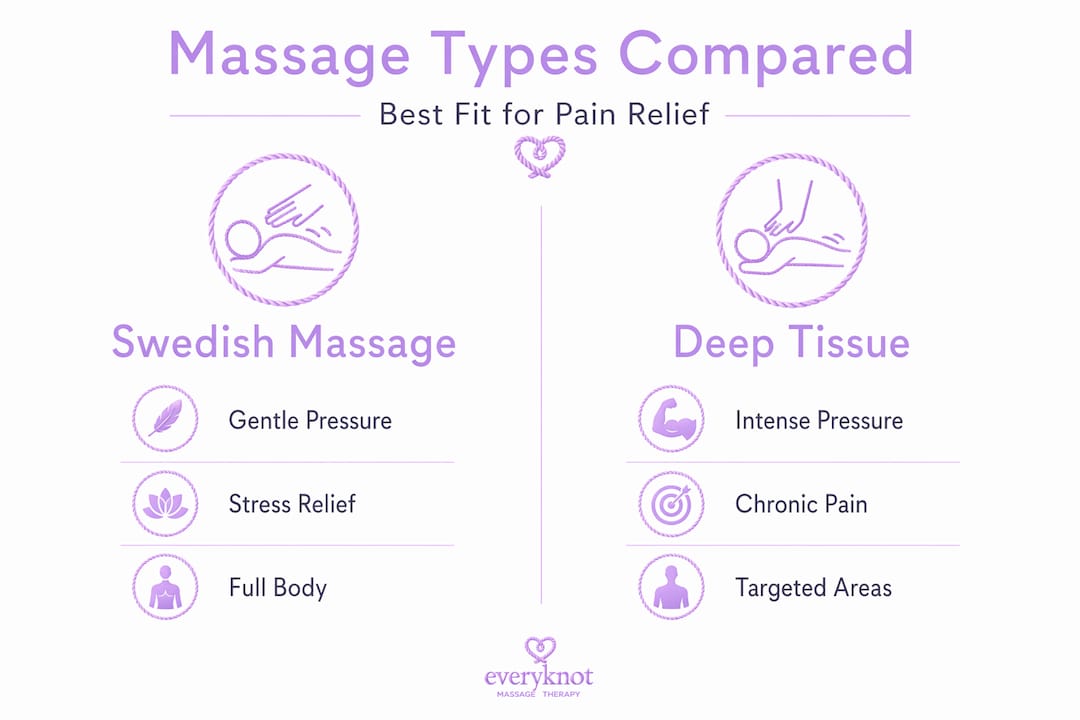
Not all massage is the same. Choosing the right modality for your situation shapes how much relief you actually experience. Here is a practical breakdown:
| Massage type | Best for | Pressure level | Session length |
|---|---|---|---|
| Swedish massage | Stress relief, general wellness, first-time clients | Light to moderate | 60 to 90 minutes |
| Deep tissue massage | Chronic tension, targeted muscle pain, recurring knots | Moderate to firm | 60 to 90 minutes |
| Sports massage | Active individuals, injury prevention, flexibility | Moderate to firm | 45 to 90 minutes |
| Trigger point therapy | Isolated knots referring pain to other areas | Focused, variable | 30 to 60 minutes |
| Prenatal massage | Pregnancy-related muscle strain and tension | Gentle to moderate | 60 minutes |
Deep tissue massage works by applying slow, deliberate strokes to reach deeper layers of muscle and connective tissue. It is particularly effective for people dealing with chronic back tension, neck stiffness, or recurring shoulder pain, conditions that a relaxing Swedish session will not fully address. For a thorough overview of what to expect, deep tissue massage benefits is worth reading before your first session.
On cost: the national average for a 60-minute massage sits between $60 and $120 in 2026, with Austin-area rates typically ranging from $100 to $150 for therapeutic work. That is slightly above the national average, reflecting local demand and the specialized training many Austin therapists bring.
A few ways to manage the cost of ongoing care:
- Book session packages upfront, which most Austin studios offer at a reduced per-session rate
- Schedule appointments during off-peak hours (weekday mornings) when some studios offer discounted pricing
- Combine professional sessions with daily self-massage to extend results between appointments
After understanding your options, let us look at how to integrate massage into a consistent pain management routine for lasting relief.
Developing a consistent massage routine for lasting pain relief and wellness
Here is what most people get wrong: they book a massage when their pain peaks, get relief, then wait until the pain peaks again. That reactive cycle limits how much progress you can make. Consistency is what changes the pattern.
Massage therapy recommended frequency for chronic tension relief is 2 to 3 times per week, improving recovery and reducing both lactic acid buildup and pain intensity over time. That does not have to mean 2 to 3 professional sessions weekly. A realistic structure looks like this:
- One professional session per week focused on your primary pain areas, using skilled hands to address what self-massage cannot reach
- Daily 10-minute self-massage targeting one or two areas, using the techniques described above
- Post-massage hydration with 16 to 24 ounces of water to support tissue flushing and reduce soreness after deep work
- Breathwork integration during and after massage, since slow diaphragmatic breathing (belly breathing) enhances endorphin release and helps your nervous system settle
"Hydration after massage is not optional. Deep tissue work releases waste products stored in compressed muscle fibers, and water helps your body process and clear them efficiently."
Pro Tip: After an acute injury like a pulled muscle, apply ice for the first 48 to 72 hours before introducing massage. Once acute inflammation settles, gentle heat followed by massage helps restore circulation and ease the muscle back into normal function.
For a broader view of how massage fits into wellness and recovery routines, massage for wellness and recovery offers a well-rounded perspective on building sustainable habits.
As you build your massage routine, consider safety precautions and when to seek professional care for pain management.
Safety tips and red flags: when to massage and when to seek professional care
Self-knowledge is a real safety tool. Understanding when to proceed and when to pause protects you from making discomfort worse.
Critical safety considerations before any massage session:
- Deep vein thrombosis (DVT): DVT is a blood clot that can form in a deep vein, most often in the legs. Screening for DVT signs like one-leg swelling, warmth, or redness is essential before leg massage. Applying pressure over an active clot can be dangerous.
- Acute inflammation or infection: If an area is hot, swollen, or actively infected, massage over it can worsen the condition. Wait until the acute phase passes.
- Fractures or recent surgery: Direct pressure over a healing fracture or surgical site is always a contraindication (meaning a reason not to proceed).
- Unexplained pain: If your pain is new, severe, or accompanied by symptoms like numbness down one arm or leg, fever, or unexplained weight loss, see a healthcare provider before booking massage.
Pro Tip: A thorough intake process is not just paperwork. It is how a skilled therapist customizes your session to be both safe and effective. If a therapist skips the intake entirely, that is a red flag worth noting.
Professional massage safety care explains what a qualified therapist should be assessing and asking before they begin working with you.
With safety guidelines clear, here is our unique perspective on maximizing massage benefits through personalized and mindful practice.
A fresh perspective on pain relief massage: consistency, personalization, and mindfulness
There is a tendency, especially in a fast-paced city like Austin, to treat massage as a one-time reset. You feel tight, you book a session, you walk out feeling better, and you repeat the cycle only when things get bad again. That approach will give you temporary relief. It will not give you lasting change.
What actually works is a different mindset: treating massage as a practice, not a product.
Consistent massage enhances recovery by reducing inflammation at the cellular level, and consistency yields 45% better long-term pain outcomes compared to sporadic sessions. That number matters. It tells you that showing up regularly, even briefly, outperforms occasional intensive work.
Personalization is the other piece most people underestimate. Generic pressure applied generically rarely addresses the real patterns driving your pain. Your tension lives in specific places, connected to specific habits, postures, and stressors. A therapist who takes the time to understand that, who adjusts depth, pacing, and technique based on your feedback in the moment, creates a very different experience than one following a standard protocol.
Mindful awareness during a session amplifies results in a way that surprises most people. When you focus your attention on the area being worked, breathe slowly, and consciously soften rather than guard against the pressure, you help your nervous system feel safe enough to let go. That shift from bracing to releasing is where much of the actual therapeutic work happens.
The practitioners who get the best results in Austin are the ones who think about all three: consistency, personalization, and presence. For a closer look at what personalized massage relief looks like in practice, it is worth understanding what to look for before you commit to a therapist.
Find personalized pain relief massage therapy in Austin with EveryKnot Massage
Living with chronic pain long enough can make you skeptical that anything will really help. That skepticism is earned. But the difference between generic massage and care that is genuinely tailored to you is substantial.
At EveryKnot Massage in Austin, Caitlin brings certified training across multiple modalities and an intuitive approach that adjusts to what your body actually needs in each session. Whether you are managing ongoing tension, recovering from an injury, or working through a condition like sciatica or fibromyalgia, sessions are built around your specific situation, not a standard template. Flexible packages make it easier to commit to the consistency that produces real results. If you are curious about what the process looks like, personalized massage relief and massage for injury recovery in Austin offer a clear preview of the approach.
Frequently asked questions
How often should I get a massage for chronic pain relief?
Massage therapy is recommended 2 to 3 times a week for chronic pain to build consistent relief and meaningful improvement in recovery. Combining professional sessions with daily self-massage makes that frequency realistic for most schedules and budgets.
What pressure level is safe and effective for self-massage?
Target a pressure level of 5 to 7 out of 10, firm enough to activate the receptors that interrupt pain signals, but not so intense that it triggers a guarding response from your muscles. If you are wincing or holding your breath, ease off.
Can massage therapy help with fibromyalgia pain?
Yes. Massage provides short-term relief for fibromyalgia-related pain with moderate-certainty evidence behind it, especially when paired with regular exercise. The key is gentle, consistent sessions rather than aggressive deep tissue work, which can temporarily increase fibromyalgia sensitivity.
What safety precautions should I take before a massage?
Always share your full medical history with your therapist, and hold off on massage if you notice signs of DVT like one-leg swelling or warmth, have a recent fracture, or are experiencing acute inflammation. When in doubt, check with your doctor before booking.