

If you've heard the phrase "energy work in massage" and felt somewhere between curious and skeptical, you're not alone. What is energy work in massage, exactly, and why does it matter for someone managing chronic pain or stress in Austin? The short answer: it's a blend of physical bodywork and intentional energy-based techniques designed to support your whole system, not just your muscles. This guide breaks down what these sessions actually involve, what the research says, and how this approach can be a practical, supportive part of your pain and stress management plan.
Table of Contents
- Understanding energy work in massage: definitions and core concepts
- The evidence and science behind energy work in massage
- How energy work massage sessions are structured and what to expect
- Benefits and practical applications of energy work massage for chronic pain and stress
- Key considerations and best practices for choosing an energy work massage therapist in Austin
- Rethinking energy work in massage: a balanced and pragmatic view
- Explore energy work massage at EveryKnot Massage in Austin
- Frequently asked questions
Understanding energy work in massage: definitions and core concepts
Energy work in massage combines hands-on bodywork with techniques drawn from ancient healing traditions. These traditions describe a vital life force that flows through the body, called chi in Chinese medicine, prana in Ayurvedic practice, or simply "life energy" in many Western interpretations. Energy healing focuses on balancing this subtle energy system, which practitioners believe influences physical, emotional, and spiritual well-being.
In practical terms, this means your session may include more than traditional massage strokes. Practitioners work with the body's energetic anatomy, which includes concepts like chakras (energy centers along the spine) and meridians (channels through which energy flows). When these pathways feel blocked or imbalanced, the idea is that physical tension and emotional distress follow.
Common energy work techniques used within massage sessions include:
- Gentle or light touch placed over specific energy centers or areas of tension
- Hovering hands near the body to sense and redirect energy without direct pressure
- Energy scanning, where the therapist moves their hands slowly to detect areas of imbalance
- Reiki, a Japanese technique using light touch to support relaxation and energy flow
- Chakra balancing, which uses intention and touch to address specific energy centers
- Integration with restorative massage techniques to address both tissue-level tension and energetic disruption
What makes this approach genuinely different from a standard massage is the whole-person focus. The goal isn't only to release a tight muscle. It's to address the physical, emotional, and energetic layers that often travel together, particularly in people carrying chronic stress or pain.
The evidence and science behind energy work in massage
Here's where many people get stuck: if you can't see energy fields under a microscope, how can you trust that energy work actually does anything? It's a fair question, and the honest answer is nuanced.
Energy healing is not scientifically proven to directly manipulate a measurable energy field. Scientists haven't confirmed the mechanism. But "unproven mechanism" doesn't mean "no effect." Multiple clinical studies point to real, measurable outcomes.
"Reiki therapy shows clinically significant improvements in pain, fatigue, anxiety, nausea, and wellbeing in cancer outpatient settings."
That's a meaningful outcome for people dealing with serious chronic conditions. Pain scores dropped. Anxiety decreased. Fatigue improved. Whether those results come from "energy rebalancing" or from deep relaxation and focused therapeutic touch is still being studied. But the benefits for real people are documented.
Key takeaways from current research on energy work massage benefits:
- Studies consistently show reductions in pain intensity and anxiety following Reiki and similar energy-based sessions
- Benefits are most reliable when energy work is used alongside conventional medical care, not instead of it
- The relaxation response triggered during sessions likely activates the parasympathetic nervous system, reducing cortisol and lowering the body's stress state
- Quality-of-life improvements, including better sleep and reduced fatigue, are commonly reported
Leading medical institutions recommend massage therapy benefits as a complement to standard treatment, not a replacement. That framing matters, especially if you're managing a chronic condition.
How energy work massage sessions are structured and what to expect
If you've never had a session that blends massage with energy work, the unknowing can feel a little unsettling. Here's what a typical energy work massage session looks like from start to finish:
- Intake conversation. Your therapist starts by listening. They'll ask about your physical symptoms, areas of chronic tension, stress levels, and any emotional goals you want to support. This isn't small talk. It shapes the entire session.
- Energy scanning. Before deep bodywork begins, the practitioner may hover their hands a few inches above your body, moving slowly from head to toe. They're sensing areas that feel heavy, hot, cold, or stagnant. You may or may not feel anything during this phase.
- Combined massage and energy techniques. This is the core of the session. The therapist moves fluidly between traditional massage strokes (to release muscle tension) and energy-focused touches (to address the energetic dimension). A tight shoulder may receive both deep tissue pressure and focused Reiki work.
- Chakra or aura work. Depending on your therapist's training and your goals, they may spend focused time on specific energy centers, particularly if you've reported symptoms like persistent anxiety, digestive discomfort, or emotional heaviness.
- Post-session reflection. After the hands-on work, you'll have a few quiet moments, then a brief conversation. Your therapist may share observations. You might notice emotions that surfaced, physical sensations that shifted, or a deep sense of calm you weren't expecting.
A personalized massage therapy session like this tends to move at a slower, more intentional pace than a standard relaxation massage. The hands-off phases can feel strange at first, but many clients find them among the most deeply relaxing parts of the session.
Pro Tip: Before your session, write down two or three specific symptoms you want to address, whether that's lower back pain, trouble sleeping, or persistent anxiety. Bringing concrete goals helps your therapist customize the work and gives you a way to measure how you feel afterward.
Benefits and practical applications of energy work massage for chronic pain and stress
For those of you in Austin managing chronic pain, ongoing stress, or emotional fatigue, this is the section that matters most. What can you actually expect to feel better after an energy work massage session?
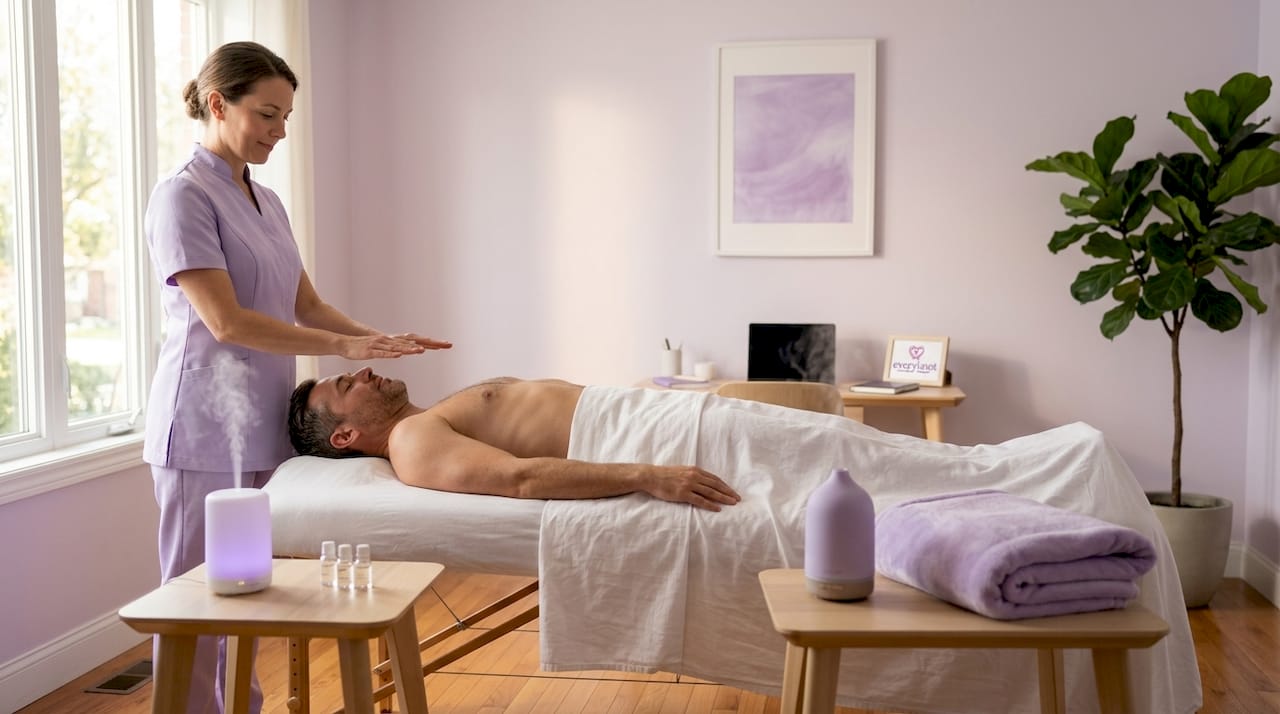
Energy work massage supports measurable improvements in pain, fatigue, anxiety, nausea, and overall sense of well-being. That range is significant. It reflects how interconnected physical symptoms and emotional states really are.
Practical benefits reported by clients include:
- Reduced pain intensity in chronic areas like the lower back, neck, and shoulders
- Lower anxiety and a calmer mental state that often lasts for days after a session
- Improved fatigue management, particularly relevant for those with chronic illness or high-stress lives
- Emotional release, sometimes unexpected, that leaves clients feeling lighter and more grounded
- Better sleep quality following sessions that calm the nervous system
The nervous system connection is worth understanding. When your body is locked in a chronic stress response, your muscles stay braced, your digestion slows, and pain signals amplify. Energy work, combined with skilled massage, gives your nervous system permission to shift toward calm. That's not mystical. That's physiology.
Here's how energy work massage compares to other approaches:
| Approach | Physical touch | Energy-based techniques | Best suited for |
|---|---|---|---|
| Conventional massage | Yes | No | Muscle tension, recovery, relaxation |
| Energy work only (e.g., pure Reiki) | Minimal | Yes | Emotional balance, light stress relief |
| Energy work massage (blended) | Yes | Yes | Chronic pain, stress, emotional healing |
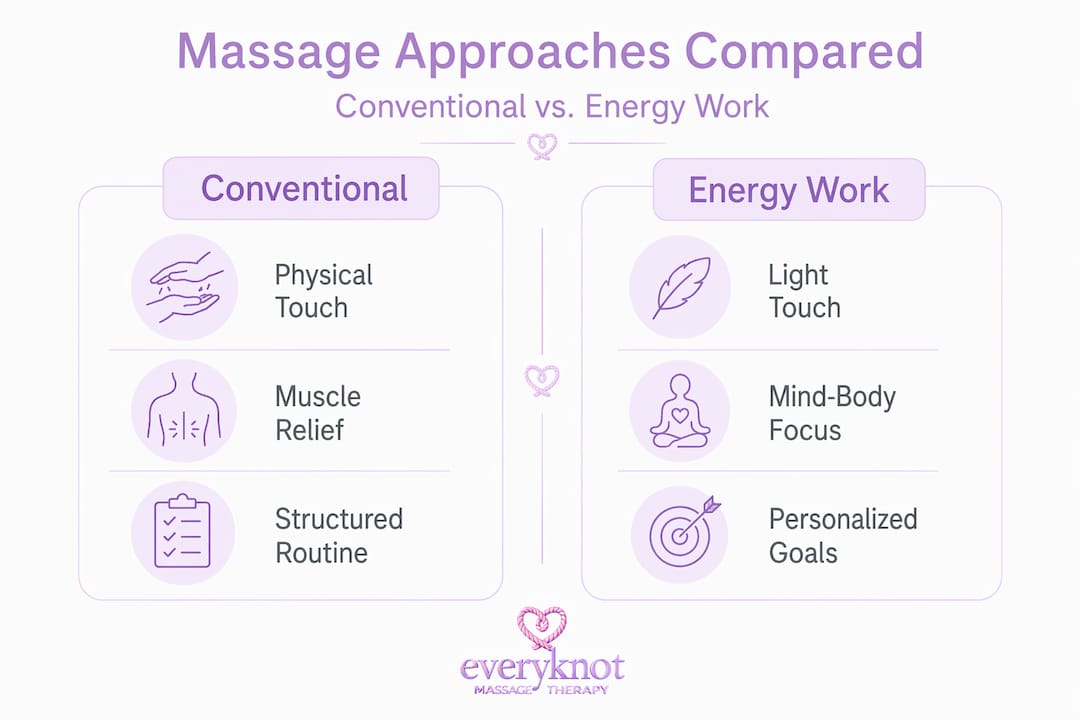
This blended approach is why clients dealing with massage therapy supports wellness goals, specifically the combination of physical relief and emotional balance, often find more lasting results than with either approach alone.
For those managing sciatica, injury recovery, or long-term tension, pairing this with restorative massage work can create a genuinely cumulative effect over time.
Key considerations and best practices for choosing an energy work massage therapist in Austin
Not every practitioner who claims to do energy work has the same training, depth of experience, or approach. Here's how to find someone who will actually serve your needs well.
- Ask directly about their training. A qualified therapist should be able to explain which energy modalities they're certified in (Reiki levels, chakra work, etc.) and how they integrate them with massage.
- Frame your goals around symptoms, not abstractions. Tell them about your pain level, your sleep, your anxiety. Concrete goals lead to more targeted sessions and clearer progress.
- Confirm they support conventional care. A trustworthy massage therapist's role is to complement your medical team, not replace it.
- Watch for overclaiming. Be cautious of any practitioner who suggests energy work will cure a diagnosed condition. It's a supportive tool, not a standalone treatment.
Continue your conventional treatment and talk with your primary care provider about adding energy work. Most doctors welcome complementary approaches when they're used responsibly.
Pro Tip: At your first appointment, ask the therapist to walk you through what they'll do before they begin. A good practitioner welcomes this conversation. It also helps you relax and stay present during the session instead of wondering what's coming next.
Rethinking energy work in massage: a balanced and pragmatic view
Here's something the typical "energy work explained" article won't tell you: the debate about whether subtle energy fields exist may be the least useful thing to focus on when you're dealing with real pain.
The honest, experience-backed reality is this. Most of the documented benefits of energy work in massage likely come from the relaxation response, the quality of human therapeutic touch, and the way a skilled practitioner holds space for your nervous system to feel safe. That is not a small thing. For people who carry chronic tension in their bodies and emotional weight in their lives, that experience of being genuinely cared for in a quiet room is itself therapeutic.
Conventional wisdom in both the wellness world and the skeptic world tends toward extremes. Believers assign too much to unseen forces. Skeptics dismiss the real, measurable relief that clients consistently report. Neither position serves you well.
The smarter framing: energy work massage is a low-risk, mind-body supportive tool that works best as part of a broader plan. It's not a miracle. It's also not nothing. For someone in Austin navigating chronic pain alongside medical treatment, it can be the piece that addresses what clinical appointments don't have time for: the emotional dimension of living in a body that hurts, day after day.
Use it that way, with clear goals and realistic expectations, and it becomes genuinely useful. For lasting relief, the most effective path combines intentional energy work with skilled bodywork. Explore what consistent massage care can do when it's customized to your actual life.
Explore energy work massage at EveryKnot Massage in Austin
If this approach resonates with you, and you're ready to experience what intentional, blended energy work and bodywork actually feels like, Caitlin at EveryKnot Massage in Austin offers exactly this kind of care. Sessions are customized to your symptoms, whether that's chronic lower back pain, persistent stress, sciatica, or emotional fatigue. The work draws on multiple certified modalities, combining deep tissue technique with energy awareness to support both physical and emotional release.
You don't need to arrive with a firm belief in energy fields. You just need to arrive with your goals. Caitlin will meet you there and build a session around what your body and nervous system actually need that day. Book a session and experience what supportive, personalized massage care can do for your long-term well-being.
Frequently asked questions
Is energy work in massage scientifically proven to heal physical ailments?
Energy healing is not proven to directly heal physical conditions, but it is generally safe and works well as a complement to conventional medical treatment for symptom relief.
What should I expect during an energy work massage session?
You can expect a blend of hands-on massage and gentle scanning or light-touch energy techniques, along with an intake conversation about your symptoms and a brief reflection after the session ends.
Can energy work massage help with chronic pain and stress?
Many clients report meaningful reductions in pain, fatigue, and anxiety after energy work massage sessions, largely through the relaxation and nervous system calming effects these sessions produce.
Should I stop my conventional treatments if I choose energy work massage?
No. Energy work massage is meant to support your existing care, not replace it. Always continue conventional treatment and let your healthcare provider know you're adding this as a complement.
How do I find a qualified energy work massage therapist in Austin?
Look for therapists who clearly explain their training and methods, focus on your specific symptoms, and coordinate with your healthcare team rather than position energy work as a substitute for medical care.